
Allergies are a condition in which the body’s immune system reacts to substances that are normally harmless, perceiving them as foreign invaders. These substances are known as “allergens.” Allergy symptoms can manifest in various forms, depending on the type of allergy and the specific allergen a person is exposed to. This article will help you understand the different types of allergies, common allergens, and the distinct symptoms associated with each type.
What is an Allergy?
An allergy is a condition in which the body’s immune system reacts to substances that are generally harmless, perceiving them as foreign invaders. These substances are called “allergens.” When allergens enter the body, the immune system produces IgE antibodies that trigger the release of histamine and other chemicals. This response causes allergic symptoms such as nasal congestion, sneezing, runny nose, itchy rashes, and asthma.
How Many Types of Allergies Are There?
Allergies can be classified into several main types based on the affected organs, as follows
- Respiratory Allergies
- Examples Allergic rhinitis, allergic asthma
- Symptoms Nasal congestion, runny nose, coughing, sneezing, difficulty breathing, chest tightness, wheezing, and asthma attacks
- Skin Allergies
- Examples Urticaria (hives), atopic dermatitis, contact dermatitis
- Symptoms Red rashes, itching, raised bumps, oozing blisters, dry and inflamed skin
- Food Allergies
- Examples Allergies to cow’s milk, peanuts, seafood, eggs, wheat, and soy
- Symptoms Itchy rashes, diarrhea, nausea, vomiting, stomach pain, and in severe cases, anaphylaxis (a life-threatening allergic reaction)
- Insect Allergies
- Examples Allergic reactions to bee stings, ant bites, wasps, and mosquitoes
- Symptoms Pain, swelling, itching, redness at the bite or sting site, and in severe cases, anaphylactic shock
- Drug Allergies
- Examples Allergic reactions to penicillin, aspirin, and nonsteroidal anti-inflammatory drugs (NSAIDs)
- Symptoms Itchy rashes, swelling, difficulty breathing, and in severe cases, anaphylaxis
- Environmental Allergies
- Examples Allergies to dust, pollen, mold, animal dander, and dust mites
- Symptoms Nasal congestion, runny nose, sneezing, itchy eyes, and itchy nose
- Severe Acute Allergies (Anaphylaxis)
- Anaphylaxis is a severe allergic reaction that can be life-threatening and may result from food, medications, or insect stings.
- Symptoms Difficulty breathing, rapid heartbeat, low blood pressure, loss of consciousness, and shock
Common Allergens
Allergens can be classified into several categories based on their sources, as follows
- Airborne Allergens
- Dust
- Pollen
- Dust mites
- Pet dander and animal fur
- Mold
- Food Allergens
- Cow’s milk
- Peanuts
- Shellfish
- Eggs
- Wheat
- Soy
- Insect Allergens
- Bee stings
- Fire ant bites
- Wasp and hornet stings
- Drug Allergens
- Penicillin
- Aspirin
- Nonsteroidal anti-inflammatory drugs (NSAIDs)
- Contact Allergens
- Latex
- Fragrances and chemicals in skincare products
- Metals such as nickel
Symptoms of Allergies by Type
Allergic symptoms vary depending on the type of allergy and the specific allergen. The main symptoms for each type are as follows
| Type of Allergy | Main Symptoms |
| Respiratory | Nasal congestion, runny nose, sneezing, coughing, difficulty breathing, asthma |
| Skin | Itchy rash, raised bumps, swelling, redness, dry and inflamed skin |
| Food | Itchy rash, stomach pain, diarrhea, vomiting, and anaphylaxis |
| Insect Stings | Pain, swelling, itching, redness, and severe cases may cause shock |
| Drug | Itchy rash, difficulty breathing, swelling, and anaphylaxis |
| Environmental | Nasal congestion, runny nose, sneezing, itchy eyes, and itchy nose |
| Anaphylaxis (Severe Acute Allergy) | Difficulty breathing, low blood pressure, loss of consciousness, shock, and can be life-threatening |
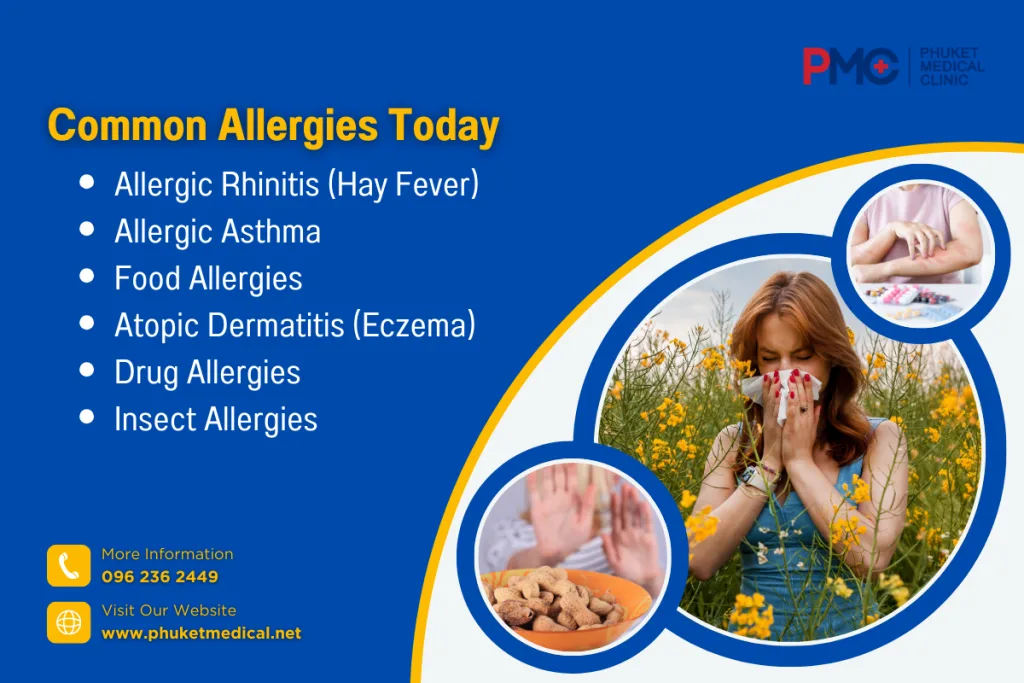
Common Allergies Today
In recent years, allergies have been on the rise worldwide due to environmental changes, pollution, and fast-paced lifestyles. The most common allergies today include
- Allergic Rhinitis (Hay Fever)
- Caused by dust, pollen, dust mites, and animal dander.
- Symptoms include nasal congestion, sneezing, runny nose, and itchy nose.
- Allergic Asthma
- Commonly triggered by air pollution, cigarette smoke, and household dust.
- Symptoms include difficulty breathing, chest tightness, and wheezing.
- Food Allergies
- Frequently found in both children and adults, such as allergies to cow’s milk, peanuts, shellfish, and eggs.
- Symptoms include itchy rash, stomach pain, vomiting, and, in severe cases, anaphylactic shock.
- Atopic Dermatitis (Eczema)
- Caused by irritants, dust, and dry air.
- Symptoms include red rashes, itching, dry skin, and inflammation.
- Drug Allergies
- Medications like penicillin, aspirin, and NSAIDs can trigger allergic reactions.
- Symptoms include itchy rash, difficulty breathing, and, in severe cases, anaphylactic shock.
- Insect Allergies
- Stings from bees, fire ants, and wasps can cause severe allergic reactions.
- Symptoms include swelling, itching, difficulty breathing, and low blood pressure.
The increase in allergies today is influenced by factors such as air pollution, processed food consumption, and exposure to chemicals in daily life. Avoiding allergens, maintaining good health, and creating a clean home environment can effectively reduce the risk and alleviate allergy symptoms.
Diagnosis of Allergies
Diagnosing allergies is a crucial step in identifying allergens and planning appropriate treatment. The methods include
- Medical History and Physical Examination The doctor will inquire about symptoms, exposure to allergens, and any family history of allergies.
- Skin Prick Test or Patch Test This is the most common method to detect allergens. A small amount of the suspected allergen is applied to the skin, and a tiny needle is used to prick the skin. If redness or swelling occurs, it indicates an allergic reaction.
- Blood Test – Specific IgE Test This test measures the levels of IgE antibodies in the blood to identify specific allergens.
- Oral Food Challenge For individuals suspected of having food allergies, a small amount of the suspected food is consumed under medical supervision to observe any allergic reactions.
- Pulmonary Function Test This test is used to diagnose allergic asthma by measuring breathing capacity and lung function.
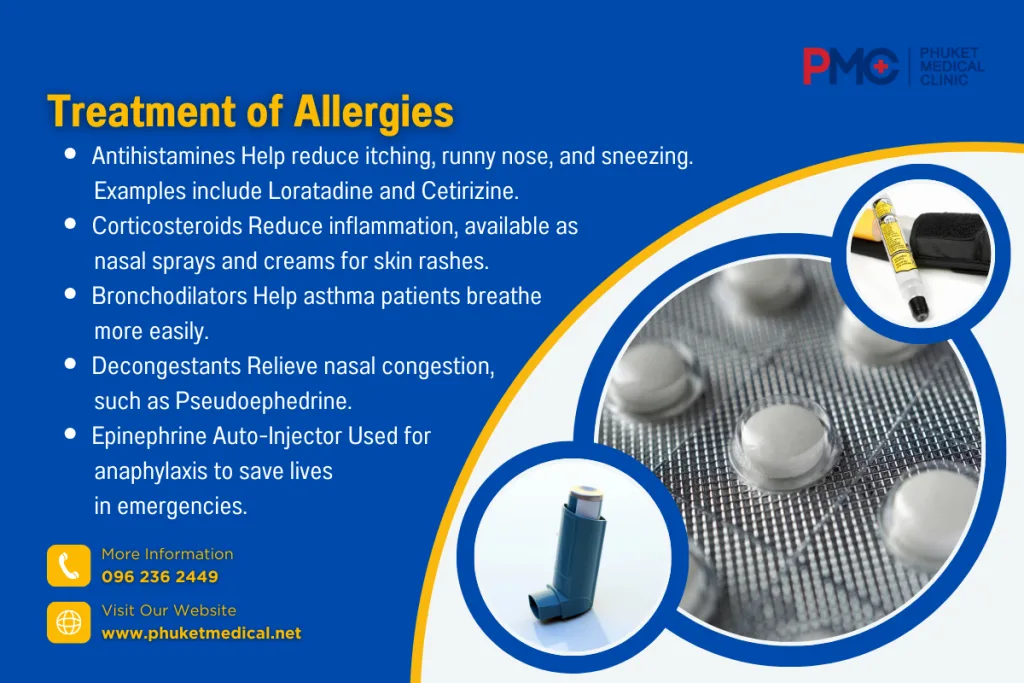
Treatment of Allergies
There are various methods to treat allergies, depending on the type and severity of symptoms, including
- Avoidance The best way is to avoid known allergens. This includes using dust mite-proof pillowcases, avoiding allergic foods, and minimizing contact with pet dander.
- Medications
- Antihistamines Help reduce itching, runny nose, and sneezing. Examples include Loratadine and Cetirizine.
- Corticosteroids Reduce inflammation, available as nasal sprays and creams for skin rashes.
- Bronchodilators Help asthma patients breathe more easily.
- Decongestants Relieve nasal congestion, such as Pseudoephedrine.
- Epinephrine Auto-Injector Used for anaphylaxis to save lives in emergencies.
- Allergy Immunotherapy Allergy shots help build tolerance to allergens by gradually introducing small amounts, reducing the severity of symptoms over time.
- Emergency Treatment For anaphylaxis, immediate use of an Epinephrine injection is necessary, followed by urgent medical care at a hospital.
Prevention of Allergies
Although allergies cannot be entirely prevented, the risk can be reduced and symptoms can be managed through the following methods
- Avoiding Allergens
- Maintain cleanliness in the home to prevent dust and dust mites.
- Use air purifiers to reduce airborne allergens.
- Avoid contact with pet dander and pollen, especially during high pollen seasons.
- Strengthening the Immune System
- Eat a healthy diet and exercise regularly.
- Get sufficient sleep and manage stress effectively.
- Being Cautious with Food and Medication
- Read food and medication labels carefully.
- Avoid products containing allergens.
- Inform doctors and pharmacists about any known allergies before treatment.
- Prevention in Children
- Breastfeeding during the first six months can help reduce the risk of developing allergies.
- Limit exposure to allergens from an early age to prevent allergy development.
Allergy Treatment Services at Phuket Medical Clinic (PMC Phuket Medical Clinic)
Phuket Medical Clinic is a medical center that offers advanced allergy treatments, utilizing modern technology and a team of allergy specialists. Their comprehensive services cover diagnosis, treatment, and prevention, ensuring that patients can enjoy a better quality of life.
Allergy Treatment at Phuket Medical Clinic
- Medical History and Physical Examination
The medical team will inquire about symptoms, exposure to allergens, and family history of allergies. - Skin Prick Test
This test identifies allergens by applying small amounts of allergens to the skin and lightly pricking it to observe allergic reactions. - Blood Test (Specific IgE)
A blood test to analyze the levels of IgE antibodies to detect specific allergens. - Oral Food Challenge
For suspected food allergies, the patient is given small amounts of suspected foods while the doctor closely monitors any reactions. - Pulmonary Function Test
This test is used for patients with asthma or breathing difficulties to assess lung function.
Special Services for Allergy Patients at Phuket Medical Clinic
- Personalized Treatment
Treatments are tailored to the individual needs and physical condition of each patient for optimal results. - Follow-Up Care
Patients receive regular follow-up care to monitor progress and adjust treatment as needed. - Comprehensive Health Check-Up
In addition to allergy treatment, patients can undergo general health check-ups to assess their overall health and prevent other related conditions.
Why Choose Allergy Treatment at PMC Phuket Medical Clinic?
- Expert Medical Team Treatment is provided by doctors specializing in allergies.
- Advanced Technology Accurate diagnostic equipment and effective treatment methods.
- Convenient and Fast Service Book appointments online to reduce waiting time.
- Clean and Safe Environment International standards of hygiene and safety.
- Comprehensive Care From diagnosis and treatment to long-term follow-up care.
Read More Articles
- Learn about respiratory system examinations for better health.
- Get to know chronic diseases, health problems that everyone should be concerned about.
Contact Information
Laguna Branch
Phuket Medical Clinic – Laguna Branch is located at
- 58/1, Choeng Thale Subdistrict, Thalang District, Phuket 83100
- Open daily: Monday – Sunday, 09:00 AM–10:00 PM
- Contact via Line ID: @pmcphuket (Include @)
- Phone number: 096 236 2449
- Clinic Location: https://maps.app.goo.gl/SXaeLrSU9Lx47YPH6
- Online appointment booking: https://pmclaguna.youcanbook.me
Phuket Town Branch
Phuket Medical Clinic – Phuket Town Branch is located at
- 41/7-41/8, Talat Nuea Subdistrict, Mueang Phuket District, Phuket 83000
- Open daily: Monday – Sunday, 09:00 AM–9:00 PM
- Contact via Line ID: @pmcphuket (Include @)
- Phone number: 096 228 2449
- Clinic Location: https://maps.app.goo.gl/yeU9qNArGg3qdwZw9
- Online appointment booking: https://phuketmedicalclinic.youcanbook.me
Boat Lagoon Branch
Phuket Medical Clinic – Boat Lagoon Branch is located at
- 20/96, Moo 2, Thepkrasattri Road, Ko Kaeo Subdistrict, Mueang Phuket District, Phuket 83000
- Open daily: Monday – Sunday, 10:00 AM – 06:00 PM
- Contact via Line ID: @pmcphuket (Include @)
- Phone number: 096 696 2449
- Clinic Location: https://maps.app.goo.gl/HbqfUKMEHXuKwan96
- Online appointment booking: https://pmctown.youcanbook.me
Allergies are common and can vary depending on the allergen and affected body part. Understanding the different types of allergies, their causes, and symptoms helps in effective prevention and symptom management. If severe or frequent allergic reactions occur, consult a doctor for proper diagnosis and treatment to ensure a better quality of life, free from allergic symptoms.
References
- World Health Organization (WHO). Allergies and Immune System Disorders. Comprehensive guidelines on allergy management and prevention. [Online] Available from https//www.who.int
- Centers for Disease Control and Prevention (CDC). Allergies Overview Symptoms, Causes, and Treatments. [Online] Available from https//www.cdc.gov
- National Institute of Allergy and Infectious Diseases (NIAID). Understanding Allergies Types, Diagnosis, and Treatment Options. [Online] Available from https//www.niaid.nih.gov
- Department of Disease Control, Ministry of Public Health, Thailand. Allergies Types, Causes, and Prevention. [Online] Available from https//ddc.moph.go.th
- Food and Drug Administration (FDA), Thailand. Allergens in Food and General Products. [Online] Available from https//www.fda.moph.go.th