

Bottom line: Tirzepatide, sold under Mounjaro and other brand names depending on market and indication, can produce substantial average weight loss in eligible people receiving lifestyle support. The relevant question is not simply “how many kilograms?” but whether likely benefit justifies adverse effects, monitoring and long-term treatment in your circumstances.
This page is independent health education. It contains no price or purchase link and does not promise a prescription, supply or result.
1. Tirzepatide in plain language
A weekly injection
Tirzepatide is a long-acting subcutaneous prescription medicine. A brand name should not be confused with an indication: the locally registered product and label determine lawful use.
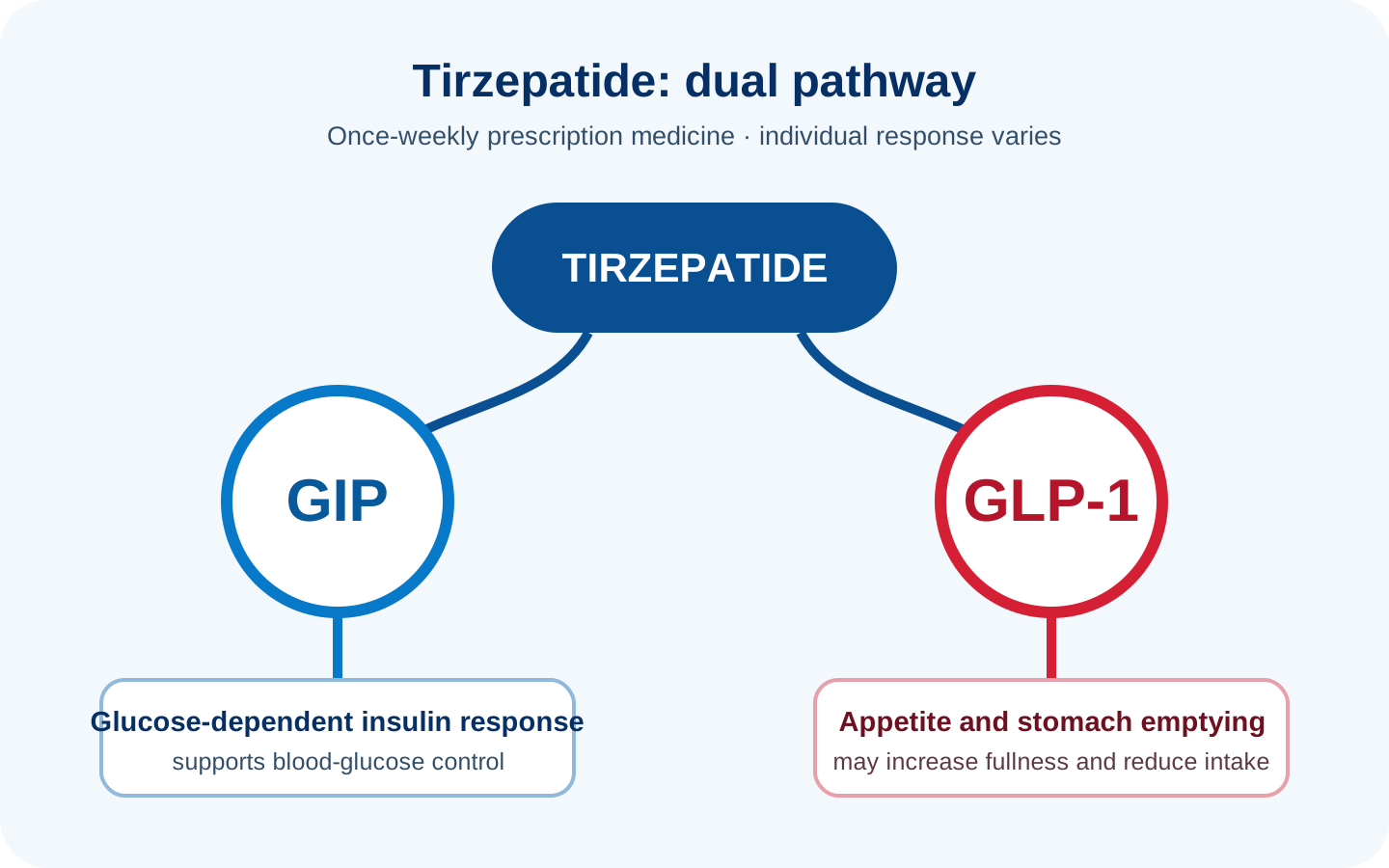
GIP plus GLP‑1
Receptor activity influences glucose-dependent insulin response, glucagon, fullness and gastric emptying, potentially reducing energy intake.
Comparison with semaglutide and liraglutide
Semaglutide (Ozempic/Wegovy) is a weekly GLP‑1 medicine, while liraglutide (Saxenda) is generally a daily GLP‑1 medicine. Tirzepatide also targets GIP; that distinction alone does not establish personal suitability.
Mounjaro and Zepbound
Both contain tirzepatide, but approved indications and product labelling vary by country. Thai registration should be verified at the time of consultation.
2. Interpreting the weight-loss evidence
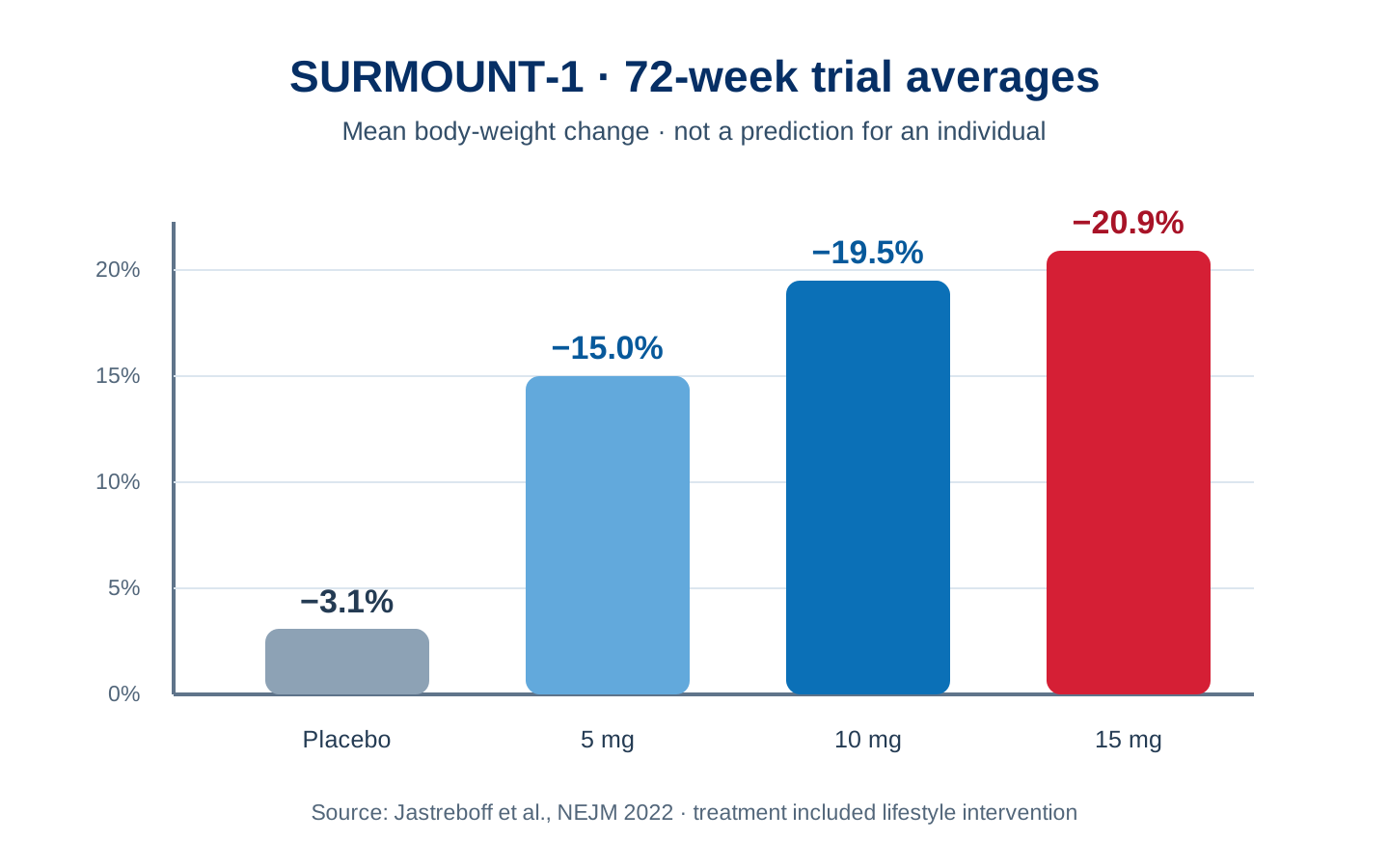
SURMOUNT‑1
At 72 weeks, mean changes were −15.0%, −19.5% and −20.9% for 5, 10 and 15 mg, versus −3.1% for placebo. Participants had obesity or overweight with a complication, no diabetes, and lifestyle support. Trial averages cannot predict a first-month result.
SURMOUNT‑5
Mean loss at 72 weeks was about 20.2% with maximally tolerated tirzepatide and 13.7% with maximally tolerated semaglutide. Clinical selection still depends on indication, risk and tolerability.
Metabolic changes
Trials also reported improvements in waist, glucose, blood pressure and some lipids. Existing diabetes or blood-pressure therapy may need review; do not stop it independently.
3. Eligibility and reasons not to use it
BMI and Asian populations
Weight medicines are commonly considered at obesity thresholds or overweight with complications. Asian metabolic risk may appear at lower BMI, so waist, conditions, tests and previous care matter alongside the calculation.
Contraindications and cautions
- US labelling contraindicates personal/family MTC, MEN2 and serious tirzepatide hypersensitivity.
- Weight-loss treatment is not used in pregnancy; pregnancy planning and breastfeeding require review.
- Past pancreatitis, gallbladder disease, severe delayed gastric emptying and kidney disease need individual assessment.
- Insulin and sulfonylureas may raise hypoglycaemia risk.
Not a short cosmetic intervention
Normal-weight use can expose a person to undernutrition, lean-mass loss and adverse effects without established medical benefit.
4. Dosing, missed doses and storage
Weekly subcutaneous use
Injection sites include abdomen, thigh or upper arm, rotating sites. Training must match the actual device.
Gradual escalation
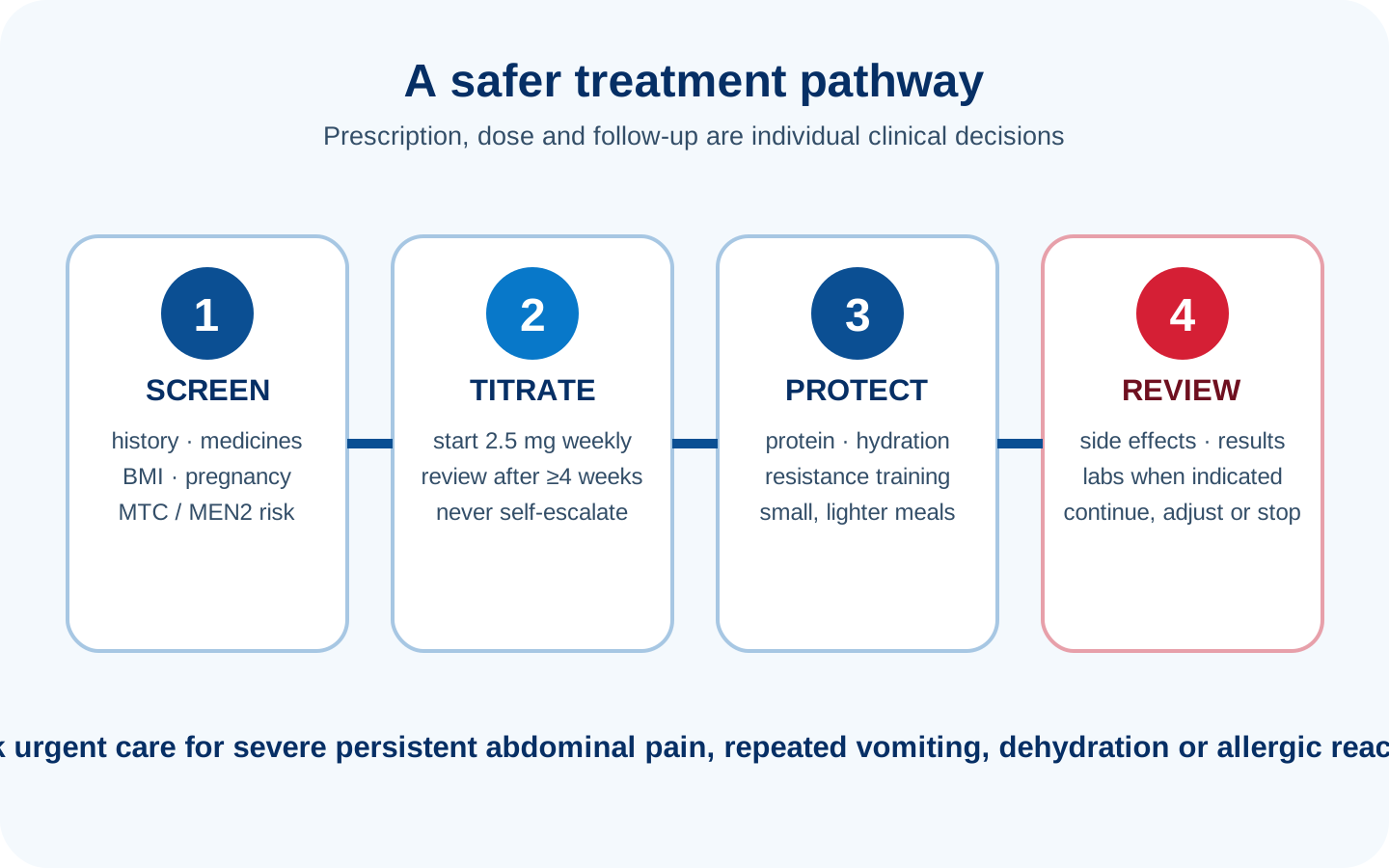
US labelling begins at 2.5 mg weekly for four weeks, then 5 mg, with 2.5 mg increases no sooner than every four weeks if needed, to 15 mg maximum. Follow Thai labelling and your prescription.
Missed dose
US instructions allow administration within 96 hours; after that it is skipped. Keep at least 72 hours between two doses.
Heat matters in Phuket
Protect from light and freezing. US instructions allow 21 days at no more than 30°C, but cars and bags in direct sun can exceed that. Follow the supplied leaflet during travel.
5. Adverse effects and urgent symptoms
Common gastrointestinal effects
Nausea, diarrhoea, constipation, vomiting, dyspepsia, abdominal pain and appetite loss are common, especially during escalation.
Urgent review
- Severe persistent abdominal pain or pain radiating to the back
- Repeated vomiting, little urine, dizziness or dehydration
- Right-upper abdominal pain, fever or jaundice
- Breathing difficulty, swelling or severe allergy
Lean mass and facial change
“Ozempic face” is a media phrase, not a diagnosis and not drug-specific. Rapid weight loss may reduce facial fat and lean tissue, reinforcing the need for nutrition and resistance exercise.
Oral contraceptives
US labelling advises a non-oral method or added barrier for four weeks after starting and after each escalation because delayed gastric emptying may reduce oral contraceptive effectiveness.
6. Weight regain after discontinuation
SURMOUNT‑4
Following a 20.9% mean lead-in loss, those switched to placebo regained 14.0% on average during the randomised year, while continued therapy produced a further 5.5% mean loss.
Plan beyond the active-loss phase
Before starting, agree how benefit will be measured, what adverse effects trigger change, and how nutrition, activity and monitoring continue if treatment stops.
7. Protecting function while weight falls
Protein and nutrient density
Reduced appetite can make inadequate intake easy. Include protein and nutrient-rich foods, individually adjusted for kidney disease and other restrictions.
Resistance training
Adapted strength work two or three times weekly can support function and lean mass. Track strength and waist as well as scale weight.
Practical symptom reduction
- Use smaller meals and eat slowly
- Stop at comfortable fullness
- Sip fluids in Phuket's heat
- Avoid heavy fried food and alcohol when symptomatic
8. Thailand and travel safety
Clinician oversight
Thai law restricts public promotion of controlled medicines. This educational page has no price, purchase route or inducement. Booking is an assessment, not a medicine reservation.
Counterfeit and heat-damaged products
Unverified products may be counterfeit, contaminated, incorrectly dosed or badly stored. Use a lawful medical/pharmacy pathway and retain product documentation while travelling.
PrEP, ART and other medicines
Disclose every oral medicine, hormone, supplement and injectable. Delayed gastric emptying and vomiting may affect some medicine absorption or adherence; exact products require clinician/pharmacist review.
9. Frequently asked questions
How much will I lose in month one?
It cannot be predicted or guaranteed. The first month commonly assesses tolerability at the starting dose.
Can a person without diabetes use it?
Some tirzepatide products have weight-management indications in some countries for eligible people without diabetes; Thai registration and personal eligibility must be checked.
Can I drink alcohol?
Alcohol can worsen nausea, dehydration and hypoglycaemia risk in some people. Avoid it during initiation/escalation and seek individual advice.
Is it better than Ozempic?
Not universally. Mean trial results do not replace assessment of indication, medicines, risks and access.
Can I inject in my hotel?
Only after device training and correct storage. Do not use a pen exposed to excessive heat, freezing or an unverifiable supply chain.
10. Make a benefit–risk plan with a clinician
Bring a medication list, results, weight history, previous strategies and travel itinerary. A clinician can compare medicine and non-medicine options and agree measurable review points.
Book a PMC assessment at Laguna, Circle Clock Tower, Phuket Town or Koh Sirey. Assessment does not guarantee supply or prescription.
References
- Mounjaro USPI
- Zepbound USPI
- SURMOUNT‑1
- SURMOUNT‑5
- SURMOUNT‑4
- Thai FDA advertising FAQ
- FDA concerns: unapproved GLP‑1 products
Reviewed 29 October 2026. General information only, not diagnosis or individual prescribing advice. Local indications may change.