
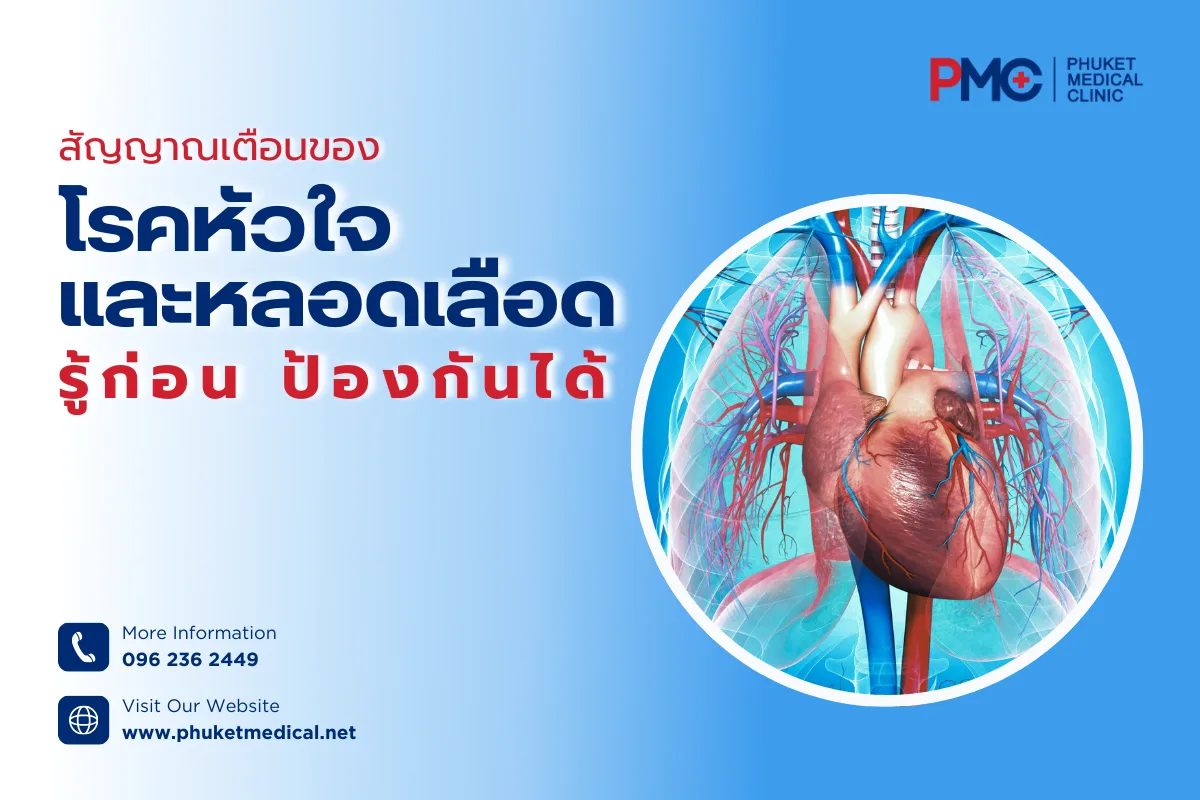
Cardiovascular disease is the leading cause of death worldwide. Although it is a serious disease, it often gives warning signs before symptoms become more severe. Understanding the warning signs and making preventative lifestyle changes can help reduce your risk and increase your chances of living a long, quality life.
What is Cardiovascular Disease?
Cardiovascular Disease is a group of diseases that involve abnormal functioning of the heart and blood vessels, such as:
- Coronary Artery Disease: Narrowing or blockage of the coronary arteries
- Stroke: Blockage or rupture of blood vessels in the brain
- Heart Failure: Decreased function of the heart, unable to pump enough blood
- Valvular Heart Disease: Abnormalities of the heart valves that control blood flow
Warning signs of cardiovascular disease
- Chest pain or tightness
- Pain in the center of the chest that often feels like a pressure or squeeze
- May radiate to the shoulder, arm, or jaw
- A key symptom of coronary artery disease
- Unusually tired
- Feeling tired easily even with light activities, such as walking up the stairs
- May be a sign of heart failure
- Shortness of breath or difficulty breathing
- Feeling like you can’t take a full breath, especially when lying down
- May be a sign of heart failure or heart valve disease
- Swelling in the legs or feet
- Swelling in the ankles or feet due to fluid buildup in the body
- May indicate abnormal heart function
- Irregular heartbeat
- An abnormally fast or slow heartbeat, or a twitching heartbeat
- Is a symptom related to an arrhythmia
- Dizziness or fainting
- Feeling dizzy or lightheaded while standing
- May be caused by low blood pressure or abnormal blood circulation
- Numbness or weakness on one side of the body
- Usually occurs suddenly and is a sign of a stroke
- May also cause problems with speech or vision
Risk factors that cause cardiovascular disease
- Lifestyle behaviors such as consuming foods high in fat and sodium, lack of exercise, smoking and drinking alcohol
- Underlying diseases such as high blood pressure, diabetes or high cholesterol
- Personal factors such as increasing age, genetics
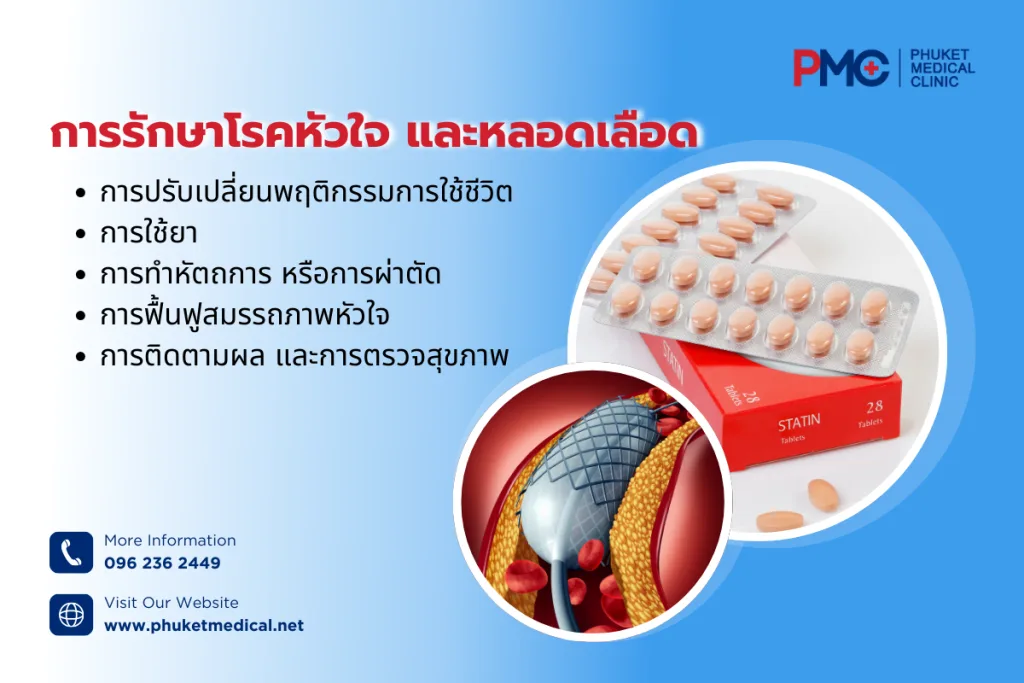
Treatment of cardiovascular disease
Treatment of cardiovascular disease depends on the type and severity of the disease. Common treatments include:
- Lifestyle modification
- Diet: Reduce the consumption of trans fats, salt and sugar, add vegetables, fruits and low-fat protein to your meals.
- Exercise: Do light exercise such as brisk walking, swimming or cycling for at least 150 minutes per week.
- Medication
- Low-lipid-lowering drugs: Such as Statins to reduce bad cholesterol (LDL) and increase good cholesterol (HDL).
- Antihypertensive drugs: Such as ACE inhibitors, Beta-blockers to reduce blood pressure and reduce the burden on the heart.
- Anti-thrombotic drugs: Such as Aspirin or Clopidogrel to reduce the risk of blockage in the blood vessels.
- Procedures or surgeries
- Angioplasty: Use a balloon to expand a narrowed or blocked blood vessel.
- Coronary bypass surgery (CABG): Create a new path for blood to flow through a blocked coronary artery.
- Pacemaker implantation: Used in cases of irregular heartbeat.
- Cardiac rehabilitation, such as a program that includes exercise. Nutritional advice and mental health care to improve quality of life after treatment
- Follow-up and health check-ups
- Regularly monitor blood lipid, blood pressure and blood sugar levels
- Check your heart health with various methods such as EKG, Echocardiogram or Stress Test as advised by your doctor
How to prevent heart disease and blood vessels
- Change your eating habits, reduce your consumption of foods with trans fat and saturated fat, increase your consumption of vegetables, fruits, whole grains and low-fat protein
- Exercise regularly, at least 150 minutes per week, such as brisk walking, swimming or cycling
- Quit smoking and reduce your alcohol consumption. Quitting smoking significantly reduces the risk of heart disease and blood vessels.
- Control stress, practice relaxation techniques such as meditation or yoga
- Regularly check your health, check your blood pressure, blood lipid and blood sugar levels, and if you have a chronic disease such as diabetes, you should closely monitor your treatment.
Cardiovascular Disease Screening at Phuket Medical Clinic, Laguna Branch
Phuket Medical Clinic, Laguna Branch provides heart and blood vessel disease diagnosis services with modern technology and a team of specialist doctors to ensure that you receive proper heart health care.
Cardiovascular Disease Screening Services
- Electrocardiogram (EKG/ECG) to detect heart rhythm
- Echocardiogram (ECHO) to examine the structure of the heart and function of the heart valves
- Exercise Stress Test (EST) to assess ischemic heart disease
- Computed Tomography Coronary Angiography to detect blood vessel blockage
- Check blood fat and blood sugar levels to assess the risk of heart disease
- Check blood pressure and hardening of the arteries
Why do you need a heart scan at Phuket Medical Clinic, Laguna Branch?
- A team of specialist doctors in heart disease provides detailed consultations
- Modern, accurate and safe diagnostic equipment
- Plan treatment according to individual health conditions
- Convenient, fast and private service
If you have any abnormal symptoms, Phuket Medical Clinic Laguna Branch is ready to provide heart and blood vessel health check-up services. Make an appointment and consult today!
Read more articles
- Dealing with diabetes: How to eat and live safely
- Why is high blood pressure called the ‘silent killer’?
Contact Channels
Laguna Branch
- Phuket Medical Clinic, Laguna Branch is located at 58/1, Cherngtalay Subdistrict, Thalang District, Phuket Province 83100
- Open every day, Monday – Sunday, 09.00 – 22.00 hrs.
- Inquire via Line id. @pmcphuket (with @)
- Contact number 096 236 2449
- Clinic map https://maps.app.goo.gl/SXaeLrSU9Lx47YPH6
- Book an appointment online https://pmclaguna.youcanbook.me
Branch in the city
- Phuket Medical Clinic, Phuket City Branch is located at 41/7-41/8, Talat Nuea Subdistrict, Mueang Phuket District, Phuket Province 83000
- Open every day, Monday – Sunday, 09.00 – 22.00 hrs.
- Inquire via Line id. @pmcphuket (with @)
- Contact number 096 228 2449
- Clinic map https://maps.app.goo.gl/yeU9qNArGg3qdwZw9
- Book an appointment online https://phuketmedicalclinic.youcanbook.me
Boat Lagoon Branch
- Phuket Medical Clinic Boat Lagoon Branch is located at 20/96. Moo 2, Thepkrasattri Rd., Koh Kaew Subdistrict, Mueang Phuket District, Phuket Province 83000
- Open every day, Monday – Sunday, 10.00 – 18.00 hrs.
- Inquire via Line ID. @pmcphuket (with @)
- Contact number 096 696 2449
- Clinic map https://maps.app.goo.gl/HbqfUKMEHXuKwan96
- Book an appointment online https://pmctown.youcanbook.me
Heart and blood vessel disease is a preventable disease if we are aware of and understand the warning signs and risk factors. Changing lifestyle behaviors, regular health check-ups, and appropriate treatment can help reduce the risk and control the disease effectively. Good heart health starts with taking care of yourself today!
Reference
- Centers for Disease Control and Prevention (CDC). (2025). Heart Disease Prevention and Management. [ออนไลน์] เข้าถึงได้จาก: https://www.cdc.gov/heartdisease
- World Health Organization (WHO). (2025). Cardiovascular Diseases (CVDs). [ออนไลน์] เข้าถึงได้จาก: https://www.who.int
- American Heart Association (AHA). (2025). Guidelines for Heart Health and Disease Prevention. [ออนไลน์] เข้าถึงได้จาก: https://www.heart.org
- กระทรวงสาธารณสุขแห่งประเทศไทย. (2025). แนวทางเวชปฏิบัติสำหรับโรคหัวใจและหลอดเลือดในประเทศไทย. [ออนไลน์] เข้าถึงได้จาก: https://www.moph.go.th
- สมาคมโรคหัวใจแห่งประเทศไทย (The Heart Association of Thailand – HAT). (2025). แนวทางการดูแลรักษาโรคหัวใจ และหลอดเลือดสำหรับประชาชนไทย. [ออนไลน์] เข้าถึงได้จาก: https://www.thaiheart.org