
Diabetes is a chronic health problem caused by abnormalities in blood sugar control. If left untreated, it can lead to serious complications such as heart disease, kidney disease, and eye disease. Changing eating habits and lifestyle are important to help control blood sugar levels and prevent complications. This article will provide you with self-care methods to manage diabetes safely and effectively.
What is diabetes?
Diabetes Mellitus is caused by abnormalities of the hormone insulin, which controls blood sugar. It is divided into 3 main types:
- Type 1 Diabetes is caused by the body’s inability to produce insulin. It is often found in children or adolescents.
- Type 2 Diabetes is caused by the body’s resistance to insulin or insufficient insulin production. It is common in adults and overweight people.
- Gestational Diabetes occurs in pregnant women and usually disappears after childbirth, increasing the risk of developing type 2 diabetes in the future.
Effects of diabetes on the body
- High blood sugar levels can damage blood vessels and important organs such as the kidneys, heart, and eyes.
- Increases the risk of complications such as heart disease, stroke, and diabetic ulcers.
Dietary principles for diabetics
- Control the amount of carbohydrates Choose carbohydrates with a low glycemic index, such as brown rice, whole grains, and sweet potatoes. Avoid refined sugar, sweets, and soda.
- Increase dietary fiber in your meals. Vegetables and fruits that are high in fiber, such as green leafy vegetables, apples, and berries, because dietary fiber helps reduce sugar absorption and control blood sugar.
- Eat good-quality protein, lean meats such as chicken, fish, or tofu, and nuts or grains such as almonds and peanuts.
- Reduce saturated fat and trans fat consumption. Choose olive oil, rice bran oil, or avocado. Avoid fried foods and baked goods that contain trans fat.
- Control salt intake. Reduce the use of salt in food to reduce the risk of high blood pressure.
- Arrange balanced meals and at regular times. Eat the right amount of food at each meal to control blood sugar levels.
Diabetes treatment
Diabetes treatment focuses on controlling blood sugar levels to be normal to prevent complications:
- Diet control. Eat foods with a low glycemic index (low glycemic index) and choose foods that are high in fiber to help slow down the absorption of sugar.
- Exercise. Exercise regularly, such as brisk walking, swimming, or cycling. Increases the body’s sensitivity to insulin
- Medication Use of blood sugar-lowering pills, such as Metformin for type 2 diabetes or insulin for type 1 and some types 2 diabetes
- Health check-ups and follow-ups Regularly check your blood sugar and hemoglobin A1c levels, and have your eyes, kidneys, and blood vessels checked to prevent complications
- Mental health care Stress can increase your blood sugar levels. Try meditation or relaxation activities.
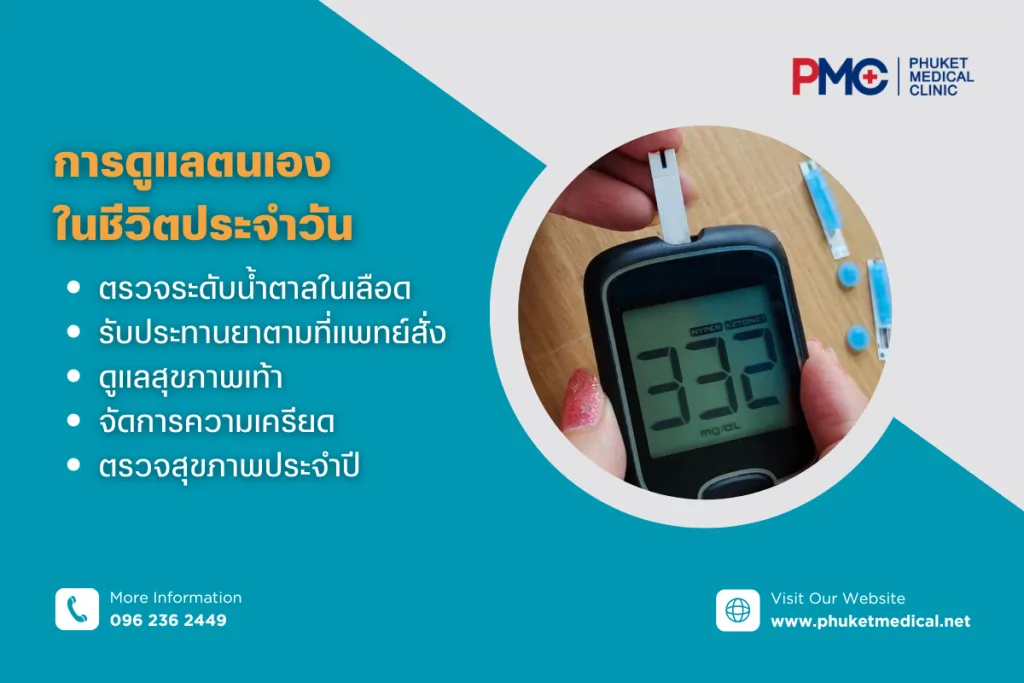
Daily self-care
- Check your blood sugar level. Check your blood sugar level regularly as advised by your doctor.
- Take your medication as prescribed by your doctor. Do not stop taking it or adjust the dosage yourself.
- Take care of your feet. Check for wounds or cracks on your feet by wearing appropriate and clean shoes.
- Manage stress. Use relaxation techniques such as meditation or deep breathing.
- Have an annual health check-up. Check your heart, kidneys and eyes to monitor for complications.
Things to avoid
- Avoid sweet foods and refined flour such as white rice, white bread and cake.
- Stop smoking and drinking alcohol, which increase the risk of heart and blood vessel disease.
- Avoid skipping meals. Skipping meals can cause your blood sugar level to fluctuate.
Additional tips for a safe life with diabetes
- Plan your menu in advance to avoid eating indulgently.
- Carry snacks suitable for diabetic patients, such as nuts or fresh fruit.
- Maintain good relationships with family and friends for emotional support.
Diabetes screening at Phuket Medical Clinic, Laguna Branch
Phuket Medical Clinic, Laguna Branch provides comprehensive diabetes diagnosis and follow-up services with the following highlights:
- Blood sugar testing uses modern technology to detect diabetes, such as fingertip blood sugar testing (FBS) and hemoglobin A1c (HbA1c) testing.
- Risk assessment Assess the risk of diabetes in the early stages for those with a family history or risky behavior.
- Personalized counseling, nutritional advice, behavior modification, and exercise by experts.
- Follow-up There is a treatment follow-up system to help patients control their blood sugar levels effectively.
- Comprehensive services Check heart, kidney, and eye health to monitor complications from it.
Phuket Medical Clinic, Laguna branch is ready to take care of your health completely with a team of expert doctors and high-standard services!
Read more articles
- Get to know chronic diseases, health problems that everyone should be concerned about
- What is a blood test? What do blood test results say? Find the answer for good health
Contact Channels
Laguna Branch
- Phuket Medical Clinic, Laguna Branch is located at 58/1, Cherngtalay Subdistrict, Thalang District, Phuket Province 83100
- Open every day, Monday – Sunday, 09.00 – 22.00 hrs.
- Inquire via Line id. @pmcphuket (with @)
- Contact number 096 236 2449
- Clinic map https://maps.app.goo.gl/SXaeLrSU9Lx47YPH6
- Book an appointment online https://pmclaguna.youcanbook.me
Branch in the city
- Phuket Medical Clinic, Phuket City Branch is located at 41/7-41/8, Talat Nuea Subdistrict, Mueang Phuket District, Phuket Province 83000
- Open every day, Monday – Sunday, 09.00 – 22.00 hrs.
- Inquire via Line id. @pmcphuket (with @)
- Contact number 096 228 2449
- Clinic map https://maps.app.goo.gl/yeU9qNArGg3qdwZw9
- Book an appointment online https://phuketmedicalclinic.youcanbook.me
Boat Lagoon Branch
- Phuket Medical Clinic Boat Lagoon Branch is located at 20/96. Moo 2, Thepkrasattri Rd., Koh Kaew Subdistrict, Mueang Phuket District, Phuket Province 83000
- Open every day, Monday – Sunday, 10.00 – 18.00 hrs.
- Inquire via Line ID. @pmcphuket (with @)
- Contact number 096 696 2449
- Clinic map https://maps.app.goo.gl/HbqfUKMEHXuKwan96
- Book an appointment online https://pmctown.youcanbook.me
Managing diabetes requires complete self-care, including diet, exercise, and following your doctor’s advice. Lifestyle changes and regular health care can help you effectively control your diabetes and live a quality life. Good health starts with taking care of yourself today!
Reference
- Centers for Disease Control and Prevention (CDC). “Diabetes Overview.” Detailed information on diabetes types, management, and prevention. [ออนไลน์] เข้าถึงได้จาก https://www.cdc.gov/diabetes/basics/index.html
- World Health Organization (WHO). “Diabetes: Key Facts and Recommendations.” Guidelines on prevention and management of diabetes. [ออนไลน์] เข้าถึงได้จาก https://www.who.int/news-room/fact-sheets/detail/diabetes
- American Diabetes Association (ADA). “Healthy Living with Diabetes.” Comprehensive resources for diabetes management. [ออนไลน์] เข้าถึงได้จาก https://www.diabetes.org
- สมาคมโรคเบาหวานแห่งประเทศไทย. “คู่มือการจัดการโรคเบาหวาน.” แหล่งข้อมูลเกี่ยวกับการป้องกันและจัดการโรคเบาหวาน. [ออนไลน์] เข้าถึงได้จาก http://www.dmthai.org
- กระทรวงสาธารณสุขแห่งประเทศไทย. “การจัดการโรคเบาหวานในประเทศไทย.” ข้อมูลและแนวทางปฏิบัติ. [ออนไลน์] เข้าถึงได้จาก http://www.ddc.moph.go.th