
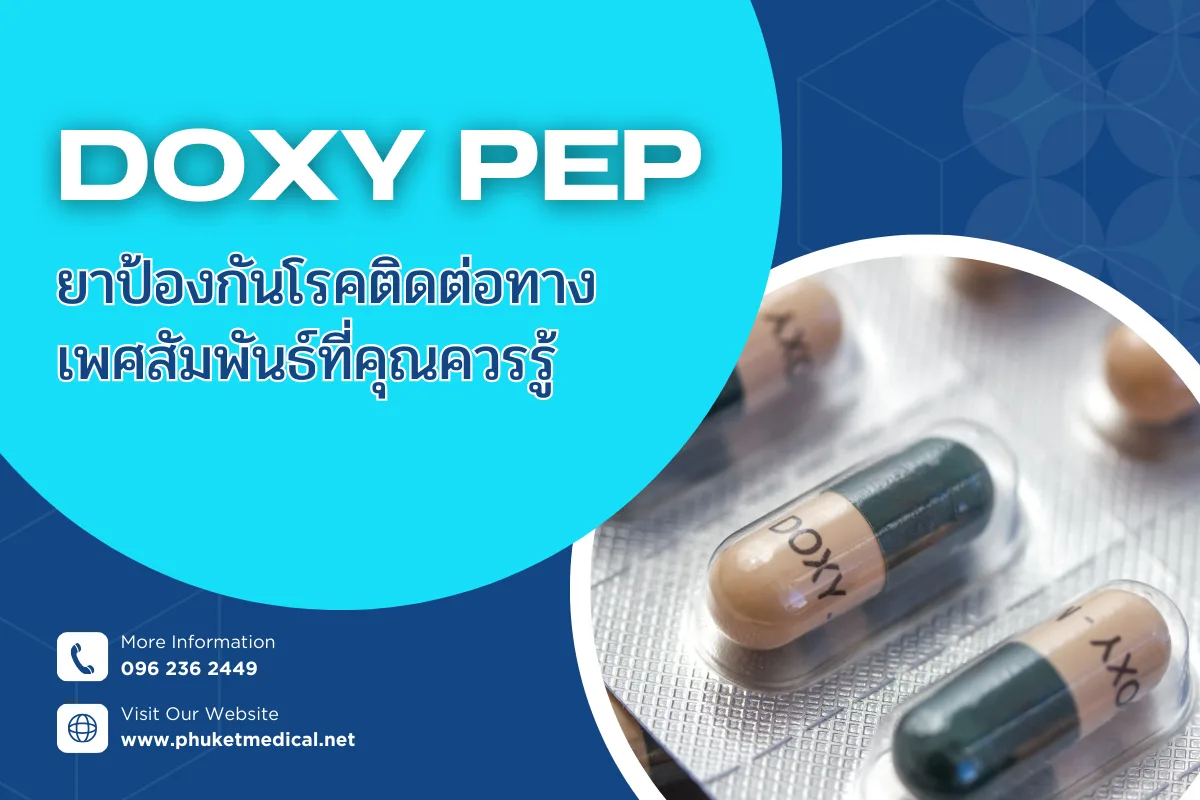
Sexually transmitted diseases (STDs) remain a major health problem worldwide. Despite a number of preventive measures, such as condoms and regular check-ups, there is still a chance that people at high risk of becoming infected can become infected. That’s why newer approaches like Doxy PEP (Doxycycline Post-Exposure Prophylaxis) are being introduced to reduce the chances of contracting certain bacterial infections. The antibiotic doxycycline is taken within 24-72 hours after sex.
Research has shown that Doxy PEP can effectively reduce the risk of bacterial STDs such as syphilis, gonorrhea, and chlamydia, which is particularly beneficial for high-risk populations. However, while Doxy PEP can be a great tool to reduce the risk of certain infections, it also has limitations and precautions that should be known before using it.
What is Doxy PEP?
Doxy PEP (Doxycycline Post-Exposure Prophylaxis) is a preventive measure against sexually transmitted diseases (STDs) by taking an antibiotic called Doxycycline within 24-72 hours after sex to reduce the chances of contracting certain STDs. Medical research has shown that Doxy PEP can effectively reduce the risk of infection, as follows:
- Syphilis: Reduces risk by 80%-90%
- Chlamydia: Reduces risk by 70%-80%
- Gonorrhea: Reduces risk by approximately 50%
Why use Doxy-PEP? A new option for preventing STDs
STD rates remain high
Despite efforts to campaign and promote condom use and regular screening services, STDs remain a major problem in many countries, especially among those with high-risk behaviors, such as:
- Men who have sex with men (MSM)
- Transgender women
- People with multiple partners
- People who cannot consistently use condoms
According to the World Health Organization (WHO), more than 374 million STDs are contracted worldwide each year, including those that can be prevented with Doxy-PEP, such as syphilis, non-gonococcal urethritis, and gonorrhea.
Therefore, using Doxy-PEP can effectively reduce the rate of these bacterial infections, which is an important supplementary measure.
Long-term health effects of STDs
STIs caused by bacteria may not show symptoms in the early stages, but if left untreated, they can lead to serious complications, such as:
- Infertility. Non-gonococcal urethritis and gonorrhea can cause inflammation of the reproductive system, causing blocked fallopian tubes.
- Complications during pregnancy. If a pregnant woman is infected with syphilis, it can result in a baby with birth defects or premature birth.
- Infections in other body systems, such as infections of the eyes, lungs, and joints.
- Increased risk of infection with HIV. Some STDs, such as syphilis, can increase the chances of contracting HIV by 2-3 times, because they cause wounds in the genital lining and make it more susceptible to infection.
Using Doxy-PEP can therefore help reduce the risk of these complications. And help maintain safer sexual health
Antibiotic resistance problem
Currently, many types of bacteria that cause sexually transmitted diseases are becoming more resistant to antibiotics, especially gonorrhea, which has been reported to have more strains that are resistant to multiple drugs.
Preventing infection from the beginning is an important approach to reduce the need for antibiotics and reduce the chances of developing drug resistance in the long term. Doxy-PEP is a measure that helps prevent infection early on to reduce the use of antibiotics in the long term.
Reduce the public health burden
Treating sexually transmitted diseases requires a lot of medical resources, both in terms of diagnosis, treatment and follow-up.
If the infection rate can be reduced from the beginning, Doxy-PEP can greatly reduce the burden on medical personnel and the cost of medical treatment, especially in countries with high infection rates.
Increase prevention options
Although condoms and screening are already good prevention methods, there are sometimes limitations, such as:
- Condoms may break or not be used every time.
- Screening for sexually transmitted diseases can be expensive or not easily accessible.
- Some people may not feel comfortable using condoms with their partners.
Doxy-PEP is another option for prevention that can be used in conjunction with other measures to increase safety.
Who is Doxy PEP suitable for?
Doxy PEP is recommended for populations at high risk of contracting STDs, such as:
- Men who have sex with men (MSM) Men who have sex with men are at high risk of contracting STDs, such as syphilis, gonorrhea, and chlamydia.
- Transgender Women Transgender women who have sex in high-risk groups can use Doxy PEP to help reduce the chances of contracting STDs.
- Bisexual men Having sex with a variety of genders increases the chances of contracting STDs, making Doxy PEP an appropriate prevention tool for this group.
Limitations
For women who have sex with men, there is not enough research to make a clear recommendation for the use of Doxy PEP. Other barrier methods, such as condoms and regular STD checkups, should be used.
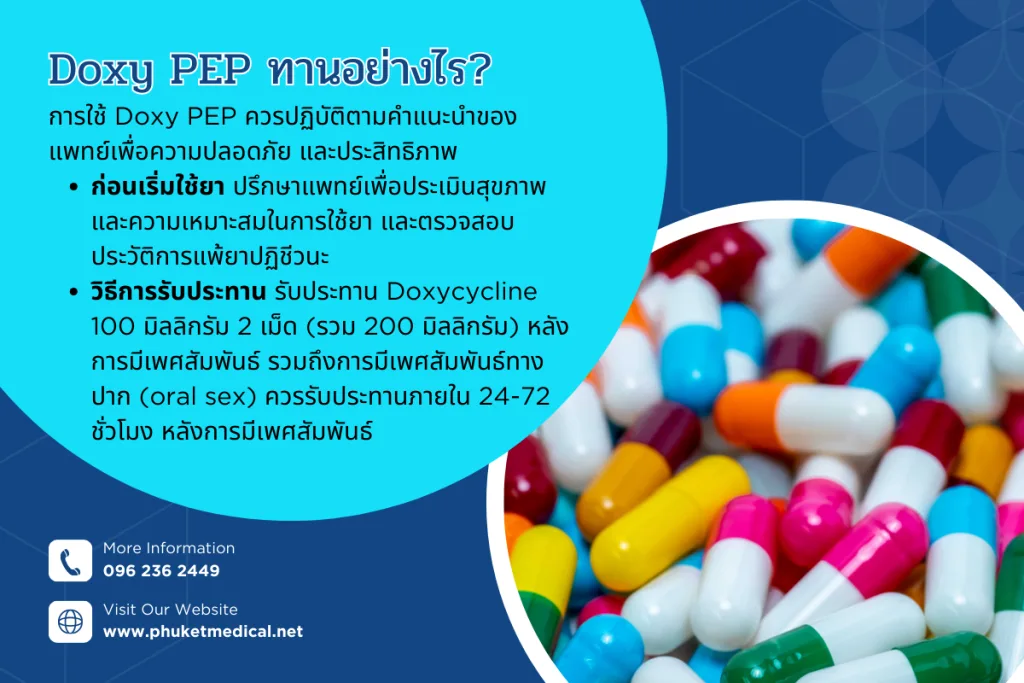
How to take Doxy PEP?
Doxy PEP should be taken as directed by a doctor for safety and effectiveness.
- Before starting to use the drug, consult a doctor to assess your health and suitability for use, and check your history of antibiotic allergies.
- How to take: Take 2 tablets of Doxycycline 100 mg (total 200 mg) after sexual intercourse, including oral sex. It should be taken within 24-72 hours after sexual intercourse.
- Precautions: Do not use more than necessary to prevent future drug resistance problems. Take the full course of medication as recommended by your doctor.
Benefits and considerations for using Doxy-PEP: A new option for preventing sexually transmitted diseases
Benefits of Doxy-PEP
- Easy to use: Doxy-PEP is an oral antibiotic, making it convenient to use. It does not require injections, does not require special equipment, and can be taken within 24-72 hours after sexual exposure.
- Reduce concerns about sexually transmitted diseases For those who are concerned about getting infected, Doxy-PEP can effectively reduce the risk of bacterial infections such as syphilis, chlamydia, and gonorrhea, giving users more confidence in their lives.
- Can be used with PrEP If you are taking PrEP (Pre-Exposure Prophylaxis) to prevent HIV infection, you can use Doxy-PEP in conjunction with it to reduce the risk of bacterial STDs, providing more comprehensive protection.
- It is highly effective in preventing STDs. Studies have shown that Doxy-PEP can significantly reduce the rate of infection.
- It reduces the chance of getting syphilis by 80%-90%.
- It reduces the chance of getting chlamydia by 70%-80%.
- It reduces the chance of getting gonorrhea by 50%.
- This is an interesting result, and it makes Doxy-PEP another important option for preventing STDs.
- It is an additional option for those at high risk. While condoms and sexual health screenings are good preventive measures, in some cases, Doxy-PEP is an alternative that can provide additional protection. Especially in high-risk groups, such as:
- Men who have sex with men (MSM)
- Transgender Women
- People who have multiple partners
- People who have sex without condoms regularly
Considerations for using Doxy-PEP
- Side effects may occur. Although the side effects of Doxy-PEP are not serious in most users, some side effects may occur, such as:
- Nausea, vomiting
- Abdominal pain, diarrhea
- Skin rash
- Sensitivity to sunlight (avoid exposure to strong sunlight after taking the drug)
- If you experience severe side effects, such as a rash, hives, or difficulty breathing, stop taking the drug and consult a doctor immediately.
- Risk of drug resistance: Overuse of antibiotics can cause bacteria to develop drug resistance, which is a global problem. Therefore, Doxy-PEP should be used only when necessary and should not be used daily.
- Not for everyone. Doxy-PEP is not suitable for everyone, especially in the following groups:
- People who are allergic to Doxycycline
- People who have kidney, liver, or chronic gastrointestinal problems
- Pregnant or breastfeeding women
- People who take other medications that may interact with Doxycycline (such as certain antacids Or Warfarin)
- Therefore, before using Doxy-PEP, always consult a doctor.
- Cannot prevent HIV infection
- Although Doxy-PEP can help prevent STDs caused by bacteria, it cannot prevent HIV infection.
- Therefore, those who are at high risk of HIV infection should also use PrEP (PrEP) to increase the effectiveness of disease prevention.
- Cannot be used instead of condoms
- Doxy-PEP is not an option that can be used instead of condoms because it cannot prevent Hepatitis B, Hepatitis C, Herpes, and HPV (Human Papillomavirus).
- Cannot prevent pregnancy
- Therefore, condoms should be used every time you have sex to reduce the risk of disease and prevent unwanted pregnancy.
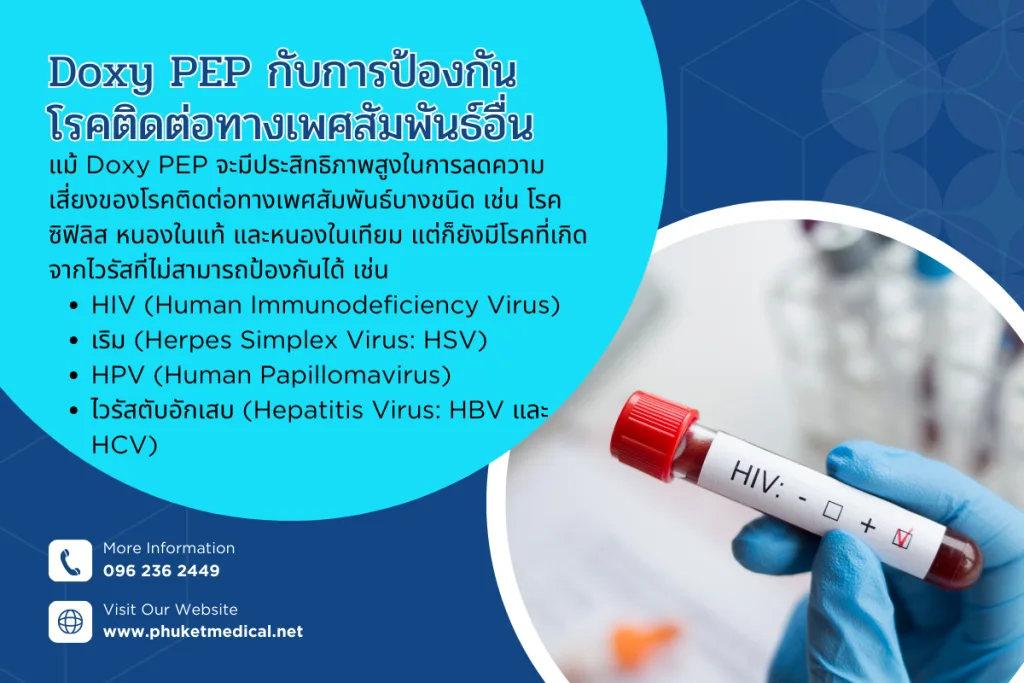
Doxy PEP and Other STD Prevention
While Doxy PEP is highly effective in reducing the risk of certain STDs, such as syphilis, gonorrhea, and chlamydia, there are still some viral infections that cannot be prevented, such as:
- HIV (Human Immunodeficiency Virus)
- A virus that destroys the body’s immune system.
- Effective prevention: Use PrEP (Pre-Exposure Prophylaxis) or PEP (Post-Exposure Prophylaxis).
- Always use condoms.
- Herpes Simplex Virus (HSV)
- Caused by the herpes simplex virus HSV-1 and HSV-2.
- There is no cure and it can recur.
- HPV (Human Papillomavirus)
- This is the virus that causes genital warts and is associated with cervical and penile cancers.
- Prevention: Get the HPV vaccine and use condoms.
- Hepatitis Virus (HBV and HCV)
- Transmitted through blood and bodily fluids
- Prevention: Hepatitis B (HBV) vaccination and avoid sharing personal items
Prevention of other sexually transmitted diseases that should be practiced together
- Use of condoms Correct use of condoms is the most effective way to prevent sexually transmitted diseases and also reduces the risk of unwanted pregnancy.
Advantages
- Prevents sexually transmitted diseases caused by viruses and bacteria
- Easy to use, easy to find
- Helps reduce the chance of pregnancy
Disadvantages
- Must be used correctly, otherwise it may reduce the effectiveness of protection
- May cause an allergic reaction to some condoms
- If not used all the time during sex, there is a risk of infection
Regular screening for sexually transmitted diseases Sexual health check-ups are important to help detect infections from the beginning. And can receive treatment in time
Advantages
- Helps to cure the disease faster
- Reduces the chance of spreading the infection to your partner
- Prevents complications from sexually transmitted diseases
Disadvantages
- May cost money for a health check
- Some people may feel uncomfortable getting tested
- Recommendation Should be screened at least 1-2 times a year, or more often if at high risk
- Reducing risky behaviors
- Reduce the number of sexual partners Having multiple sexual partners increases the risk of infection
- Avoid having sex with strangers
- Refrain from having sex while intoxicated or using drugs Because having sex without consciousness Can lead to a lack of proper protection
- Providing knowledge and education
- Provide knowledge about sexually transmitted diseases Because having accurate information helps you make better decisions to protect yourself
- Promote open and safe communication about sex
- Raise awareness of the importance of prevention
- Reduce biases related to HIV infection and sexually transmitted diseases
- Using PrEP for HIV prevention PrEP is an antiretroviral drug used in people who are not yet infected with HIV. To prevent infection Suitable for high-risk groups such as
- Men who have sex with men (MSM)
- People with multiple sexual partners
- Partners of people with HIV
- Considerations for PrEP
- To get the best results, you must take the medication daily.
- You must be under the guidance of your doctor and have regular checkups.
- It does not protect against other sexually transmitted diseases, such as syphilis, gonorrhea, or herpes.
What is the difference between Doxy-PEP and PEP?
Currently, there are several methods of preventing sexually transmitted diseases that have been developed to help reduce the risk of infection, including Doxy-PEP (Doxycycline Post-Exposure Prophylaxis) and PEP (Post-Exposure Prophylaxis). Both methods are primarily intended to prevent diseases that are caused by sexual intercourse or contact with an infected person. However, they differ in their purpose and the diseases that can be prevented.
What is Doxy-PEP?
Doxy-PEP is the use of the antibiotic doxycycline in a dose of 100 milligrams, 2 tablets, after risky sex within 24-72 hours. This drug is effective in preventing sexually transmitted diseases caused by bacteria, such as:
- Syphilis: Reduces the risk by 80%-90%
- Chlamydia: Reduces the risk by 70%-80%
- Gonorrhea: Reduces the risk by approximately 50%
Doxy-PEP is suitable for people at high risk, such as those who have multiple partners, those who do not use condoms. Or those whose condoms break or tear during sex
What is PEP?
PEP (Post-Exposure Prophylaxis) is an emergency antiretroviral medication used to prevent HIV infection after exposure to the body fluids or blood of an infected person. The medication should be started within 72 hours after exposure and must be continued for 28 days.
PEP is especially important for the following cases:
- Unprotected sex with someone who is HIV-positive or whose status is unclear
- Being stabbed by a needle contaminated with blood in the case of a healthcare worker
- Exposure to the blood or body fluids of an HIV-infected person
What is the difference between Doxy-PEP and PEP
| Topics | Doxy-PEP | PEP |
| What does it protect against? | STDs caused by bacteria, such as syphilis, gonorrhea, non-gonococcal urethritis | HIV |
| How to use | Take 2 tablets of Doxycycline 100 mg within 24-72 hours after sex. Start taking PEP within 72 hours and continue for 28 days. | เริ่มรับประทานยา PEP ภายใน 72 ชั่วโมง และทานต่อเนื่องเป็นเวลา 28 วัน |
| Efficacy | Prevents only diseases caused by bacteria. | Prevents HIV infection if used correctly. |
| How to use together? | Can be used together to prevent multiple STDs at the same time. | Used together with Doxy-PEP to prevent diseases caused by viruses and bacteria. |
Guidelines for Responsible Use of Doxy-PEP in a Safe and Effective Way
Therefore, it is important to follow the guidelines for responsible use of Doxy-PEP to maintain the effectiveness of the drug and reduce possible side effects in the future.
Talk to your doctor before starting the drug.
- You should talk to your doctor or a specialist in sexually transmitted diseases.
- Your doctor will help you assess whether you are suitable for Doxy-PEP.
- Check your medical history, including allergies to the drug.
- Reason: Unnecessary use of antibiotics can lead to drug resistance. If you are not at high risk for STDs, Doxy-PEP may not be the right choice for you.
Take the drug exactly as directed by your doctor.
- Take 2 tablets of Doxycycline 100 mg within 24-72 hours after sex.
- Do not take more than necessary or every time you have sex.
- If you have any questions about using the drug, ask your doctor or pharmacist.
- Reason: Overuse of the drug increases the chance that the bacteria will become drug-resistant and reduces the effectiveness of future treatment.
Do not use Doxy-PEP instead of other methods of birth control.
- Use condoms every time you have sex.
- Consider using PrEP (Pre-Exposure Prophylaxis) to prevent HIV.
- Avoid risky behaviors, such as having multiple partners or having unprotected sex.
- Reason Doxy-PEP does not protect against all STDs, such as HIV, HPV, and herpes. Therefore, condoms and PrEP are still important prevention methods.
Regular sexual health checkups
- STI should be tested regularly, at least every 3-6 months.
- Get screened for HIV and other STDs, such as syphilis, gonorrhea, and hepatitis.
- If you are infected, seek treatment as soon as possible.
- Reason Some STDs may not have symptoms in the early stages, but can be transmitted to others. Regular health checkups allow for timely treatment.
Reason Understand the limitations of Doxy-PEP
- Understand that Doxy-PEP does not protect against viral diseases, such as HIV (PrEP or PEP is required), HPV (HPV vaccination is recommended), herpes simplex virus (HSV), and hepatitis (HBV, HCV). It should be used in conjunction with other preventive measures for maximum effectiveness.
- Reason Although Doxy-PEP can reduce the risk of bacterial infection, STD prevention requires a combination approach for maximum safety.
Report side effects to your doctor
- Possible side effects include nausea, stomach pain, diarrhea, and photophobia. If you experience serious side effects, such as a severe allergic rash, hives, or difficulty breathing, stop taking the medication and see your doctor right away.
- Reason: Although Doxy-PEP is a safe medication, some side effects can affect your health.
Get vaccinated against sexually transmitted diseases.
- Vaccines that you should get include the hepatitis B (HBV) vaccine, the HPV vaccine to prevent cervical cancer and genital warts, and the monkeypox (Mpox) vaccine.
- Reason: Vaccination can help reduce the risk of contracting certain viruses that cannot be prevented with Doxy-PEP.
Do not share the medication with others.
- Doxy-PEP is a medication that must be used under the direction of a doctor.
- If your sexual partner wants to use it, they should talk to their doctor for advice.
- Reason: Using the medication without a doctor’s advice may cause drug resistance and may not be suitable for everyone.
Future Trends and Challenges of Sexually Transmitted Disease Prevention
Although there have been significant advances in the prevention and treatment of STDs in recent years, major challenges remain, including antibiotic resistance, changes in sexual behavior, access to healthcare services, and vaccine development. Integrating technology into the healthcare system is another factor that can help reduce the rate of new infections and enable those at risk to receive more effective healthcare services.
Key Challenges of Sexually Transmitted Disease Prevention
Antibiotic Resistance
The bacteria that cause diseases such as gonorrhea, syphilis, and chlamydia are increasingly developing antibiotic resistance. Currently, multidrug-resistant gonorrhea (super gonorrhea) has spread in many countries, limiting treatment options. Therefore, the use of Doxy-PEP may help reduce the rate of infection of some infections. However, in the long term, continuous use of antibiotics may promote drug resistance. Therefore, it is necessary to develop new antibiotics and control their use effectively to reduce the problem of drug resistance.
Changes in sexual behavior
The use of dating apps has led to more frequent sexual partners, increasing the risk of STIs, and changing attitudes towards condom use, causing some groups to use condoms less. Especially in the group receiving PrEP to prevent HIV, providing correct sexual health education is important to encourage people to be aware of appropriate prevention.
Inequality in access to medical services In some areas,
especially rural or remote areas, those at risk may not have the opportunity to receive medical services for sexually transmitted diseases. Due to economic and social barriers, some groups, such as migrant workers, LGBTQ+ and sex workers, are unable to access screening and preventive medicines. It is necessary to have a public health policy that allows everyone to have equal access to preventive and treatment services for sexually transmitted diseases.
Development of vaccines to prevent sexually transmitted diseases
Currently, there are vaccines to prevent some diseases, such as the HPV (Human Papillomavirus) vaccine and the Hepatitis B (HBV) vaccine. However, there is no vaccine that can prevent other sexually transmitted diseases, such as syphilis, gonorrhea and non-chlamydia. Therefore, scientists are accelerating the development of vaccines to prevent bacteria that cause sexually transmitted diseases, which may help reduce the dependence on antibiotics and the problem of drug resistance.
Integration of prevention and treatment services
A new trend in sexual health services is the One-Stop Service or a complete service that includes counseling. HIV and STI screening, as well as PrEP, PEP and Doxy-PEP, are all available in one place. Using digital technologies such as online counseling apps and medication reminders, users can better monitor their health.
Doxy-PEP and its role in controlling STDs
Although DoxyPEP is a highly effective tool in reducing the rate of STD bacterial infections, societal control requires a variety of measures, such as:
- Sex education and prevention of STDs
- Promoting safe sexual behavior
- Access to quality medical services, such as screening and treatment of STDs
DoxyPEP should be an additional option in STD prevention measures, and should not be used as a primary prevention method, as using it alone may lead to increased health risks in the future.
Precautions and recommendations
- Doxy-PEP cannot prevent viral infections, such as HIV, herpes, HPV, and hepatitis. Therefore, condoms and PrEP should be used to prevent viruses as well.
- Using Doxy-PEP and PEP together If there is a high risk of both bacterial and viral infections, Doxy-PEP and PEP can be used together. However, a doctor should be consulted for appropriate advice.
- Proper use of both Doxy-PEP and PEP should always be under the supervision of a doctor to prevent drug resistance. And reduce possible side effects
Where to buy Doxy-PEP, how much does it cost?
Since Doxy-PEP is an antibiotic that must be used under the supervision of a doctor, it cannot be purchased from general pharmacies or online stores. If you want to use the drug, you should consult a doctor and have a health check-up to ensure that it is suitable for use.
Where to get Doxy-PEP in Thailand Currently, there are many medical facilities that provide Doxy-PEP for people at high risk, including:
- Bangkok: Safe Clinic
- Chiang Mai: Hugsa Klang Wiang
- Phuket: Phuket Medical (Laguna), Phuket Medical (Boat Lagoon) and Phuket Medical (in the city)
- Surat Thani: Wiraphong Clinic
Note
- The price of the drug may vary depending on the service provider.
- Additional costs may apply, such as health check-up fees and doctor consultation fees.
- Get Doxy-PEP at Phuket Medical Clinic, Laguna Branch
Phuket Medical Clinic, Laguna Branch offers drug dispensing services. Doxy-PEP (Doxycycline Post-Exposure Prophylaxis) for the prevention of sexually transmitted diseases such as syphilis, gonorrhea, and non-gonococcal urethritis. The medical team will provide consultation, health check-up, and prescribe medication as appropriate.
Steps for receiving the service
- Consult a doctor to assess the risks and appropriateness of medication use.
- Receive advice on how to use medication correctly.
- Follow up and consult further as scheduled.
Make an appointment in advance for your convenience at Phuket Medical Clinic Laguna Branch, where our team of expert doctors will be ready to serve you.
Read more articles
- Syphilis: Causes, Symptoms, Treatment and Prevention
- Gonorrhea: Knowledge about causes, symptoms, treatment and prevention
Contact Channels
Laguna Branch
- Phuket Medical Clinic, Laguna Branch is located at 58/1, Cherngtalay Subdistrict, Thalang District, Phuket Province 83100
- Open every day, Monday – Sunday, 09.00 – 22.00 hrs.
- Inquire via Line id. @pmcphuket (with @)
- Contact number 096 236 2449
- Clinic map https://maps.app.goo.gl/SXaeLrSU9Lx47YPH6
- Book an appointment online https://pmclaguna.youcanbook.me
Branch in the city
- Phuket Medical Clinic, Phuket City Branch is located at 41/7-41/8, Talat Nuea Subdistrict, Mueang Phuket District, Phuket Province 83000
- Open every day, Monday – Sunday, 09.00 – 22.00 hrs.
- Inquire via Line id. @pmcphuket (with @)
- Contact number 096 228 2449
- Clinic map https://maps.app.goo.gl/yeU9qNArGg3qdwZw9
- Book an appointment online https://phuketmedicalclinic.youcanbook.me
Boat Lagoon Branch
- Phuket Medical Clinic Boat Lagoon Branch is located at 20/96. Moo 2, Thepkrasattri Rd., Koh Kaew Subdistrict, Mueang Phuket District, Phuket Province 83000
- Open every day, Monday – Sunday, 10.00 – 18.00 hrs.
- Inquire via Line ID. @pmcphuket (with @)
- Contact number 096 696 2449
- Clinic map https://maps.app.goo.gl/HbqfUKMEHXuKwan96
- Book an appointment online https://pmctown.youcanbook.me
Although Doxy-PEP is a new innovation that effectively prevents bacterial STDs, it does have limitations and should be used responsibly under the guidance of a doctor. The best way to prevent STDs is to practice safer sexual health.
Doxy-PEP, a STD medication, should not be your only option for prevention, but should be part of a comprehensive prevention plan to ensure you and your partner have safer, more confident sexual health.
Doxy-PEP, a STD medication, and PEP are effective options for STD prevention in different situations. Doxy-PEP is best for preventing bacterial STDs, such as syphilis and gonorrhea, while PEP is best for preventing HIV infection.
However, neither method can replace condoms or other barrier methods. It is important to consult your doctor to choose the barrier method that is right for your situation. It is important to take care of your sexual health.
Reference
- Centers for Disease Control and Prevention (CDC). (2023). Doxycycline Post-Exposure Prophylaxis (DoxyPEP) for STD Prevention. [ออนไลน์] เข้าถึงได้จาก: https://www.cdc.gov
- World Health Organization (WHO). (2023). Sexually Transmitted Infections (STIs): Prevention and Management Guidelines. [ออนไลน์] เข้าถึงได้จาก: https://www.who.int
- กระทรวงสาธารณสุขแห่งประเทศไทย. (2023). แนวทางเวชปฏิบัติสำหรับโรคติดต่อทางเพศสัมพันธ์ในประเทศไทย. [ออนไลน์] เข้าถึงได้จาก: http://www.ddc.moph.go.th
- สถาบันบำราศนราดูร. (2023). การใช้ยาปฏิชีวนะ Doxycycline ในการป้องกันโรคติดต่อทางเพศสัมพันธ์. [ออนไลน์] เข้าถึงได้จาก: https://www.bamras.org
- มูลนิธิเอดส์แห่งประเทศไทย (Thai Red Cross AIDS Research Centre). (2023). การป้องกันและจัดการโรคติดต่อทางเพศสัมพันธ์ในกลุ่มเสี่ยงสูง. [ออนไลน์] เข้าถึงได้จาก: https://www.trcarc.org