
Hepatitis B is a viral infection that affects the function of the liver, with severe consequences that can lead to chronic diseases such as cirrhosis and liver cancer. It is one of the major public health problems in Thailand and around the world, with a large number of patients affected by the disease each year.
What is Hepatitis B?
Hepatitis B Virus (HBV) is a virus that causes severe liver inflammation. This disease can be divided into 2 main stages:
- Acute infection occurs in the early stages after infection. Symptoms can range from fatigue, low-grade fever, loss of appetite, to jaundice.
- Chronic infection If the body cannot eliminate the virus, the virus will remain in the body and continuously damage the liver, leading to cirrhosis and liver cancer in the long term.
Causes and channels of transmission of Hepatitis B virus
Hepatitis B virus is a highly persistent virus that can survive in the environment for a long time. Most infections occur through:
- Transmission from mother to child in the womb, which is the most common route of infection in Thailand. Mothers with Hepatitis B virus can transmit the virus to their child during childbirth.
- Contact with blood or secretions of infected persons.
- Sharing injection needles.
- Tattooing, ear piercing, or acupuncture using unsterilized instruments.
- Direct contact with blood, such as blood transfusions that have not been screened for infection.
- Contact with lymph, saliva, or secretions of infected persons, especially in cases of wounds or abrasions.
- If there are sores in the mouth or in the area that is touched, kissing may be one way that the virus can spread.
- Unprotected sex, having sex with someone who has it without using a condom increases the risk of infection.
- Sharing personal items, items that may be contaminated with blood, such as toothbrushes, razors, or nail clippers.
Characteristics of the Hepatitis B virus
The Hepatitis B virus is a highly contagious virus and carries the risk of causing several serious diseases, as follows:
- Risk of chronic liver disease
- The Hepatitis B virus can cause chronic inflammation of the liver, especially in those who have been infected since childhood.
- This chronic inflammation leads to the formation of fibrosis in the liver tissue, resulting in cirrhosis, which is a permanent scarring of the liver.
- Liver cancer
- Patients infected with the Hepatitis B virus are at high risk of developing liver cancer.
- Patients with other risk factors, such as drinking alcohol, infection with the Hepatitis C or D viruses, or exposure to carcinogens such as aflatoxin, are at increased risk.
- Characteristics of infection at each age
- Children who are infected: If infected in childhood, there is a high chance that the disease will develop into a chronic infection, in which the virus will remain in the body and affect liver function in the long term.
- Infected adults: Adults with strong immune systems can clear the infection on their own, with no or only mild symptoms.
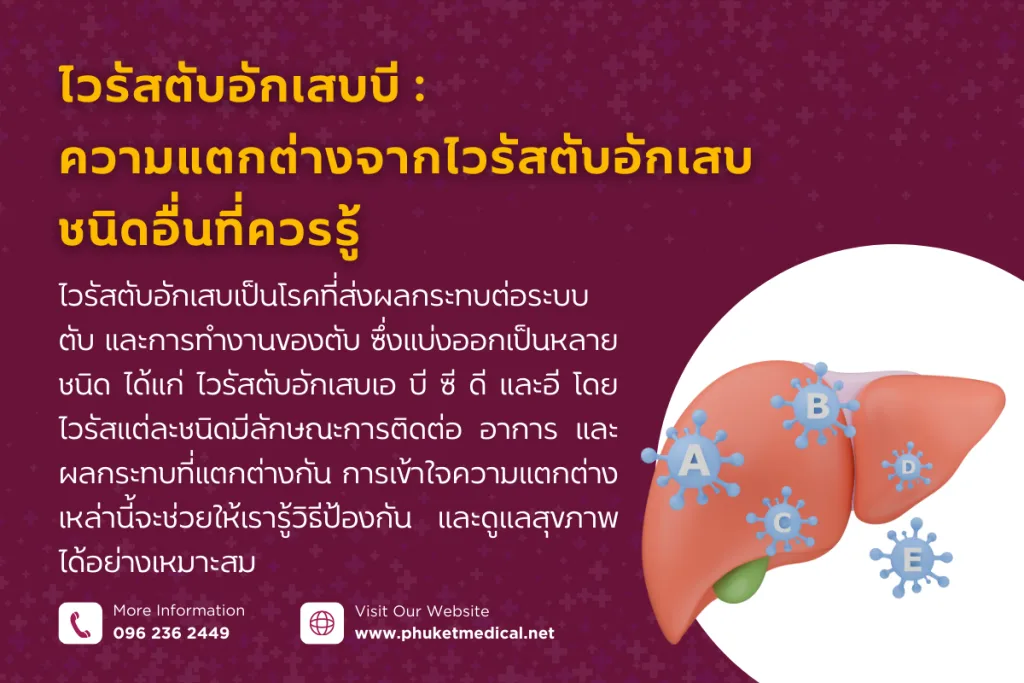
Hepatitis B: Differences from other hepatitis viruses that you should know
Hepatitis is a disease that affects the liver system and liver function. It is divided into several types: hepatitis A, B, C, D, and E. Each virus has different transmission characteristics, symptoms, and effects. Understanding these differences will help us know how to prevent and take care of our health appropriately.
Hepatitis A Virus (HAV)
Transmission Hepatitis A can be transmitted from person to person through methods related to hygiene and food consumption, such as:
- Eating contaminated food, such as vegetables, fruits, drinking water
- Eating undercooked food
- Contact with an infected person or drinking water contaminated with feces containing the virus
Symptoms
- Children under 6 years of age usually have no symptoms.
- In older children and adults, there is often a fever, fatigue, loss of appetite, nausea, vomiting, or jaundice.
- This disease usually goes away on its own within 24 weeks. However, in people with pre-existing liver disease, there is a risk of acute liver failure.
Hepatitis B Virus (HBV)
Transmission Hepatitis B virus is transmitted through various channels, such as:
- Contact with blood, such as blood transfusions, sharing of injection needles
- Contact with bodily fluids, such as saliva, semen
- Sex without condoms
- Transmission from mother to child during childbirth
Symptoms
- Adults who are infected may have fever, fatigue, jaundice, yellow eyes, nausea, and pain in the right rib cage.
- Infants up to children under 5 years old may have chronic hepatitis, which leads to liver fibrosis and cirrhosis later in life.
Hepatitis C Virus (HCV)
Transmission Hepatitis C virus is transmitted through blood and sexual intercourse, such as:
- Sharing injection needles
- Receiving unscreened blood
- Having unprotected sex
Symptoms
- Most patients do not have symptoms in the early stages.
- As the disease progresses, they may feel fatigued, nauseous, and have chronic inflammation of the liver.
- If left untreated, it can lead to cirrhosis or liver cancer in the long term.
Hepatitis D Virus (HDV)
Transmission Hepatitis D virus is transmitted through blood and bodily fluids, such as:
- Sharing needles
- Receiving contaminated blood
- Having sex with an infected person
- Important: Hepatitis D virus can only occur in people who are already infected with hepatitis B virus, because HDV requires HBV to reproduce.
Symptoms
- Patients may have symptoms of acute hepatitis, such as fatigue, jaundice, dark urine.
- If left untreated, it may develop into chronic hepatitis.
Hepatitis E Virus (HEV)
Transmission Hepatitis E virus is transmitted similarly to hepatitis A by:
- Consumption of contaminated food and water
- Contact with feces containing the virus
Symptoms
- Patients may experience nausea, low-grade fever, abdominal pain, dark urine, pale stools
- May experience pain in the right ribcage and jaundice
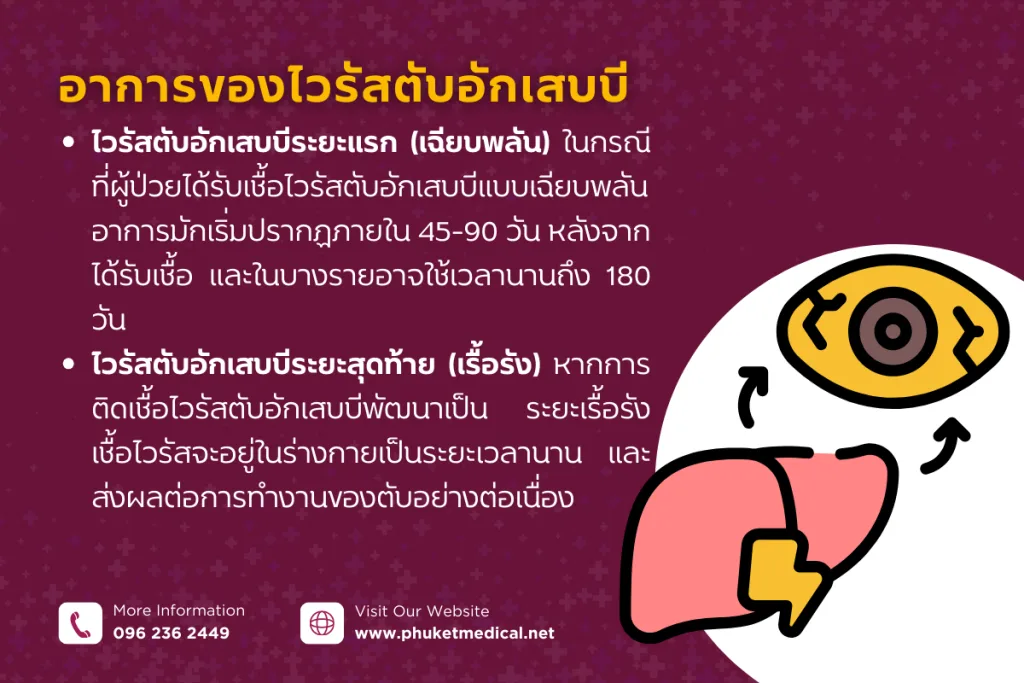
Symptoms of Hepatitis B
Primary (acute) Hepatitis B
In cases where a patient is infected with acute hepatitis B, symptoms usually appear within 45-90 days after infection, and in some cases, it may take up to 180 days. Symptoms in this initial stage include:
Initial symptoms
- General symptoms
- Loss of appetite
- Tiredness, fatigue
- Low-grade fever, feeling unwell
- Nausea and vomiting
- Liver symptoms
- Pressure under the right rib cage due to enlarged liver
- Yellow skin and eyes (jaundice)
- Dark urine
- Other symptoms
- Muscle aches
- Diarrhea or loose stools
During this stage, some patients may have only minor symptoms that are barely noticeable. However, in cases where symptoms are obvious, a doctor should be seen immediately for diagnosis and appropriate treatment.
Final (chronic) Hepatitis B
If the hepatitis B infection develops into a chronic stage, the virus will remain in the body for a long time and continuously affect liver function. Patients in this stage often have the following symptoms:
Symptoms of the chronic stage
- Chronic fatigue
- Loss of appetite, weight loss
- Liver dysfunction, which may not show obvious symptoms at first
As the disease progresses, it may lead to cirrhosis or liver cancer. Symptoms associated with cirrhosis include:
- Ascites: caused by the accumulation of fluid in the abdominal cavity
- Yellow skin and eyes: are signs of decreased liver function
- Easy bleeding and bruising: caused by the liver not being able to produce enough proteins that help clot blood
Staging of Hepatitis B Symptoms
| Stage of infection | Symptoms | Duration |
| Initial (acute) | Anorexia, fatigue, nausea, jaundice, dark urine | 45-90 days after infection |
| Chronic | Chronic fatigue, anorexia, weight loss, symptoms of liver cirrhosis such as ascites, jaundice | Long-term (months to years) |
Diagnosis and testing for hepatitis B
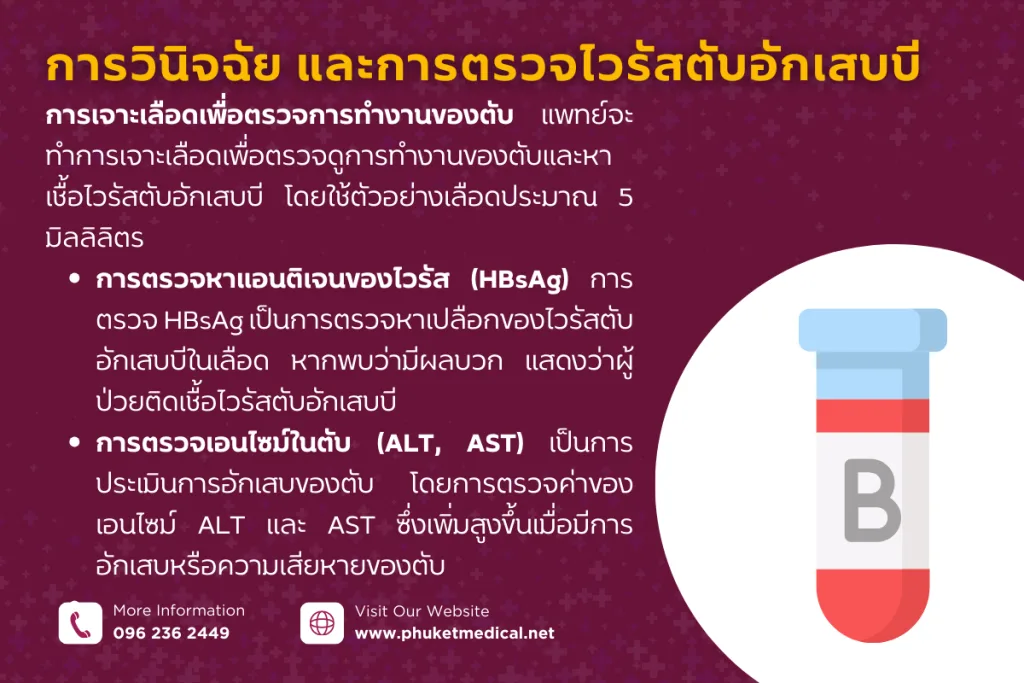
If you suspect that you are at risk of hepatitis B infection, you should see a doctor for a detailed diagnosis. The testing and diagnosis process can be divided as follows:
Blood test to check liver function
The doctor will take a blood test to check liver function and find the hepatitis B virus using a blood sample of approximately 5 milliliters.
- Viral antigen test (HBsAg) The HBsAg test is a test for the hepatitis B virus shell in the blood. If the result is positive, it means that the patient is infected with the hepatitis B virus.
- Liver enzyme test (ALT, AST) is an assessment of liver inflammation by testing the levels of the enzymes ALT and AST, which increase when there is inflammation or damage to the liver.
Additional tests for patients suspected of having chronic hepatitis
For patients who are found to be infected with the hepatitis B virus and suspected of having chronic hepatitis, the doctor may recommend the following additional tests:
- Follow-up testing Patients with chronic hepatitis usually need to receive additional tests every 1-2 months to assess the progress of the disease. These tests will help the doctor know if the liver is still inflamed.
- HBV DNA testing is a direct measure of the amount of virus in the blood, which helps assess the level of infection and viral replication. This information is important for planning treatment, such as using antiviral drugs.
- Indirect viral load testing (HBeAg and Anti-HBe) The HBeAg and Anti-HBe tests indicate the level of virus replication and the immune response to the virus.
- Liver biopsy. Your doctor may consider performing a liver biopsy in patients with severe chronic hepatitis. This test helps assess liver damage, such as fibrosis or cirrhosis.
Treatment of Hepatitis B
Treatment of hepatitis B focuses on controlling the virus in the body to reduce liver damage and prevent complications. Treatment is divided into
Use of antiviral hepatitis B drugs
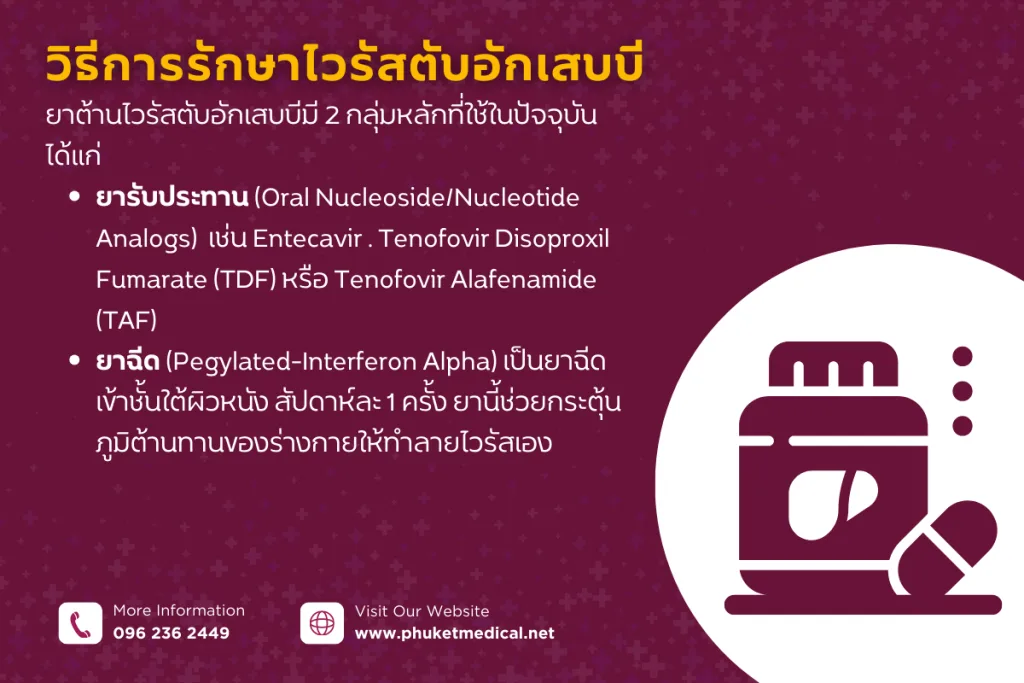
There are 2 main groups of antiviral hepatitis B drugs currently used:
- Oral drugs (Oral Nucleoside/Nucleotide Analogs)
- Oral drugs help inhibit the replication of the virus in the body.
- Commonly used drugs include:
- Entecavir
- Tenofovir Disoproxil Fumarate (TDF)
- Tenofovir Alafenamide (TAF)
- This group of drugs has fewer side effects than injections, but patients must take them continuously to control the virus in the body.
- Injections (Pegylated-Interferon Alpha)
- It is injected under the skin once a week.
- This drug stimulates the body’s immune system to destroy the virus itself.
- Common side effects include chills, fever, headache, and rapid heartbeat. These symptoms usually improve within 24 hours after injection.
- Precautions:
- Do not use in patients who are allergic to the drug. Or have health problems such as diabetes, high blood pressure, epilepsy or depression
- Should not be used in children under 2 years old, pregnant women or breastfeeding women
Self-care along with treatment
In addition to taking medication, patients should take care of themselves to reduce the risk and prevent liver deterioration.
- Avoid foods that contain aflatoxin: such as peanuts, chili powder or food that is not stored properly.
- Avoid alcohol: Drinking alcohol causes more damage to the liver.
- Do not take medication by yourself: Especially drugs that may have side effects on the liver, you should always consult a doctor first.
- Eat a healthy diet: Focus on vegetables, fresh fruits and foods with quality protein.
Treatment in patients with chronic hepatitis B
Patients with chronic hepatitis B require continuous care and monitoring of symptoms. The doctor will consider the treatment for each individual according to the severity of the disease.
Treatment conditions
- Patients with positive HBsAg results for more than 6 months
- There is evidence that the virus is multiplying in large quantities
- ALT enzyme levels higher than 1.5 times the normal value at least 2 times within 3 months
Treatment guidelines
- If the patient has cirrhosis or liver failure Doctors may start treatment immediately without waiting for a follow-up period.
- For patients who do not have severe symptoms, doctors will monitor ALT levels and viral replication every 3-6 months.
Treatment follow-up
Treatment of hepatitis B is often a long-term process. Patients should follow their doctor’s advice and have regular follow-up visits to assess their response to treatment and adjust their treatment plan as needed.

Hepatitis B Prevention
Hepatitis B Vaccination
Vaccination is the most effective way to prevent hepatitis B.
- Vaccination Procedure Hepatitis B vaccine is injected into the muscle in the upper arm. There are 3 injections, spaced as follows:
- 1st injection: First injection
- 2nd injection: Injected in the 1st month after the first injection
- 3rd injection: Injected in the 6th month after the first injection
- Combined vaccines Currently, there is a vaccine that can protect against hepatitis A and hepatitis B in the same injection, which is convenient for those who want to prevent both types of diseases.
- Blood test before vaccination In adults, it is recommended to have a blood test before vaccination to assess whether there is already an infection or immunity to hepatitis B.
Self-care to prevent hepatitis B infection
In addition to vaccination, appropriate behaviors can reduce the chances of hepatitis B infection, including:
- Avoid risky behaviors, avoid ear piercing, tattooing, or sharing needles with others, and avoid sharing personal items such as razors, toothbrushes, and nail clippers.
- Practice safe sex by using condoms every time you have sex and avoid having multiple sexual partners.
- Avoid contact with secretions of infected people. Avoid direct contact with blood, saliva, lymph or secretions of infected people.
- General health care, such as regular exercise, eating a healthy diet, and avoiding unclean food.
Who should get vaccinated against hepatitis B?
- Children and infants
- Infants born to mothers infected with hepatitis B: These infants are at high risk of infection through birth.
- People who were not vaccinated at birth: Especially those who are at risk of future exposure.
- Adults at risk of infection
- People aged 8-65: Can receive the combined vaccine against hepatitis A and B in the same dose.
- People who inject drugs: Sharing needles increases the risk of infection.
- People who have multiple sexual partners or have unprotected sex.
- People who are in close contact with infected people.
- People who are in close contact with people infected with hepatitis B: Such as family members or caregivers.
- People with chronic diseases
- People with chronic liver disease: Hepatitis B infection can worsen liver conditions.
- People with chronic kidney disease who need dialysis: They are at risk of exposure to infection during the dialysis process.
- People who need immunosuppressive drugs: Such as patients after an organ transplant.
- Groups that require special treatment
- People who frequently receive blood or blood products: such as patients with thalassemia or other blood diseases
- Homosexuals
- Homosexuals with infected partners: are at high risk of contracting hepatitis B through sexual contact

Frequently Asked Questions About Hepatitis B
Is Hepatitis B Scary?
Hepatitis B is a scary disease not only because of its symptoms, but also because of its long-term effects if it is not diagnosed and treated properly.
The horror of Hepatitis B
- Unknowingly infected People who are infected with Hepatitis B in the early stages may not have obvious symptoms, causing the disease to progress from the acute stage to the chronic stage without realizing it. And if it is not diagnosed and treated in the early stages, the disease may progress until it damages the liver cells.
- Effects on Liver Cells Viral infection causes liver cells to become inflamed and destroyed. If left for a long time, it can lead to cirrhosis and increase the risk of liver cancer.
- Transmission People who are infected with Hepatitis B unknowingly can transmit the infection to others through blood, secretions, or sexual intercourse.
Risk Prevention
- Regular health check-ups and tests for Hepatitis B reduce the risk of unknowingly getting infected.
- The best way to prevent Hepatitis B vaccination is to
Is Hepatitis B Curable?
Treatment for Hepatitis B depends on the stage of infection, which can be divided into 2 cases:
- Acute infection
- In cases where the patient is acutely infected The body can clear the virus on its own in some cases.
- Most patients recover within 10 weeks and do not need any specialized treatment.
- However, after recovery, the virus may remain in the body in very small amounts and may be contagious to others.
- Chronic infection
- If the infection develops into a chronic stage, the patient will need to be monitored and treated under the guidance of a doctor.
- Antiviral therapy can help control the replication of the virus, reduce inflammation of the liver, and reduce the risk of complications such as cirrhosis and liver cancer.
- Recommendations for those who are infected
- Regular health check-ups and liver function tests should be performed.
- Avoid drinking alcohol and taking medications that may adversely affect liver function.
Hepatitis B screening and treatment services at Phuket Medical Clinic, Laguna branch
- Diagnostics
- Blood test for hepatitis B antigen (HBsAg) and liver function assessment (ALT, AST)
- Check the amount of virus in the blood (HBV DNA) to plan treatment
- Treatment
- Treat symptoms with antiviral drugs such as Entecavir, Tenofovir
- Advice on health care, such as avoiding alcohol And consult your doctor regularly
- Follow-up
- Follow up your symptoms every 3-6 months or adjust your treatment plan as advised by your doctor
Note: Contact Phuket Medical Clinic Laguna Branch for more information and to make an appointment.
Read more articles
- Liver Disease: Dangers That Often Don’t Show Symptoms and How to Deal with It
- Hepatitis A: Understand the Disease, Prevent It, and Take Proper Care
Contact Channels
Laguna Branch
- Phuket Medical Clinic, Laguna Branch is located at 58/1, Cherngtalay Subdistrict, Thalang District, Phuket Province 83100
- Open every day, Monday – Sunday, 09.00 – 22.00 hrs.
- Inquire via Line id. @pmcphuket (with @)
- Contact number 096 236 2449
- Clinic map https://maps.app.goo.gl/SXaeLrSU9Lx47YPH6
- Book an appointment online https://pmclaguna.youcanbook.me
Branch in the city
- Phuket Medical Clinic, Phuket City Branch is located at 41/7-41/8, Talat Nuea Subdistrict, Mueang Phuket District, Phuket Province 83000
- Open every day, Monday – Sunday, 09.00 – 22.00 hrs.
- Inquire via Line id. @pmcphuket (with @)
- Contact number 096 228 2449
- Clinic map https://maps.app.goo.gl/yeU9qNArGg3qdwZw9
- Book an appointment online https://phuketmedicalclinic.youcanbook.me
Boat Lagoon Branch
- Phuket Medical Clinic Boat Lagoon Branch is located at 20/96. Moo 2, Thepkrasattri Rd., Koh Kaew Subdistrict, Mueang Phuket District, Phuket Province 83000
- Open every day, Monday – Sunday, 10.00 – 18.00 hrs.
- Inquire via Line ID. @pmcphuket (with @)
- Contact number 096 696 2449
- Clinic map https://maps.app.goo.gl/HbqfUKMEHXuKwan96
- Book an appointment online https://pmctown.youcanbook.me
Hepatitis B is a disease that can affect health both in the short term and long term. Understanding the characteristics of the disease and the channels of transmission are important in prevention and reducing the risk. Prevention by vaccination, maintaining good personal hygiene, and avoiding risky behaviors will effectively reduce the chances of infection and the impact of this disease. If you suspect that you are at risk of infection, you should consult a doctor for advice and appropriate diagnosis.
Reference
- Centers for Disease Control and Prevention (CDC). Hepatitis B Information for the Public. Comprehensive details on symptoms, treatment, and prevention. [ออนไลน์] เข้าถึงได้จาก https://www.cdc.gov/hepatitis/hbv
- World Health Organization (WHO). Hepatitis B Fact Sheet. ข้อมูลเกี่ยวกับไวรัสตับอักเสบบี. [ออนไลน์] เข้าถึงได้จาก https://www.who.int/news-room/fact-sheets/detail/hepatitis-b
- กระทรวงสาธารณสุขแห่งประเทศไทย. เว็บไซต์ กรมควบคุมโรค กระทรวงสาธารณสุข. ข้อมูลเกี่ยวกับไวรัสตับอักเสบบีและการป้องกัน. [ออนไลน์] เข้าถึงได้จาก http://www.ddc.moph.go.th
- Mayo Clinic. Hepatitis B: Symptoms, causes, and treatment. [ออนไลน์] เข้าถึงได้จาก https://www.mayoclinic.org/diseases-conditions/hepatitis-b/symptoms-causes/syc-20366802
- สมาคมโรคตับแห่งประเทศไทย. ข้อมูลการดูแลและการป้องกันไวรัสตับอักเสบบี. [ออนไลน์] เข้าถึงได้จาก https://www.thailiverfoundation.org