
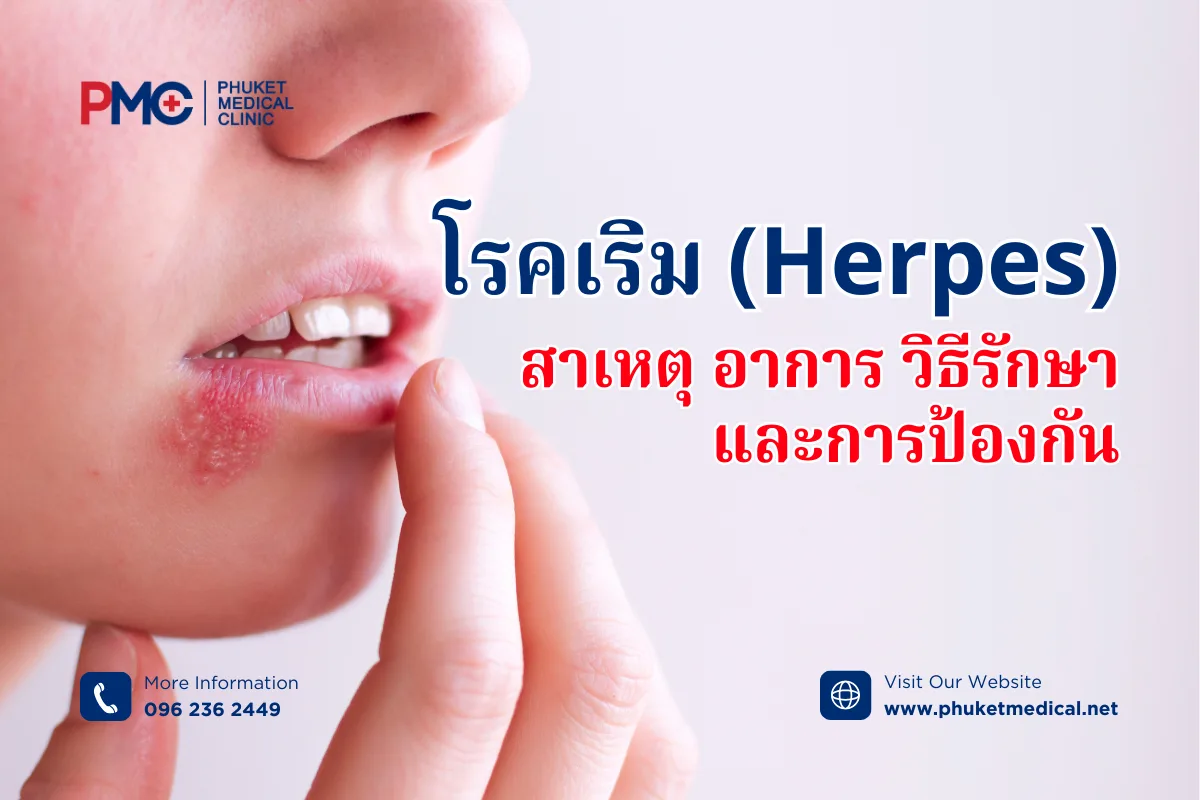
Herpes is a common viral infection in people, especially those with weak health or reduced immunity. This disease can occur in people of all ages, whether male or female. In many cases, people with herpes often feel embarrassed and do not dare to see a doctor, even though the disease can be treated and prevented.
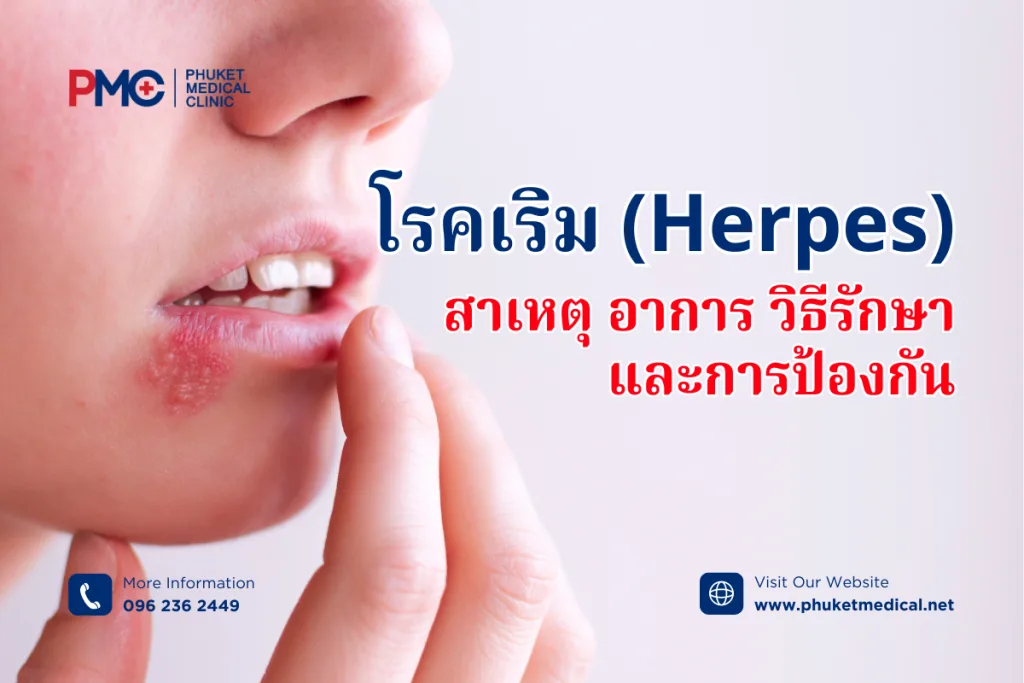
What is herpes?
Herpes is an infectious disease caused by a type of virus that can affect the skin and mucous membranes in the body. This disease is common in all ages and genders and may make patients feel embarrassed or afraid to see a doctor, even though in fact, herpes can happen to anyone, especially those with poor health.
The transmission of herpes occurs through direct contact, such as contact with lymph from blisters, sharing personal items such as drinking glasses, towels, or having unprotected sex. In addition, touching things in public while the body is weak can also cause infection.
Causes of herpes
Herpes is caused by a type of virus called Herpes Simplex Virus (HSV), which can be divided into 2 main types:
Herpes Simplex Virus Type 1 (HSV-1)
HSV-1 usually causes infection in areas above the waist, especially the mouth, lips, and nose. HSV-1 infection can occur in the following cases:
- Weak immunity, such as when the body is tired, stressed, or does not get enough rest.
- Contact with an infected person, such as sharing items such as drinking glasses, lipstick, or contaminated towels.
- During recovery from an illness Or women during menstruation, which is a period when the body is weak.
- A common example is herpes on the mouth, which is a small blister that occurs on the lips or around the mouth.
Herpes Simplex Virus Type 2 (HSV-2)
HSV-2 often causes infection in the area below the waist, especially the genitals and reproductive system. HSV-2 infection is often associated with direct sexual intercourse, such as:
- Contact with the genitals of an infected person
- Improper use of condoms or condom breaks during sex
Locations where HSV-2 infection is found include:
- Vaginal and cervix in women
- Anus and genitals in men
- Scrotum and groin area
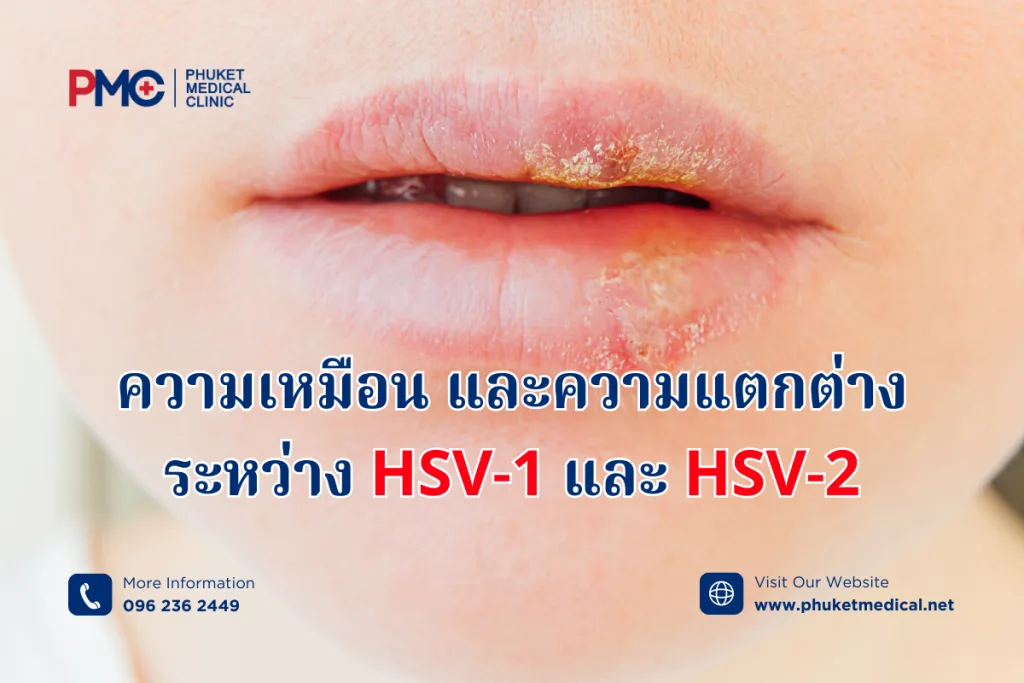
Similarities and differences between HSV-1 and HSV-2
- HSV-1 and HSV-2 are viruses with similar structures and can cause herpes in any part of the body. However, the infection characteristics in different locations tend to be different as follows:
- HSV-1
- Infection is found in areas above the waist, such as the mouth, lips, and nose.
- It is the cause of approximately 70-90% of herpes cases of the mouth.
- HSV-2
- Infection is found in areas below the waist, such as the genitals, vagina, and anus.
- It is the cause of approximately 70-90% of genital herpes cases.
Despite their specific location, both HSV-1 and HSV-2 can spread and cause infections in unusual locations. For example, HSV-1 may infect the genitals, or HSV-2 may infect the lips if there is direct cross-site contact, such as oral sex.
Where can herpes occur?
Although herpes is often found in the mouth and genitals, which are the locations where the Herpes Simplex Virus (HSV) shows its most prominent symptoms, herpes can also occur in other areas of the body, depending on the contact behavior. And the patient’s immune status
Herpes on the nose or herpes on the eyes
In some cases, HSV can spread to the nose or eyes, with the following symptoms:
- Small blisters appear in groups
- In local language, these blisters are often called “dog’s paws”.
- These blisters usually heal on their own within 1-2 weeks, but if not treated properly, it may cause a secondary bacterial infection, such as the formation of pus in the blisters.
Herpes on the legs
Herpes on the legs is not common, but can occur in some patients with weak immune systems, with the following symptoms:
- Initial symptoms are usually a burning or tingling sensation in the legs.
- Some people may feel a stinging pain before small blisters (about 2-3 millimeters) appear.
- Blisters usually appear in groups, mostly caused by HSV that moves along nerves to the skin.
Herpes on the neck
Herpes can appear in the neck and mouth, which is found in cases where the HSV virus has spread to the oral mucosa. Common symptoms include:
- The development of mouth ulcers, which usually appear on the gums or hard palate.
- Blisters initially appear and later break open to form shallow, red sores.
- The sores may then become covered with yellow scabs.
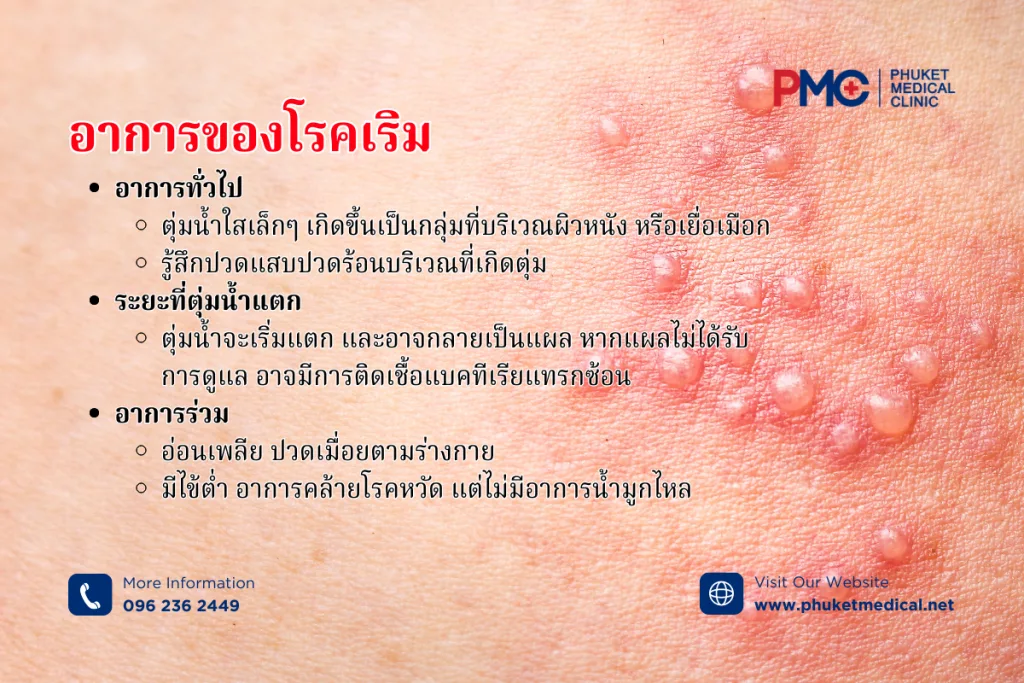
Symptoms of herpes
- General symptoms
- Small blisters appear in groups on the skin or mucous membranes
- Feeling of a burning sensation in the area where the blisters occur
- The stage when the blisters burst
- The blisters will start to burst and may become sores. If the sores are not treated, a secondary bacterial infection may occur.
- Associated symptoms
- Fatigue, body aches
- Low-grade fever, cold-like symptoms, but no runny nose
Complications of herpes
Although most herpes infections can heal on their own, in some cases where they are not treated or treated properly, serious complications can occur, such as:
- Secondary bacterial infections
- Blisters that burst and are not properly cared for may turn into pus.
- If they occur on the skin, such as the legs, nose, or mouth, they may not cause serious harm. However, if they occur in the eyes, they can cause serious eye damage, such as loss of vision or blindness.
- Infections in pregnant women
- A herpes infection for the first time during pregnancy, especially in the last trimester, can have serious consequences for the fetus.
- The baby may be infected through vaginal delivery. Causes neonatal herpes, which carries a risk of death.
- Infection in immunocompromised people
- In people with weakened immune systems, such as those with AIDS, organ transplant recipients, or those taking immunosuppressive drugs, HSV can spread to the brain or meninges.
- Causes meningitis, or encephalitis, which can cause severe headache, seizures, weakness, and even coma.
Treatment of herpes
- Using antiviral drugs such as Acyclovir or Valacyclovir to help reduce the severity and duration of symptoms.
- Treating symptoms Use fever reducers or pain relievers to reduce discomfort.
- Wound care Clean the wound with saline or antiseptic. Avoid picking at the wound or blisters.
Self-care for herpes
- Get enough rest to help the body recover and strengthen the immune system.
- Drink plenty of water to help the body expel waste and recover faster.
- Keep the wound clean. Clean the wound area regularly.
Prevention of herpes
- Avoid contact with infected people. Avoid sharing personal items such as drinking glasses, towels.
- Always use a condom during sex to reduce the risk of herpes infection.
- Maintain good health, exercise regularly, get enough rest, and eat healthy foods.
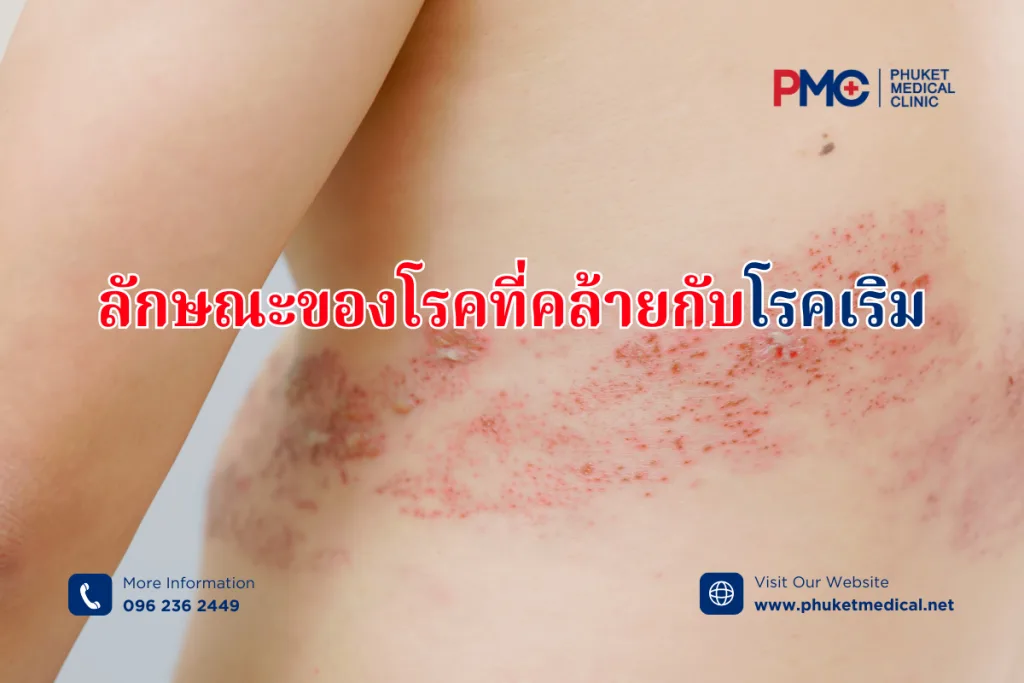
Symptoms of diseases similar to herpes
Herpes has prominent symptoms that most people often misunderstand as other diseases. This is because the symptoms of herpes, especially the occurrence of small, clear blisters that are often found on the skin or mucous membranes in the body, may look similar to the symptoms of other diseases, as follows:
Herpes and canker sores
Canker sores and herpes on the lips are often confused because both diseases occur in the mouth and lips. However, the characteristics of the two diseases are clearly different:
- Herpes
- Appears as small, clear blisters on the lips.
- Before the blisters appear, the patient often feels itchy or stinging on the lips.
- The blisters may burst and cause small, painful sores.
- Canker sores
- Appear as small, shallow sores on the soft tissues in the mouth, such as the gums, tongue, or cheeks.
- Do not appear as clear blisters.
- Canker sores usually cause pain or irritation only when eating or drinking hot drinks.
Herpes and shingles
Both herpes and shingles are caused by the same group of viruses. Herpes virus, but the location and symptoms of both diseases are different.
- Herpes
- Usually occurs on the lips or genitals.
- Appears as small blisters grouped together.
- The burning pain is usually not severe.
- Shingles
- Caused by the Varicella-zoster virus, which is the same virus that causes chickenpox.
- Appears as small blisters, but spreads in long rows along the nerves.
- Patients often feel a burning pain like being shocked by electricity, along with deep tingling pain in the area where the blisters are.
Herpes and chickenpox
Herpes and chickenpox have similar initial symptoms, especially the formation of blisters. However, the two diseases are different as follows:
- Herpes
- Blisters are small and grouped together.
- No itching, but there is a burning sensation in the area of the blisters.
- Blisters often break and dry into scabs.
- Chickenpox
- Blisters often spread throughout the body.
- The main symptoms are itching and fever.
- Blisters become shallow sores. And later, scabs form.
Herpes and thrush
Thrush is a disease caused by a fungal infection of the skin at the corners of the mouth. Symptoms are as follows:
- There are sores and redness at the corners of the mouth.
- The wound area may be swollen and sore when moving the mouth.
- It usually does not have blisters like herpes.
- While herpes will cause small blisters on the lips without swelling or redness.
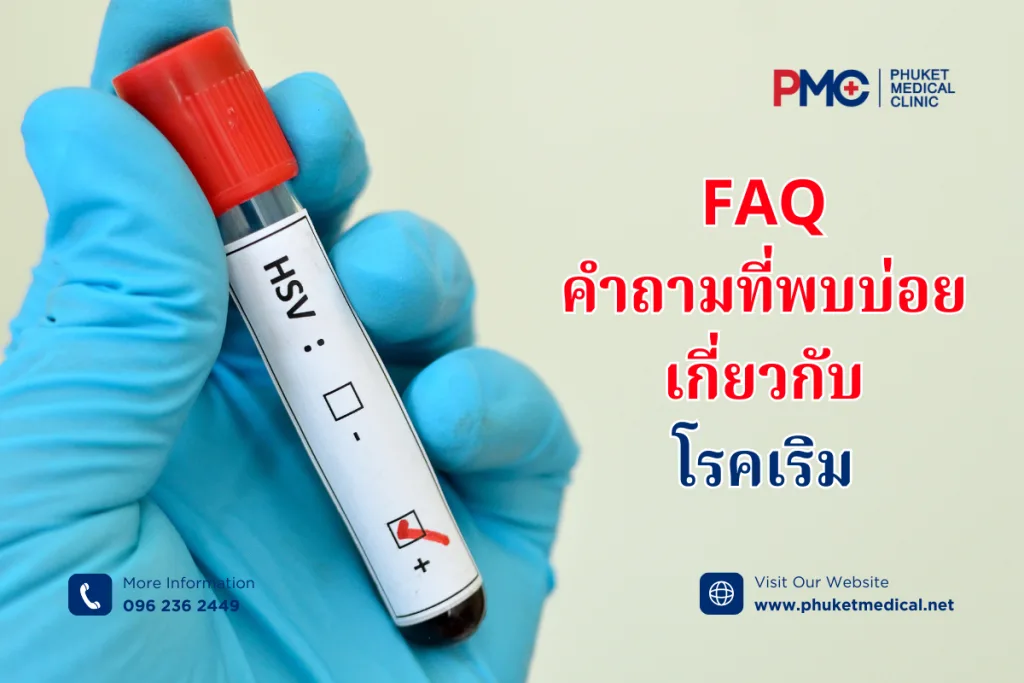
FAQ Frequently asked questions about herpes
Can herpes be cured?
Herpes cannot be cured because the Herpes Simplex Virus (HSV) will stay in the nerve nodes of the body for life. However, herpes can be controlled and treated by strictly following the doctor’s advice and taking care of your health, such as eating a healthy diet, getting enough rest, and avoiding stress.
Can I have sex with herpes?
Sex is an important channel that causes herpes to spread, especially genital herpes. However, patients can have sex, but they must follow the following precautions:
- Wear a condom every time you have sex to reduce the risk of spreading the infection.
- Avoid having sex during the time when you have blisters or sores because this is when you are more likely to spread the infection.
- You should consult your doctor about taking antiviral medications to help reduce the chance of spreading the infection to your partner.
Does herpes increase the risk of HIV infection?
People who have genital herpes are at higher risk of getting HIV because herpes sores reduce the immune system in the area where the sores occur, making it easier for HIV to enter the body. At the same time, people who are already infected with HIV tend to have more severe herpes symptoms. Due to low body immunity
Summary of herpes
Herpes is a disease that can be managed and controlled if patients take care of their health and strictly follow the doctor’s advice. This is an important thing to understand about herpes.
- Preventing infection Wash your hands frequently, avoid sharing things with others, and maintain good health.
- Controlling symptoms Take antiviral drugs as prescribed by the doctor and keep the area with blisters or wounds clean to prevent secondary infections.
- Living with herpes Those who are infected can still live in their family and society as usual by following precautions to prevent the infection from spreading.
Why should you get herpes tested at Phuket Medical Clinic?
Phuket Medical Clinic provides comprehensive diagnostic and treatment services for herpes (Herpes Simplex Virus – HSV) with a team of expert doctors and modern equipment for accurate testing and safe care.
Herpes testing services
- Herpes Simplex Virus (HSV) testing is a test for HSV-1 and HSV-2, which are the causes of herpes on the lips and genitals, using a blood test for antibodies (IgG and IgM) and collecting a sample of secretions from the lesion.
- Differentiation of the type of infection Differentiation of the type of herpes virus (HSV-1 or HSV-2) for appropriate treatment and prevention of the spread of infection
- Consultation on herpes, consultation on symptoms of the disease, methods of preventing the spread of infection, and self-care guidelines
- Follow-up and treatment of the disease, recommend a treatment plan, such as the use of antiviral drugs, and self-care methods to prevent recurrence
Advantages of herpes testing at Phuket Medical Clinic
- Modern equipment and technology Use technology that has been certified to international standards for accurate and fast test results
- A team of doctors specializing in skin diseases and sexually transmitted diseases Provide professional care With appropriate advice for each patient
- Safe and private service Focusing on the safety of service recipients and strict data management
- Comprehensive and convenient testing Can be tested in cases of symptoms or suspected risk With appropriate advice
- Continuous care Provide post-test consultation Along with recommendations on how to take care of your health to prevent recurrence
Herpes can be transmitted even without symptoms. If you suspect that you are at risk or have started to have symptoms, you should get tested as soon as possible to reduce the chance of spreading the infection and prevent complications.
Read more articles
- Sexually Transmitted Diseases: Information Everyone Should Know for Safety
- Sexually Transmitted Disease Testing Reduces Risk, Increases Confidence
Contact Channels
Laguna Branch
- Phuket Medical Clinic, Laguna Branch is located at 58/1, Cherngtalay Subdistrict, Thalang District, Phuket Province 83100
- Open every day, Monday – Sunday, 09.00 – 22.00 hrs.
- Inquire via Line id. @pmcphuket (with @)
- Contact number 096 236 2449
- Clinic map https://maps.app.goo.gl/SXaeLrSU9Lx47YPH6
- Book an appointment online https://pmclaguna.youcanbook.me
Branch in the city
- Phuket Medical Clinic, Phuket City Branch is located at 41/7-41/8, Talat Nuea Subdistrict, Mueang Phuket District, Phuket Province 83000
- Open every day, Monday – Sunday, 09.00 – 22.00 hrs.
- Inquire via Line id. @pmcphuket (with @)
- Contact number 096 228 2449
- Clinic map https://maps.app.goo.gl/yeU9qNArGg3qdwZw9
- Book an appointment online https://phuketmedicalclinic.youcanbook.me
Boat Lagoon Branch
- Phuket Medical Clinic Boat Lagoon Branch is located at 20/96. Moo 2, Thepkrasattri Rd., Koh Kaew Subdistrict, Mueang Phuket District, Phuket Province 83000
- Open every day, Monday – Sunday, 10.00 – 18.00 hrs.
- Inquire via Line ID. @pmcphuket (with @)
- Contact number 096 696 2449
- Clinic map https://maps.app.goo.gl/HbqfUKMEHXuKwan96
- Book an appointment online https://pmctown.youcanbook.me
Herpes is not an embarrassing disease. Herpes is not just a disease related to inappropriate sexual behavior. This disease can happen to anyone who is physically weak and gets infected into their body. Even using public restrooms with others can be a cause.
Therefore, if you suspect that you may have herpes or have symptoms consistent with the disease, you should see a doctor as soon as possible to get a diagnosis and treatment. Early treatment can reduce the severity of the disease and prevent future complications.
เอกสารอ้างอิง
- Centers for Disease Control and Prevention (CDC). Genital Herpes – CDC Fact Sheet. [ออนไลน์] เข้าถึงได้จาก: https://www.cdc.gov/std/herpes/stdfact-herpes.htm
- World Health Organization (WHO). Herpes Simplex Virus. [ออนไลน์] เข้าถึงได้จาก: https://www.who.int
- American Sexual Health Association. Herpes Overview and FAQs. [ออนไลน์] เข้าถึงได้จาก: https://www.ashasexualhealth.org
- กรมควบคุมโรค กระทรวงสาธารณสุข. คู่มือการวินิจฉัยและรักษาโรคเริม (Herpes Simplex Virus). [ออนไลน์] เข้าถึงได้จาก: https://www.ddc.moph.go.th
- โรงพยาบาลศิริราช ปิยมหาราชการุณย์. ข้อมูลการดูแลและรักษาโรคเริม. [ออนไลน์] เข้าถึงได้จาก: https://www.siphhospital.com