
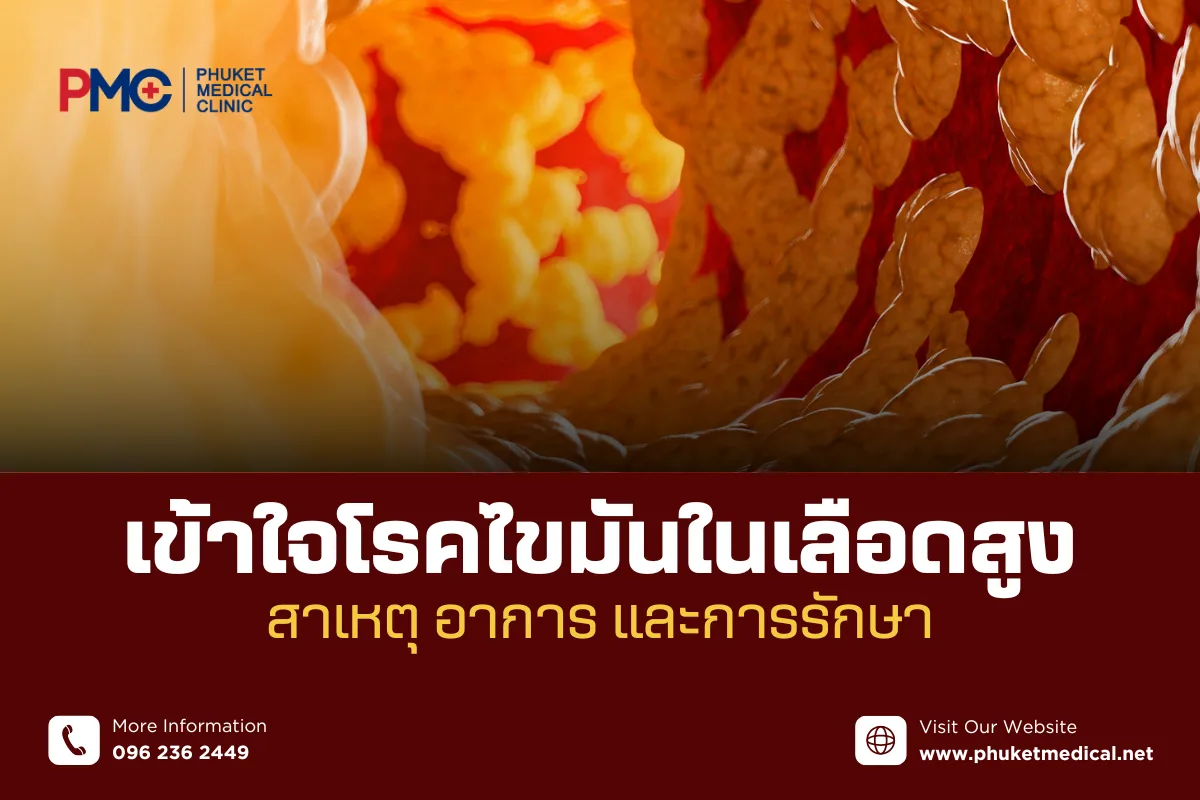
Hyperlipidemia or abnormal blood lipids is a common health problem in the present era, especially among people who have a hectic lifestyle, eat an unbalanced diet and lack exercise. This condition often has no obvious symptoms in the early stages, but can lead to serious diseases such as heart and blood vessel disease or stroke if not diagnosed and managed properly. This article will help you understand the causes, symptoms and treatment of hyperlipidemia in detail.
What is hyperlipidemia?
Hyperlipidemia is a condition in which blood fat levels are higher than normal. There are two main types of fat involved:
- Cholesterol
- Bad cholesterol (LDL) increases the risk of cardiovascular disease.
- Good cholesterol (HDL) helps reduce the accumulation of fat in the blood vessels.
- Triglycerides Excess energy that the body stores in the form of fat.
When these fats accumulate in the blood vessels for a long time, they cause the blood vessels to narrow or become clogged, resulting in poor blood circulation, which is a cause of heart disease and blood vessels.
Causes of hyperlipidemia
- Lifestyle
- Consumption of foods high in saturated fat and trans fat, such as fried foods, baked goods, and desserts.
- Drinking a lot of alcoholic beverages
- Lack of exercise
- Genetic factors Those who have a family history of high cholesterol or heart disease are at higher risk.
- Underlying diseases such as diabetes, obesity, and hypothyroidism.
- Age and hormones As age increases, fat burning decreases. And hormonal changes, such as after menopause
Symptoms of high blood fat
High blood fat often has no symptoms in the early stages. But if the condition continues for a long time, it may cause the following effects:
- Symptoms caused by fat accumulation in the blood vessels
- Chest pain or tightness in the chest
- Difficulty breathing
- Dizziness or lightheadedness
- Complications
- Coronary artery disease (COD)
- Stroke
- Peripheral artery disease (PER)
- Fat accumulation in various parts of the body
- Fat lumps under the skin (Xanthomas)
- White fat strips around the cornea (Arcus Corneae)
Diagnosis of high blood fat
- Blood test (Lipid Profile) to check LDL, HDL, triglycerides and total cholesterol levels
- Assess risk factors, consider family history, underlying diseases and lifestyle behaviors
- Additional health checks such as electrocardiogram (ECG) or Doppler ultrasound
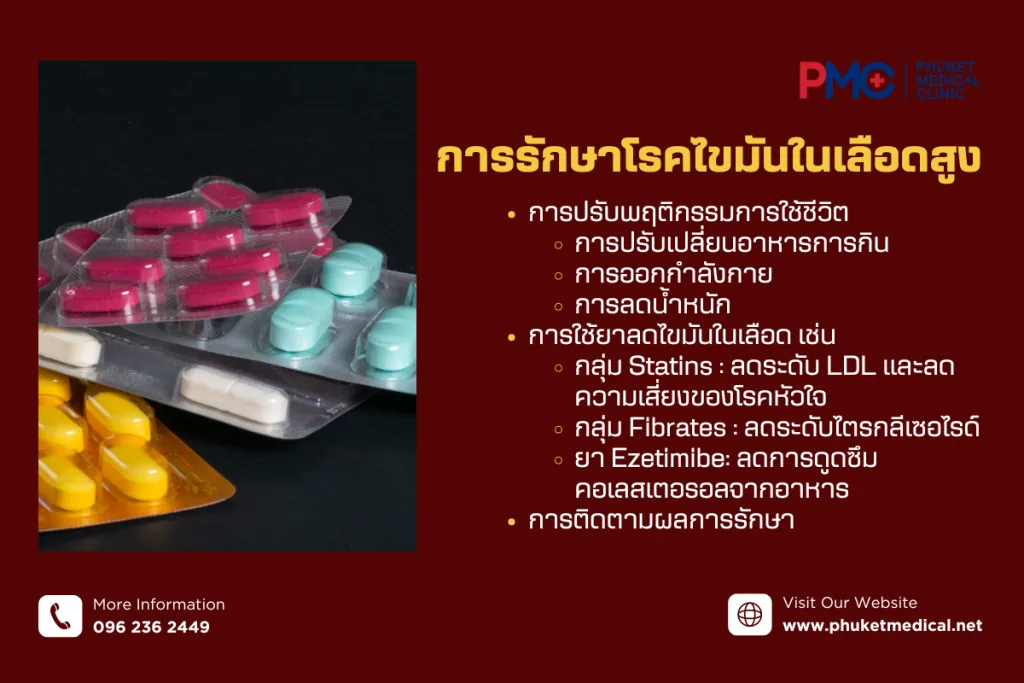
Treatment of hyperlipidemia
- Lifestyle modification
- Diet modification, such as reducing the consumption of foods with saturated fat, trans fat, sugar, and increasing the consumption of vegetables, fruits, whole grains, and fish
- Exercise Aerobic exercise, such as brisk walking, swimming, at least 150 minutes per week
- Weight loss Lose weight in cases of being overweight or obese
- Use of lipid-lowering drugs, such as
- Statins: reduce LDL levels and reduce the risk of heart disease
- Fibrates: reduce triglyceride levels
- Ezetimibe: reduce cholesterol absorption from food
- Use drugs under the advice of a doctor
- Monitoring treatment results Check blood lipid levels regularly to monitor the treatment results
Prevention of hyperlipidemia
- Eat a healthy diet Choose foods high in fiber, such as vegetables, fruits, and whole grains, and reduce foods high in saturated fat, trans fat, and sugar
- Regular exercise helps increase HDL levels and reduce LDL levels
- Quitting smoking helps reduce the risk of cardiovascular disease
- Regular health check-ups Check blood lipid levels every 1-2 years, especially in those with risk factors
Hyperlipidemia screening at Phuket Medical Clinic, Laguna branch
Phuket Medical Clinic, Laguna branch provides health check-ups and blood lipid levels to reduce the risk of heart and blood vessel disease, along with providing healthcare advice by a team of specialist doctors.
Diagnostic steps
- History taking and physical examination – assessing risk factors such as genetics, diet, body weight, and lifestyle
- Lipid profile blood test – to check cholesterol and triglyceride levels
- Analyze results and provide health advice – to change eating and exercise behaviors
Treatment and healthcare guidelines
- Diet control – reduce foods with saturated fat and trans fat, such as fried and processed foods
- Exercise regularly – walk briskly, swim or cycle for at least 150 minutes/week
- Lose weight and maintain a normal weight
- Avoid smoking and alcohol
- Medication – In cases of very high cholesterol levels, the doctor may recommend lipid-lowering medications
Why should I have my blood lipids tested at Phuket Medical Clinic, Laguna branch?
- A team of specialist preventive medicine doctors who provide comprehensive advice
- Accurate diagnosis with modern laboratory equipment
- Holistic health check-up services to reduce the risk of cardiovascular disease
- Personalized health care plans to adjust behaviors appropriately
If you are at risk or not sure if you have high blood fat, you should get checked as soon as possible to prevent complications. Contact Phuket Medical Clinic, Laguna branch for consultation and service today!
Read more articles
- Dealing with diabetes: How to eat and live safely
- Why is high blood pressure called the ‘silent killer’?
Contact Channels
Laguna Branch
- Phuket Medical Clinic, Laguna Branch is located at 58/1, Cherngtalay Subdistrict, Thalang District, Phuket Province 83100
- Open every day, Monday – Sunday, 09.00 – 22.00 hrs.
- Inquire via Line id. @pmcphuket (with @)
- Contact number 096 236 2449
- Clinic map https://maps.app.goo.gl/SXaeLrSU9Lx47YPH6
- Book an appointment online https://pmclaguna.youcanbook.me
Branch in the city
- Phuket Medical Clinic, Phuket City Branch is located at 41/7-41/8, Talat Nuea Subdistrict, Mueang Phuket District, Phuket Province 83000
- Open every day, Monday – Sunday, 09.00 – 22.00 hrs.
- Inquire via Line id. @pmcphuket (with @)
- Contact number 096 228 2449
- Clinic map https://maps.app.goo.gl/yeU9qNArGg3qdwZw9
- Book an appointment online https://phuketmedicalclinic.youcanbook.me
Boat Lagoon Branch
- Phuket Medical Clinic Boat Lagoon Branch is located at 20/96. Moo 2, Thepkrasattri Rd., Koh Kaew Subdistrict, Mueang Phuket District, Phuket Province 83000
- Open every day, Monday – Sunday, 10.00 – 18.00 hrs.
- Inquire via Line ID. @pmcphuket (with @)
- Contact number 096 696 2449
- Clinic map https://maps.app.goo.gl/HbqfUKMEHXuKwan96
- Book an appointment online https://pmctown.youcanbook.me
Hyperlipidemia is a silent killer that can lead to serious diseases if not treated properly. Changing your lifestyle habits, such as eating a healthy diet, exercising, and having regular health checkups, are the best ways to prevent and control this disease. If you have risk factors, consult your doctor for advice on proper health management. Good health starts with taking care of yourself every day!
Reference
- Centers for Disease Control and Prevention (CDC). (2023). High Cholesterol: Causes, Symptoms, and Treatment. [ออนไลน์] เข้าถึงได้จาก: https://www.cdc.gov
- World Health Organization (WHO). (2023). Cardiovascular diseases (CVDs): Prevention and Management. [ออนไลน์] เข้าถึงได้จาก: https://www.who.int
- American Heart Association (AHA). (2023). Understanding Cholesterol Levels and Heart Health. [ออนไลน์] เข้าถึงได้จาก: https://www.heart.org
- สมาคมโรคหัวใจแห่งประเทศไทย. (2023). การควบคุมระดับไขมันในเลือดเพื่อป้องกันโรคหัวใจและหลอดเลือด. [ออนไลน์] เข้าถึงได้จาก: https://www.thaiheart.org
- มหาวิทยาลัยมหิดล คณะแพทยศาสตร์ศิริราชพยาบาล. (2023). โรคไขมันในเลือดสูง: สาเหตุ ผลกระทบ และแนวทางรักษา. [ออนไลน์] เข้าถึงได้จาก: https://www.si.mahidol.ac.th