
Influenza is a respiratory infectious disease caused by the influenza virus, which spreads easily and leads to widespread outbreaks every year, especially during the rainy and winter seasons. Many people may wonder why influenza continues to re-emerge annually, even though a vaccine is available.
What is Influenza?
Influenza is a respiratory infectious disease caused by the influenza virus, which has multiple strains and can spread rapidly. This disease differs from the common cold as its symptoms are more severe and can lead to dangerous complications such as pneumonia or respiratory failure, especially in high-risk groups such as young children, the elderly, pregnant women, and individuals with chronic diseases.
Influenza is a seasonal illness that occurs every year, with outbreaks typically increasing during the rainy and winter seasons. Although vaccines are available, the influenza virus constantly mutates, leading to recurring infections and making it necessary to receive the vaccine annually.
What Causes Influenza?
Influenza is caused by the influenza virus, which is classified into four main groups:
- Influenza A Found in both humans and animals, such as birds and pigs. It is often responsible for major outbreaks.
- Influenza B Found only in humans and typically causes more localized outbreaks.
- Influenza C Rarely causes severe outbreaks and usually results in milder symptoms.
- Influenza D Primarily affects animals, with no evidence of infection in humans.
Influenza A and B are the primary strains responsible for seasonal outbreaks each year.
Why Does Influenza Reoccur Every Year?
The Influenza Virus Mutates Rapidly
The influenza virus constantly mutates, making it difficult for the human immune system to recognize and effectively defend against the virus. Examples of these mutations include:
- Antigenic Drift Small genetic changes in the virus that make it harder for the immune system to recognize and combat the virus.
- Antigenic Shift A major genetic change that can result in a new and more dangerous strain, potentially leading to a pandemic, such as the H1N1 influenza strain (2009 flu pandemic).
Due to the virus’s continuous mutations, influenza vaccines must be updated annually to provide protection against the strains expected to circulate that year.
Influenza Spreads Easily
Influenza spreads quickly through respiratory droplets from coughs or sneezes, as well as through contact with contaminated surfaces. When individuals touch their face, mouth, or nose after coming into contact with the virus, transmission occurs. This rapid spread is especially common in crowded places such as schools, workplaces, and public transportation.
Seasonal Factors Influence Influenza Outbreaks
Influenza is more likely to spread during the rainy and winter seasons because colder weather weakens the immune system. Additionally, people tend to stay indoors with poor ventilation, which facilitates the spread of the virus. Low humidity also helps the virus survive longer.
In Thailand, influenza outbreaks typically occur during two periods
- Rainy season June to September
- Winter season November to February
Symptoms of Influenza
Influenza is a respiratory infection caused by the influenza virus. Its symptoms often appear suddenly and are more severe than those of the common cold, causing significant fatigue. Influenza symptoms can be categorized into general symptoms and severe symptoms that require immediate medical attention as follows:
General Symptoms of Influenza
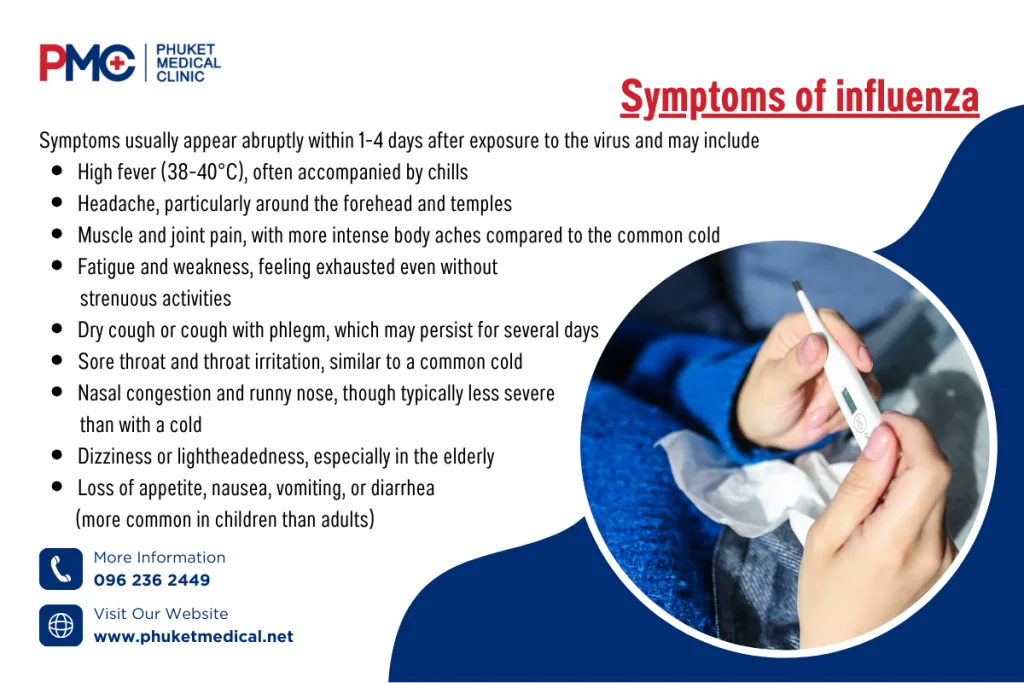
Symptoms usually appear abruptly within 1-4 days after exposure to the virus and may include
- High fever (38-40°C), often accompanied by chills
- Headache, particularly around the forehead and temples
- Muscle and joint pain, with more intense body aches compared to the common cold
- Fatigue and weakness, feeling exhausted even without strenuous activities
- Dry cough or cough with phlegm, which may persist for several days
- Sore throat and throat irritation, similar to a common cold
- Nasal congestion and runny nose, though typically less severe than with a cold
- Dizziness or lightheadedness, especially in the elderly
- Loss of appetite, nausea, vomiting, or diarrhea (more common in children than adults)
Note Some patients may not experience fever but may still have other symptoms such as body aches, cough, and fatigue.
Severe Symptoms That Require Immediate Medical Attention
In some cases, influenza can lead to severe complications, especially in high-risk groups such as the elderly, young children, pregnant women, and individuals with chronic diseases. If any of the following symptoms occur, seek medical attention immediately:
- Difficulty breathing or shortness of breath
- Chest pain or tightness in the chest
- Severe dizziness or loss of consciousness
- Persistent high fever lasting more than three days that does not subside with fever-reducing medication
- Severe cough with dark yellow or green phlegm, which may be accompanied by blood
- Unusually severe muscle pain or headache
- Extreme fatigue that prevents normal daily activities
In children
- Lethargy or lack of interest in playing
- Continuous crying that cannot be soothed
- Reduced fluid intake or signs of dehydration
- Seizures
If any of these symptoms are present, they may indicate complications such as pneumonia, bronchitis, or bloodstream infections, which require immediate medical treatment.
Influenza vs. Common Cold What’s the Difference?
Many people often confuse influenza with the common cold because their symptoms are similar. However, influenza is much more severe.
| Symptom | Influenza (Flu) | Common Cold |
| Onset of Symptoms | Sudden and rapid | Gradual onset |
| Fever | High (38-40°C), often with chills | Low fever or no fever |
| Body Aches | Severe muscle aches, feeling very weak | Mild or no body aches |
| Cough | Dry or severe cough | Mild cough, sometimes with phlegm |
| Runny Nose | Occasional, not severe | Frequent, with clear nasal discharge |
| Headache | Severe headache | Rare or mild headache |
| Fatigue | Extreme fatigue, may feel bedridden | Mild fatigue |
| Complications | Can be severe, such as pneumonia or bronchitis | Rarely causes severe complications |
Summary If you experience a high fever, severe body aches, and unusual fatigue, it may be influenza. Seek medical attention promptly for proper diagnosis and treatment.
Treatment of Influenza
Although influenza can often resolve on its own without severe complications, certain individuals, particularly those in high-risk groups, may require appropriate treatment to prevent severe symptoms and complications.
Supportive Care
For mild cases, doctors typically recommend self-care and symptom management, including
- Rest: Adequate sleep helps the immune system fight the virus.
- Hydration: Drinking plenty of fluids reduces fever, soothes a sore throat, and prevents dehydration.
- Nutritious Diet: Eating foods rich in protein, vitamin C, and antioxidants helps boost the immune system.
Medications to relieve symptoms include
- Paracetamol (Acetaminophen) or Ibuprofen: Reduces fever and alleviates muscle aches.
- Decongestants or Cough Suppressants: Relieves respiratory symptoms.
- Expectorants or Non-productive Cough Medications: Helps clear airways and makes breathing easier.
Warning Aspirin should not be given to children with influenza due to the risk of Reye’s syndrome, a serious condition that affects the brain and liver.
Antiviral Medications
In some cases, especially in high-risk groups or those with severe symptoms, doctors may prescribe antiviral medications to reduce the duration of illness and lower the risk of complications. Examples include
- Oseltamivir (Tamiflu): Widely used and effective if taken within 48 hours of symptom onset.
- Zanamivir (Relenza): Inhaled medication used for severe cases or when Tamiflu is ineffective.
- Baloxavir marboxil (Xofluza): A newer antiviral taken as a single dose that helps reduce viral transmission.
- Peramivir (Rapivab): Administered by injection in hospitals for severe cases.
Who Should Receive Antiviral Medications?
- Individuals with severe symptoms, such as difficulty breathing or rapidly worsening conditions.
- High-risk groups, including
- Children under 5 years old
- Adults over 65 years old
- Pregnant women
- Individuals with chronic conditions such as heart disease, diabetes, or chronic lung diseases
- Those with weakened immune systems
Treatment for Complications
If complications such as pneumonia or respiratory failure occur, hospitalization may be required. Treatment may include
- Oxygen Therapy: To support breathing.
- Antibiotics: If bacterial infections develop alongside influenza.
- Intravenous (IV) Fluids: To maintain hydration and support overall health.
Influenza Prevention
Influenza is a respiratory infection that spreads easily and occurs annually. The best prevention is to reduce the risk of infection and strengthen the immune system through the following methods
Influenza Vaccination in Phuket
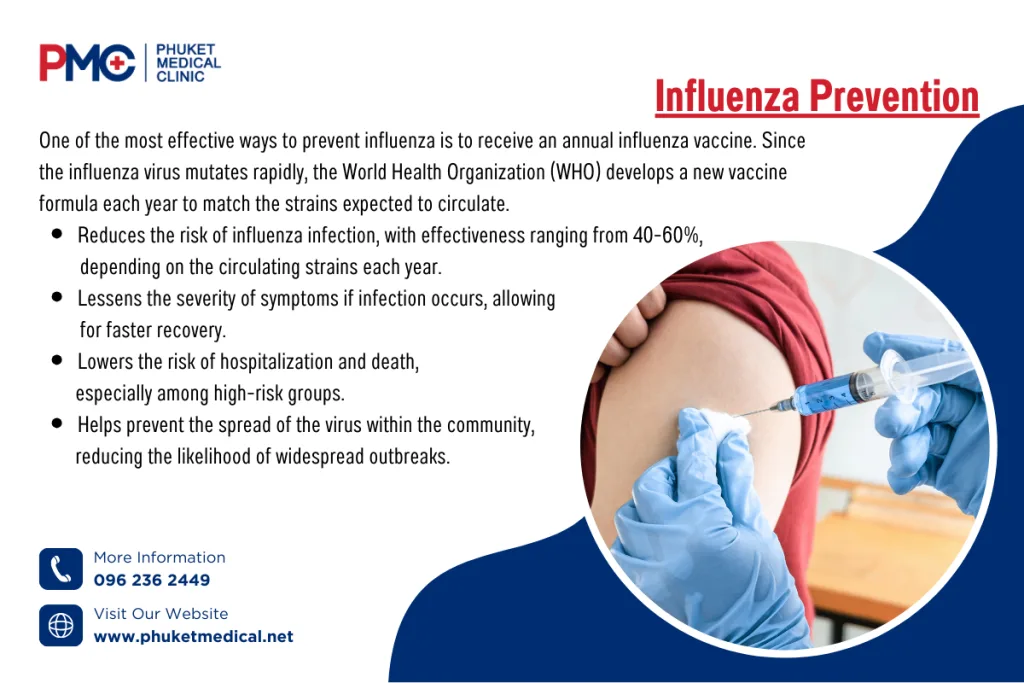
One of the most effective ways to prevent influenza is to receive an annual influenza vaccine. Since the influenza virus mutates rapidly, the World Health Organization (WHO) develops a new vaccine formula each year to match the strains expected to circulate.
Benefits of Influenza Vaccination
- Reduces the risk of influenza infection, with effectiveness ranging from 40-60%, depending on the circulating strains each year.
- Lessens the severity of symptoms if infection occurs, allowing for faster recovery.
- Lowers the risk of hospitalization and death, especially among high-risk groups.
- Helps prevent the spread of the virus within the community, reducing the likelihood of widespread outbreaks.
Who Should Receive the Influenza Vaccine?
Annual influenza vaccination is recommended, particularly for high-risk groups susceptible to severe complications, including
- Children aged six months and older (children younger than six months are not eligible for the vaccine)
- Adults aged 65 years and older
- Pregnant women, as their weakened immune systems during pregnancy increase the risk of severe complications for both mother and baby
- Individuals with chronic conditions such as heart disease, diabetes, asthma, chronic lung diseases, immunodeficiency, or kidney disease
- Healthcare professionals and those working in medical facilities, as they are more likely to be exposed to infected individuals
Are There Any Side Effects of the Influenza Vaccine?
Influenza vaccines are generally safe, with mild side effects such as soreness at the injection site, low-grade fever, or fatigue. These symptoms are typically short-lived and resolve within 1-2 days.
Avoiding Transmission and Maintaining Good Hygiene
Influenza spreads through respiratory droplets released during coughing or sneezing, as well as through contact with contaminated surfaces. Practicing good hygiene helps reduce the risk of infection
- Wash Hands Thoroughly: Wash hands frequently with soap and clean water for at least 20 seconds or use an alcohol-based sanitizer containing at least 60% alcohol when soap and water are unavailable.
- Avoid Touching the Face: Refrain from touching the eyes, nose, and mouth with unwashed hands, as these are entry points for the virus.
- Cover Mouth and Nose When Coughing or Sneezing: Use a tissue to cover the mouth and nose when coughing or sneezing, then dispose of it in a closed bin. Alternatively, cough or sneeze into the elbow if a tissue is unavailable.
- Wear a Face Mask in Public: Especially during influenza outbreaks or when in crowded places such as public transportation, hospitals, or workplaces.
- Stay Home When Sick: Rest at home and avoid going to school or work while experiencing symptoms to prevent spreading the virus to others.
Strengthening the Immune System
Building a strong immune system is essential for preventing influenza. Follow these health tips to boost immunity
- Eat a Nutritious Diet: Include fruits and vegetables high in vitamin C, such as oranges, guavas, kiwis, and papayas, which support the immune system. Consume protein from meat, eggs, milk, and nuts, as well as zinc-rich foods like oysters, red meat, and pumpkin seeds, which help produce immune cells.
- Stay Hydrated: Drink at least eight glasses of water daily to maintain bodily functions and reduce the risk of infection.
- Get Enough Sleep: Aim for 7-9 hours of sleep each night, as sufficient rest strengthens the immune system.
- Exercise Regularly: Engage in physical activities such as brisk walking, swimming, or yoga at least 3-5 times per week to stimulate the immune system.
- Manage Stress: Stress weakens the immune system, so practice relaxation techniques such as meditation, listening to music, or engaging in hobbies.
Influenza Diagnosis and Treatment Services at Phuket Medical Clinic (PMC Phuket Medical Clinic)
Phuket Medical Clinic is an internationally accredited medical center that provides influenza diagnosis and treatment using advanced technology and a team of experienced specialists. Fast and accurate diagnosis and treatment help patients recover more quickly and reduce the risk of complications.
- Influenza Diagnosis
- Antigen Rapid Test: Provides results within 15-30 minutes, ideal for patients with early-stage symptoms.
- RT-PCR Test: Detects Influenza A and B viruses with high accuracy and can identify specific strains.
- Influenza Treatment
- Antiviral Medication – Oseltamivir (Tamiflu): Recommended for individuals with severe symptoms or those in high-risk groups, such as young children, the elderly, and pregnant women.
- Symptom Management: Includes fever reducers, pain relievers, cough suppressants, throat soothers, and respiratory care.
- Emergency Treatment: For patients with complications such as pneumonia or respiratory failure, immediate referral to partner hospitals is available.
- Influenza Vaccination Services
- Quadrivalent Influenza Vaccine: Based on the World Health Organization (WHO) recommendations, this vaccine protects against four strains of influenza and reduces the risk and severity of the disease.
- Recommended for High-Risk Groups: Children aged six months and older, the elderly, pregnant women, individuals with chronic diseases, and healthcare professionals.
Why Choose PMC for Influenza Diagnosis and Treatment?
- Experienced Medical Specialists: Personalized consultation and treatment from skilled doctors.
- Advanced Technology and Equipment: Quick and accurate diagnostic tests.
- Convenient and Fast Services: Book appointments online or contact any branch directly.
- High Safety Standards: Infection control measures meet international standards.
- Affordable Pricing: Competitive service fees with special packages for diagnosis and treatment.
Read More Articles
- How necessary is a vaccine? The answers you should know
- Specialized Health Checkup: In-depth health checkup for a long life
Contact Information
Laguna Branch
Phuket Medical Clinic – Laguna Branch is located at
- 58/1, Choeng Thale Subdistrict, Thalang District, Phuket 83100
- Open daily: Monday – Sunday, 09:00 AM–10:00 PM
- Contact via Line ID: @pmcphuket (Include @)
- Phone number: 096 236 2449
- Clinic Location: https://maps.app.goo.gl/SXaeLrSU9Lx47YPH6
- Online appointment booking: https://pmclaguna.youcanbook.me
Phuket Town Branch
Phuket Medical Clinic – Phuket Town Branch is located at
- 41/7-41/8, Talat Nuea Subdistrict, Mueang Phuket District, Phuket 83000
- Open daily: Monday – Sunday, 09:00 AM–9:00 PM
- Contact via Line ID: @pmcphuket (Include @)
- Phone number: 096 228 2449
- Clinic Location: https://maps.app.goo.gl/yeU9qNArGg3qdwZw9
- Online appointment booking: https://phuketmedicalclinic.youcanbook.me
Boat Lagoon Branch
Phuket Medical Clinic – Boat Lagoon Branch is located at
- 20/96, Moo 2, Thepkrasattri Road, Ko Kaeo Subdistrict, Mueang Phuket District, Phuket 83000
- Open daily: Monday – Sunday, 10:00 AM – 06:00 PM
- Contact via Line ID: @pmcphuket (Include @)
- Phone number: 096 696 2449
- Clinic Location: https://maps.app.goo.gl/HbqfUKMEHXuKwan96
- Online appointment booking: https://pmctown.youcanbook.me
Influenza is a disease that occurs every year due to the constant mutation of the virus. It spreads easily, especially during the rainy and winter seasons. Although avoiding infection can be challenging, the risk can be reduced by getting vaccinated annually, maintaining good hygiene, and keeping the body healthy.
Don’t forget! Prevention is better than cure. If you have not yet received your influenza vaccine this year, it is recommended to get vaccinated as soon as possible to protect yourself and your loved ones from influenza.
References
- Centers for Disease Control and Prevention (CDC). Influenza (Flu). Comprehensive information on influenza, its seasonal outbreaks, prevention, and vaccination recommendations. [Online] Available at: https://www.cdc.gov/flu/index.htm
- World Health Organization (WHO). Influenza (Seasonal). Information on the causes, spread, and prevention of seasonal influenza, including vaccine updates. [Online] Available at: https://www.who.int/news-room/fact-sheets/detail/influenza-(seasonal)
- Department of Disease Control, Ministry of Public Health (Thailand). Influenza (Flu). Detailed information on the influenza virus, viral mutations, and prevention guidelines in Thailand. [Online] Available at: https://ddc.moph.go.th/disease_detail.php?d=13
- Pediatric Infectious Disease Society of Thailand. What is Influenza? Basic information about the influenza virus and prevention guidelines for children. [Online] Available at: https://www.pidst.or.th/A709.mobile
- Ministry of Public Health (Thailand). Official website of the Department of Disease Control, Ministry of Public Health. Information about influenza and vaccination in Thailand. [Online] Available at: http://www.moph.go.th