
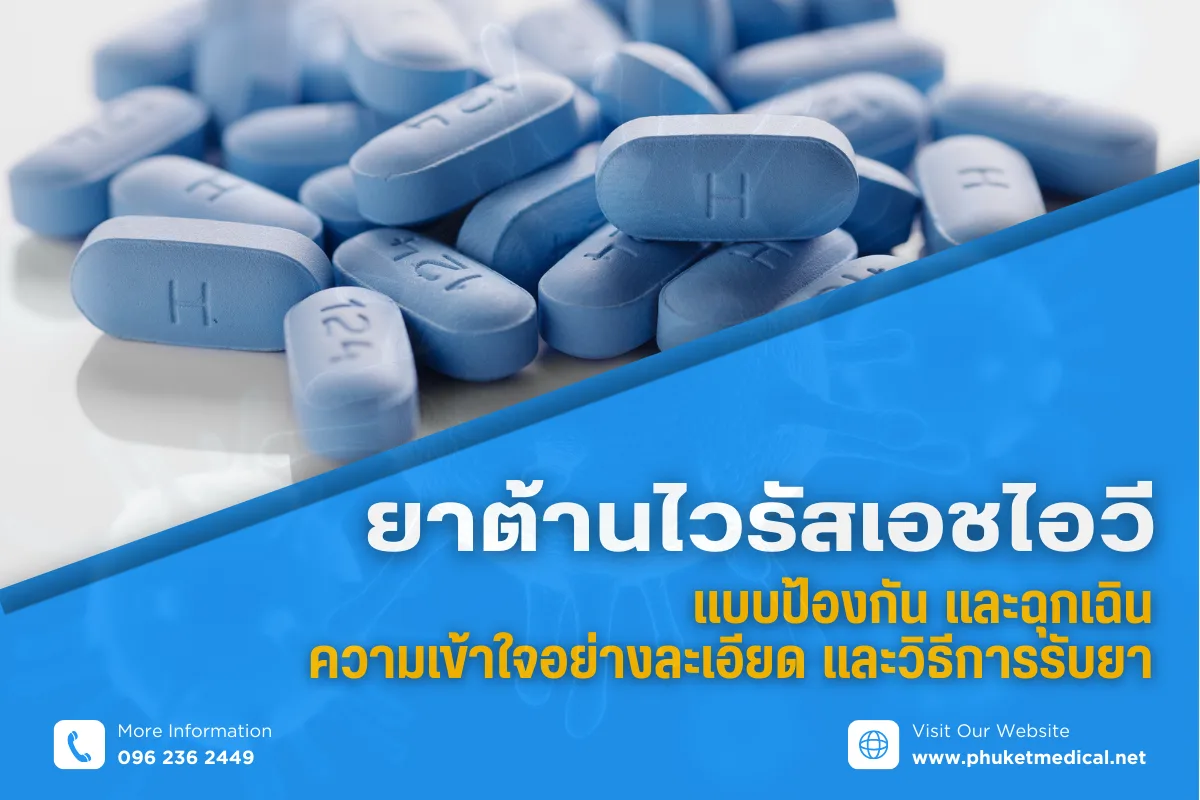
Preventive and Emergency HIV Medications The spread of HIV remains a major health problem worldwide. Although medical advances have helped reduce the spread and improve the quality of life for those infected, prevention remains the key to controlling the situation. Currently, there are antiretroviral drugs that can be used to prevent infection before and after exposure to the virus, including PrEP and PEP.
Basic understanding of HIV and AIDS
HIV (Human Immunodeficiency Virus) is a virus that affects the body’s immune system, especially the T-cell (CD4) white blood cell type, which plays an important role in fighting germs. When HIV enters the body, the number of T-cells decreases, causing the body to become weak and susceptible to various opportunistic infections.
AIDS (Acquired Immune Deficiency Syndrome) is the final stage of HIV infection when the immune system is destroyed to the point where it cannot prevent infection or complications. Patients in this stage often have severe symptoms and are at risk of death.
Causes of HIV transmission
- Unprotected sex, not using condoms during vaginal, anal, or oral sex
- Sharing injection needles, such as in drug users
- Mother-to-child transmission during pregnancy, childbirth, or breastfeeding
- Receiving contaminated blood or organs. Although there is currently strict screening, there is still a small risk.
What are HIV antiretroviral drugs?
Antiretroviral drugs (HIV) are drugs that work to inhibit the division of And the spread of HIV within the body. It is divided into 2 main types of use:
- Preventive antiretroviral drugs (Pre-Exposure Prophylaxis – PrEP) are used for people who are not infected with HIV but are at high risk of infection. This drug helps prevent the virus from entering white blood cells. It must be taken regularly and continuously.
- Post-Exposure Prophylaxis (PEP) is used for people who are accidentally exposed to HIV, such as having sex with a broken condom or being stabbed by a needle. This drug must be started within 72 hours (3 days) after exposure to the virus and must be taken continuously for 28 days.
Types of HIV antiretroviral drugs
HIV antiretroviral drugs, also known as Antiretroviral (ARV) drugs, are divided according to their mechanism of action as follows:
- Nucleoside Reverse Transcriptase Inhibitors (NRTIs)
- Mechanism of action: Inhibits the enzyme Reverse Transcriptase, an enzyme that HIV uses to change its own RNA into DNA to integrate into the body’s cells.
- Result: Stops the connection of the virus’s genetic material. Prevents the virus from multiplying.
- Examples of drugs: Tenofovir Disoproxil Fumarate (TDF), Emtricitabine (FTC)
- Non-Nucleoside Reverse Transcriptase Inhibitors (NNRTIs)
- Mechanism of Action: Inhibits the Reverse Transcriptase enzyme, just like NRTIs, but works by attaching to the enzyme at a different location.
- Effect: Stops HIV from making DNA.
- Examples of drugs: Efavirenz (EFV), Rilpivirine (RPV)
- Integrase Strand Transfer Inhibitors (INSTIs)
- Mechanism of Action: Inhibits the integrase enzyme, which HIV uses to integrate its own DNA into the DNA of white blood cells.
- Effect: Prevents HIV DNA from integrating into body cells.
- Examples of drugs: Dolutegravir (DTG), Bictegravir (BIC)
- Protease Inhibitors (PIs)
- Mechanism of Action: Inhibits the protease enzyme, which HIV uses to Used to cut long proteins into short proteins to make new viruses.
- Outcome: Stops the creation of new viruses.
- Drug example: Lopinavir/Ritonavir (LPV/r)
- Entry and Fusion Inhibitors
- Mechanism of action: Prevents HIV from entering white blood cells.
- Outcome: Stops infection at the first stage.
- Drug example: Enfuvirtide (T-20), Maraviroc (MVC)
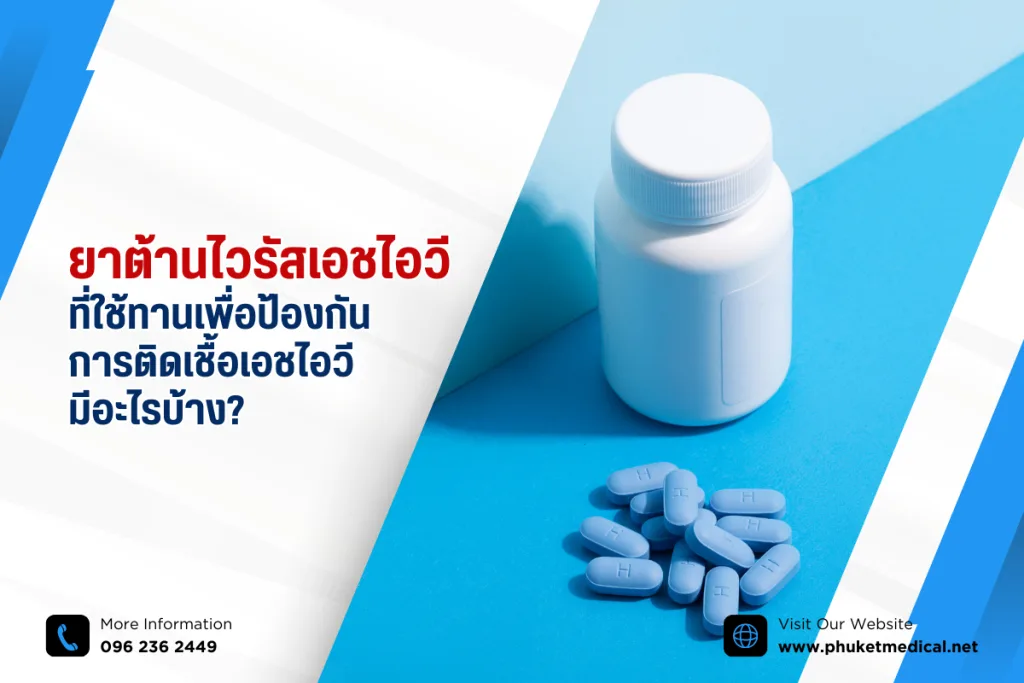
What are the antiretroviral drugs used to prevent HIV infection?
Pre-Exposure Prophylaxis (PrEP): Pre-exposure prophylaxis
PrEP is an antiretroviral drug used by people who are not yet infected with HIV but are at high risk of exposure. This drug reduces the risk of contracting HIV if exposed and is one of the most effective methods of prevention.
Steps before receiving PrEP
- Health check and blood test
- Anti-HIV test to confirm that the recipient is not infected with HIV.
- Hepatitis B (HBV) test because PrEP affects people with hepatitis B.
- Kidney function test to assess physical condition before starting the drug.
- Get medicine from the doctor. For those who are starting to use PrEP for the first time, the doctor usually prescribes a 1-month supply of medicine and schedules a follow-up check-up.
How to use PrEP
- PrEP must be taken every day at the same time in order to maintain a stable level of medicine in the body.
- Taking PrEP continuously can reduce the risk of contracting HIV by up to 99%.
Follow-up test
- People who receive PrEP Must have a health check every 3 months to test for HIV and check kidney function regularly.
Precautions
- Even though using PrEP, using condoms will help increase the effectiveness of preventing other sexually transmitted diseases such as syphilis or gonorrhea.
- PrEP does not cause long-term side effects if used correctly and under the supervision of a doctor.
Post-Exposure Prophylaxis (PEP): Emergency medicine after exposure to HIV
Pep is an antiviral drug used after the recipient may have accidentally been exposed to HIV. This drug reduces the risk of HIV infection, but it must be started within 72 hours after exposure. The sooner you start taking it, the more effective it is.
Steps before taking PEP
- Health check and blood test
- Anti-HIV test to confirm that the recipient is not infected with HIV.
- Test for hepatitis B and C, syphilis, kidney function, and liver enzymes to assess the body’s readiness before starting the drug.
- Receive medication from a doctor. PEP must be taken continuously for 28 days as prescribed by a doctor.
How to use PEP
- Take the medication strictly at the time prescribed by the doctor.
- After taking the 28-day course, you will need to get a repeat anti-HIV test to confirm the results.
Precautions
- Pep must be taken within 72 hours after exposure to the virus. If this time period is exceeded, Pep will not be effective.
- Pep does not cause drug resistance and can be used repeatedly if there is a risk in the future.
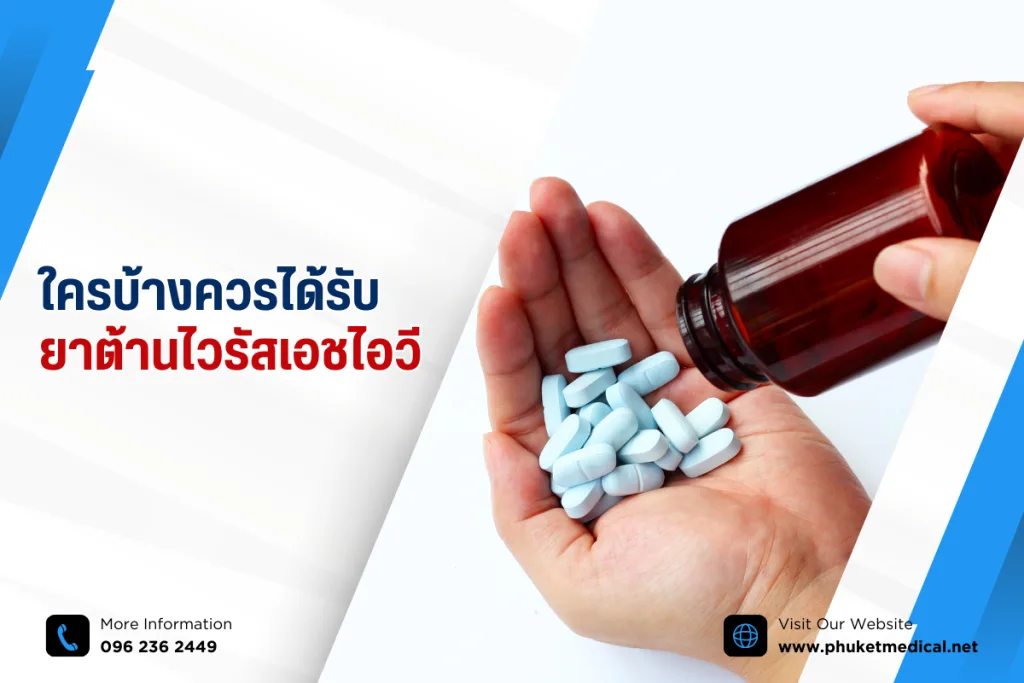
Who should receive HIV antiretroviral drugs?
- Who should receive PrEP?
- Those who have sex with a partner whose blood test result is unknown and who has had frequent sex partners.
- Those who have a partner who is HIV-infected, especially if the partner is not yet on antiretroviral treatment.
- Those who work in high-risk occupations, such as sex workers.
- Those who should receive PEP?
- Those who have unprotected sex, such as being raped, or have accidents during sex, such as condoms breaking or tearing.
- Those who have been exposed to blood or bodily fluids of an HIV-infected person, such as being punctured by a needle or knife.
- Healthcare workers who have had accidents, such as being stuck with a needle while working.
The importance of taking antiretroviral drugs
The importance of receiving PrEP and PEP are important tools in preventing HIV infection, but they cannot completely replace the use of condoms or other forms of protection. The use of the drugs must be under the supervision of a doctor and the person receiving the drugs must strictly follow the instructions.
Additional precautions
- HIV antiretroviral drugs do not protect against other sexually transmitted diseases, such as syphilis, gonorrhea, or hepatitis.
- Regular health check-ups and follow-up are important to assess the effectiveness of the drugs and their safety.
Both PrEP and PEP are effective options to reduce the risk of HIV infection, but should be used correctly and under the guidance of a doctor. Those at high risk of infection should consider using PrEP regularly, while PEP is suitable for emergency situations where HIV exposure may occur.
The best prevention is to use condoms every time you have sex and to have regular health check-ups to know your health status. Proper use of PrEP and PEP will reduce the risk of HIV infection and support sustainable good health.
Things to know before taking PrEP
- Receiving PEP
- Important time PEP is most effective if started within 72 hours (3 days) after exposure. If it is longer than this, the drug will not be effective in preventing infection.
- Blood test If a person has been at risk of exposure for more than 72 hours, they should have a blood test at least 14-21 days after to confirm their infection status.
- Special status Pregnancy and breastfeeding Pregnant or breastfeeding women must inform their doctor every time before starting to take the drug. Because the doctor must choose the right drug formula that is safe for the mother and child.
Where to take HIV antiretroviral drugs
Taking HIV antiretroviral drugs cannot be done by yourself. But must be under the order And medical care, which can be accessed at:
- Government and private hospitals provide blood tests and antiviral medications, along with consultation from a doctor.
- Specialized clinics, such as clinics specializing in sexually transmitted diseases, which have resident doctors who can provide specialized advice.
- Non-profit organizations, such as sexual health centers, provide testing and antiviral medications at affordable prices.
Every time you receive medication, you will need to have a blood test to test for HIV and assess your body’s readiness, such as liver and kidney function, for safety and to reduce possible side effects.
Prices of HIV antiviral medications
The prices of HIV antiviral medications vary depending on the type of medication, the source of production, and the side effects of the medication. Generally, high-priced medications have fewer side effects than low-priced medications.
HIV antiretroviral drug price list
| list | price baht |
| PEP | 2,500 – 18,200 |
| PrEP (30 เม็ด) | 1,000 – 3,200 |
| PEP Lab test | 3,000 |
| PrEP Lab test | 2,000 |
ค่าใช้จ่ายอื่น ๆ การรับยาครั้งแรกจำเป็นต้องมีการตรวจเลือดเพิ่มเติม เช่น การตรวจหาเชื้อ HIV ตรวจการทำงานของไต และค่าปรึกษาแพทย์ ซึ่งอาจมีค่าใช้จ่ายร่วมเพิ่มเติม
Taking HIV antiretroviral drugs: Guidelines and practices
HIV antiretroviral drugs must be taken continuously and strictly according to the doctor’s orders. Improper use of drugs may cause drug resistance and reduce the effectiveness of treatment. Therefore, you should follow these guidelines:
- Take drugs as prescribed by the doctor.
- Take drugs at the same time every day to maintain the drug level in the body at an effective level.
- Do not change the time, increase or decrease the dosage on your own. Consult a doctor if you need to make any changes.
- Taking drugs with food
- Some antiretroviral drugs are recommended to be taken with food or immediately after food to help increase drug absorption and reduce side effects, such as
- RPV (Rilpivirine)
- ATV (Atazanavir)
- DRV (Darunavir)
- EVG/COBI (Elvitegravir/Cobicistat)
- In case of taking Integrase Inhibitors, be careful not to take them with vitamins or supplements containing magnesium, aluminum, iron, calcium or zinc because they may reduce the effectiveness of the drug.
- Some antiretroviral drugs are recommended to be taken with food or immediately after food to help increase drug absorption and reduce side effects, such as
- Avoid drugs that conflict with antiretroviral drugs
- Drugs that should not be used with RPV include: Proton Pump Inhibitors (PPI)
- If antacids are required, Ranitidine should be used and a doctor should be consulted about the appropriate time to take it.
- Taking the drug before bedtime
- Some drugs, such as EFV (Efavirenz), are recommended to be taken before bedtime and on an empty stomach to reduce side effects such as dizziness or nausea.
- Stopping the drug
- Do not stop taking the drug without consulting a doctor because it may cause drug resistance and increase the complexity of the treatment.
- If it is necessary to stop taking the drug temporarily, inform the doctor to plan a new treatment plan.
- Preventing additional infections
- While taking HIV drugs, avoid having sex until the drug is completely taken as prescribed by the doctor.
- If it is unavoidable, condoms should be used at all times to prevent additional infections.
Side effects of HIV drugs
Although current HIV drugs have been developed to be safer and more effective, some patients may experience side effects in the initial stages of taking the drug, which usually decrease or disappear on their own when the body adjusts.
Common side effects
- Diarrhea 21-25%
- Dizziness 21-25%
- Headache 21-25%
- Insomnia 21-25%
- Rash 21-25%
- Asthenia 16-20%
- Nausea 16-20%
- Rhinitis 16-20%
- Abdominal Pain 11-15%
- Paresthesia 11-15%
Advice for managing side effects
- For mild symptoms such as nausea or dizziness, take the medication at bedtime to help reduce symptoms.
- If symptoms do not go away within 1 week or become more severe, consult a doctor immediately.
Long-term follow-up
- Patients who have been taking antiretroviral drugs for HIV for 6 months or more should have their liver and kidney function checked, as antiretroviral drugs can affect the function of these organs.
- Regular follow-up allows the doctor to adjust the treatment plan appropriately.
Do I have to take HIV medication forever?
There are two main types of HIV medication for prevention: PrEP and PEP. They have different durations of use, as follows:
Pre-Exposure Prophylaxis (PrEP)
This type of medication is used for people who are not yet infected with HIV but are at high risk of exposure, such as those who have sex with multiple partners or whose partners are HIV-infected.
How to take PrEP
- Daily PrEP
- You must start taking the medication continuously at least 7 days before exposure.
- If you want to stop taking the medication, you should wait until after your last risk period, which is 7 days, before stopping.
- On-Demand PrEP
- This method is suitable for anal sex only.
- Take 2 PrEP pills 2-24 hours before having sex.
- After that, take 1 PrEP pill per day for 2 days after your last sexual contact.
- This method is also called “2-1-1 PrEP”.
Post-Exposure Prophylaxis (PEP)
This type of medication is an emergency medicine for people who may have accidentally been exposed to HIV, such as through unprotected sex, needle sticks, or sexual assault.
How to take PrEP
- It must be started within 72 hours of exposure, the sooner the better.
- Take the medication continuously for 28 days at the same time every day.
- After the prescribed period, you will need to get a blood test to confirm the protection.
Do I have to take the antiretroviral medication for the rest of my life?
- For PrEP, PrEP users can stop taking it when there is no further risk of exposure. However, you should always consult your doctor before stopping the medication.
- For PEP, once you have taken it for 28 days and it is confirmed that you are HIV-negative, you can stop taking it.
Stopping the medication must be done under the guidance of a doctor, and risky behaviors should be avoided in the future.
Additional prevention: Are antiretroviral medications 100% effective in preventing HIV?
Although PrEP and PEP are highly effective in preventing HIV infection, they are not 100% effective and do not protect against other sexually transmitted diseases such as syphilis, gonorrhea, or genital warts.
Additional recommendations
- Always use condoms during sex.
- Avoid having sex with a partner whose HIV status is unknown.
Effects of not taking antiretroviral drugs on time
Taking antiretroviral drugs Preventive and Emergency HIV Medications on time is important because
- It helps maintain the effective blood levels of the drug.
- It reduces the amount of virus in the body and prevents the virus from multiplying.
- It reduces the chance of drug resistance in the future.
If the drug is not taken on time,
- HIV may multiply, requiring a change to a stronger drug formula, which may have more side effects.
- It increases the risk of complications, such as opportunistic infections.
Using antiretroviral drugs with other drugs
In general, antiretroviral drugs can be used together with other drugs, but caution must be exercised in cases where the drugs interact with each other, such as:
- RAL (Edurant) drugs
- Do not use with omeprazole stomach acid reducers.
- If antacids are required, they should be taken 2 hours before or 4 hours after.
- DTG (Trivicay) drugs
- They should not be used with Metformin diabetes medication.
Always inform your doctor or pharmacist if you need to use any additional drugs or supplements.
PrEP and PEP services at Phuket Medical Clinic, Laguna
Phuket Medical Clinic, Laguna offers Preventive and Emergency HIV Medications PrEP and PEP to prevent HIV infection safely and effectively, with care from a team of expert doctors in a friendly and safe atmosphere.
- PrEP services for pre-exposure prophylaxis against HIV
- Consultation and risk assessment
- Basic health check-ups, such as liver and kidney function
- Prescribe PrEP with instructions for correct use
- Follow-up every 3 months
- PEP services for post-exposure prophylaxis against HIV in emergencies
- PEP must be started within 72 hours of exposure
- Health check-ups and medication instructions
- Prescribe antiretroviral medications for continuous use for 28 days
- Follow-up after treatment ends
Contact Phuket Medical Clinic Laguna Branch for safe and up-to-date HIV prevention consultation and services.
Read more articles
- PrEP, HIV and AIDS prevention, a prevention option you can design
- Get to know PEP, emergency antiretroviral drugs to prevent HIV, an important option you should know about
Contact Channels
Laguna Branch
- Phuket Medical Clinic, Laguna Branch is located at 58/1, Cherngtalay Subdistrict, Thalang District, Phuket Province 83100
- Open every day, Monday – Sunday, 09.00 – 22.00 hrs.
- Inquire via Line id. @pmcphuket (with @)
- Contact number 096 236 2449
- Clinic map https://maps.app.goo.gl/SXaeLrSU9Lx47YPH6
- Book an appointment online https://pmclaguna.youcanbook.me
Branch in the city
- Phuket Medical Clinic, Phuket City Branch is located at 41/7-41/8, Talat Nuea Subdistrict, Mueang Phuket District, Phuket Province 83000
- Open every day, Monday – Sunday, 09.00 – 22.00 hrs.
- Inquire via Line id. @pmcphuket (with @)
- Contact number 096 228 2449
- Clinic map https://maps.app.goo.gl/yeU9qNArGg3qdwZw9
- Book an appointment online https://phuketmedicalclinic.youcanbook.me
Boat Lagoon Branch
- Phuket Medical Clinic Boat Lagoon Branch is located at 20/96. Moo 2, Thepkrasattri Rd., Koh Kaew Subdistrict, Mueang Phuket District, Phuket Province 83000
- Open every day, Monday – Sunday, 10.00 – 18.00 hrs.
- Inquire via Line ID. @pmcphuket (with @)
- Contact number 096 696 2449
- Clinic map https://maps.app.goo.gl/HbqfUKMEHXuKwan96
- Book an appointment online https://pmctown.youcanbook.me
Preventive and Emergency HIV Medications Getting tested for HIV and starting treatment early are key to helping people living with HIV live long, healthy lives comparable to those of other people. Don’t let fear or embarrassment get in the way of taking care of your health. HIV is preventable, and if caught early, you have a better chance of getting the right care and treatment that will help you live a better life in the long run.
Reference
- Centers for Disease Control and Prevention (CDC) Comprehensive overview on HIV testing, prevention, and management. [Online] Available at: https://www.cdc.gov/hiv/basics/testing.html
- World Health Organization (WHO) Guidelines on HIV testing and treatment approaches. [Online] Available at: https://www.who.int/publications/i/item/9789241508926
- UNAIDS Global guidelines on HIV prevention and management, including self-testing protocols. [Online] Available at: https://www.unaids.org/en/resources
- กระทรวงสาธารณสุขแห่งประเทศไทย (Ministry of Public Health, Thailand) ข้อมูลเกี่ยวกับการตรวจหาเชื้อเอชไอวีและบริการด้านสุขภาพที่เกี่ยวข้อง. [ออนไลน์] เข้าถึงได้จาก: http://www.moph.go.th
- สถาบันบำราศนราดูร (Bamrasnaradura Infectious Diseases Institute) ศูนย์บริการด้านโรคติดต่อทางเพศสัมพันธ์และเอชไอวีในประเทศไทย. [ออนไลน์] เข้าถึงได้จาก: https://www.bamras.org