
Having unprotected sex increases the risk of Sexually Transmitted Diseases (STDs), which are health problems found in all genders and all ages, especially in teenagers and working-age people who lack knowledge and understanding about self-protection. According to data from Thailand, there are hundreds of thousands of people infected with sexually transmitted diseases who may not know they are infected or have never been tested before. Understanding sexually transmitted diseases, testing methods, treatment, and prevention allows you to take care of your own health and reduce the spread of infection in society.
What are sexually transmitted diseases (STDs)?
Sexually transmitted diseases (STDs) refer to diseases that can be transmitted through direct sexual intercourse, whether through the vagina, anus, or mouth. These diseases are caused by contact with secretions such as semen, lubricant, blood, or saliva of an infected person. They can also be spread through:
- Sharing injection needles
- Contact with objects contaminated with blood or secretions
- Transmission from mother to child during pregnancy, childbirth, or breastfeeding
Some STDs, such as HIV or syphilis, if left untreated can lead to serious complications and affect quality of life.
Causes of Sexually Transmitted Diseases (STDs)
STDs are caused by various types of infections, which are divided into 4 main groups as follows:
Bacteria.
Diseases caused by bacteria can be completely cured with antibiotics if treated promptly. Examples of common diseases include:
- Gonorrhea (gonorrhea) caused by Neisseria gonorrhoeae bacteria, causing symptoms of burning when urinating, abnormal vaginal discharge, and pelvic pain.
- Chlamydia (non-gonococcal urethritis) caused by Chlamydia trachomatis bacteria, usually has no symptoms in the early stages, but if left untreated, it can affect the reproductive system.
- Syphilis (syphilis) caused by Treponema pallidum bacteria, has symptoms of chancroid in the early stages, and can spread to the nervous system and heart if left untreated.
- Chancroid (chancroid) caused by Haemophilus ducreyi bacteria, causing sores in the genitals.
- Lymphogranuloma Venereum (lymphogranuloma venereum) caused by non-gonococcal bacteria, causing swollen and painful lymph nodes.
Viruses
Some viruses can be completely cured, but some can remain in the body and recur. Examples of viruses related to sexually transmitted diseases include:
- Herpes Simplex Virus (HSV) causes sore blisters on the genitals or around the mouth. Viruses can hide in the body. And can recur
- Human Papillomavirus (HPV)
- Human Papillomavirus (HPV): Causes genital warts and cervical cancer in women
- Molluscum Contagiosum: Causes small white bumps on the skin
- Hepatitis B and C: Transmitted through bodily fluids and blood, causing inflammation of the liver and potentially leading to liver cancer
- HIV: A virus that destroys the immune system, if left untreated, can progress to AIDS
Parasites
Parasites often cause irritation and unpleasant symptoms. Examples of diseases caused by parasites include:
- Pubic Lice: Parasites that live in the pubic hair area, causing itching
- Scabies: Parasites that burrow under the skin, causing itchy rashes
- Trichomoniasis: Causes abnormal vaginal discharge and itching
Yeast
Examples of diseases caused by common yeast include:
- Vaginal yeast infection: Caused by an imbalance of microflora in the vagina Causes itching, burning, and vaginal discharge that resembles yogurt.

How are STDs transmitted?
STDs can be transmitted in many ways, especially through sexual intercourse, whether through vaginal, anal or oral sex. Contact with secretions such as semen, lubricant or blood of an infected person, as well as sharing injection needles, are channels through which the infection can enter the body.
Many people misunderstand that oral sex is not at risk of infection. However, oral sex can actually cause STDs, such as:
- Gonorrhea
- Chlamydia
- Syphilis
- Herpes Simplex Virus
- Genital Warts
No matter what type of sex you have, if your partner has the infection, you are also at risk of infection.
Who should get tested for STDs?
People who should get tested for STDs include:
- People who have unprotected sex, such as not using a condom, or if the condom leaks, breaks, slips off or tears during sex, or engage in risky behaviors.
- People who have sex at a young age. Having sex at a young age increases the risk of infection.
- People who have frequent sex partners, such as having more than 1 partner in the past 3 months.
- People who have had anal sex. Anal sex increases the risk of infection.
- People who have relationships with women or men who sell sex, especially if they do not use condoms.
- People who have risky events, such as condoms breaking, slipping, or leaking during sex.
- People who plan to get married or have children, to prevent passing on infection to their spouse or children.
Why should you get tested for STDs?
Testing for STDs is very important because:
- Some diseases do not cause symptoms, such as HIV or some strains of HPV, which people who are infected may not know they have.
- Reduce the spread of disease. Early detection and treatment can reduce the spread of infection to sexual partners or close people.
- Prevent serious complications, such as cervical cancer, anal cancer (caused by HPV) or liver cancer (caused by hepatitis B and C viruses).
- Increase the chance of treatment. If the infection is found early, treatment will be effective and reduce the long-term health impact.
What can be tested for STDs?
STD testing helps you know your health status early on. Recommended tests include:
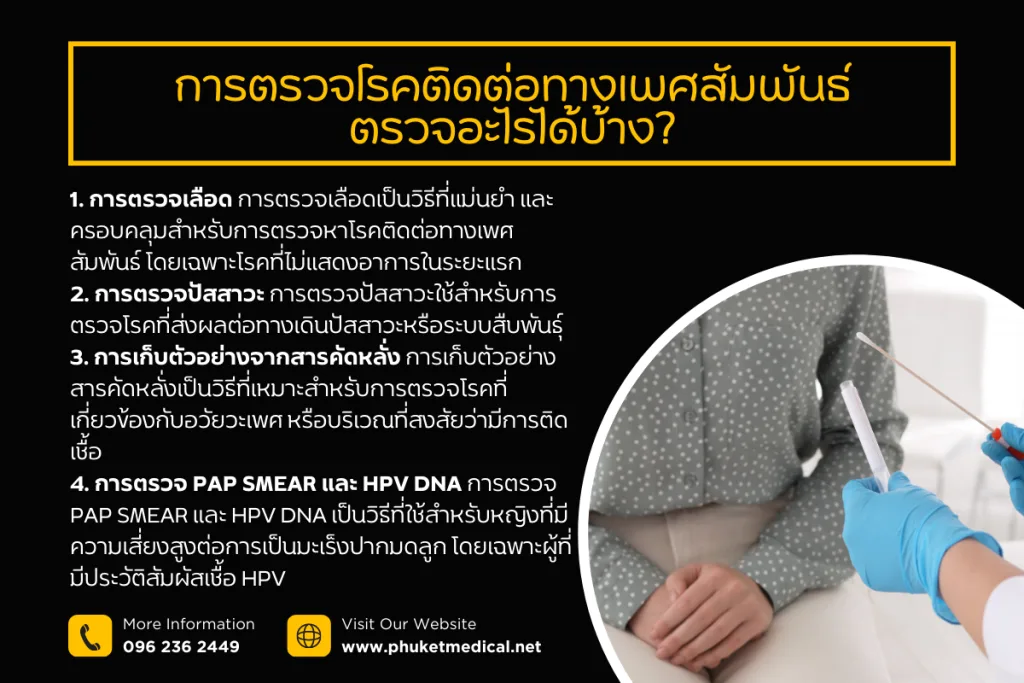
Blood test
Blood tests are an accurate and comprehensive method for screening for STDs, especially those that do not show symptoms in the early stages, such as:
- HIV: Tests for HIV antibodies or antigens to diagnose infection.
- Syphilis: Tests for antibodies to Treponema pallidum, the pathogen.
- Hepatitis B: Tests for immunity or antigens to the hepatitis B virus.
- Hepatitis C: Tests for antibodies to the hepatitis C virus.
Advantages of blood tests
- Highly accurate
- Can be tested for both symptomatic and asymptomatic people.
Urine tests
Urine tests are used to screen for diseases affecting the urinary tract or reproductive system, such as:
- Gonorrhea: Tests for Neisseria gonorrhoeae in urine
- Chlamydia: Tests for Chlamydia trachomatis in urine
Advantages of urine tests
- Painless
- Convenient and fast
Collecting samples from secretions
Collecting samples from secretions is an ideal method for screening for diseases related to the genitals or areas suspected of being infected, such as:
- Vaginal samples: To screen for pathogens that may cause abnormal vaginal discharge, such as gonorrhea, chlamydia, fungus, or bacteria
- Urethral samples (in men): To screen for pathogens, such as gonorrhea or chlamydia
- Anal or oral samples: To screen for infections in those areas, such as herpes, genital warts, or syphilis
Advantages of collecting samples from secretions
- Tests for specific infections
- Suitable for those with symptoms in those areas
Pap smear and HPV
DNA testing Pap smear and HPV DNA testing are methods used for women who are at high risk of cervical cancer. Especially those who have a history of exposure to HPV
- Pap smear: Examine cells in the cervix to look for abnormalities or changes in cells that may lead to cancer
- HPV DNA Test: Test for HPV, which causes cervical cancer
Advantages of Pap smear and HPV DNA test
- Helps detect changes in cells at an early stage
- Reduces the risk of developing cervical cancer
Where can I get tested for STDs?
STD tests can be done at
- Hospitals, both public and private hospitals, provide STD testing services
- Specialist clinics, such as clinics that provide specialized testing services in Bangkok or large cities
- Public health agencies, such as government hospitals that provide testing and counseling services
The important thing is not to be afraid or embarrassed. If you are at risk or suspect that you may be infected, you should see a doctor immediately. Because early detection will help the treatment be most effective.
Treatment of STDs
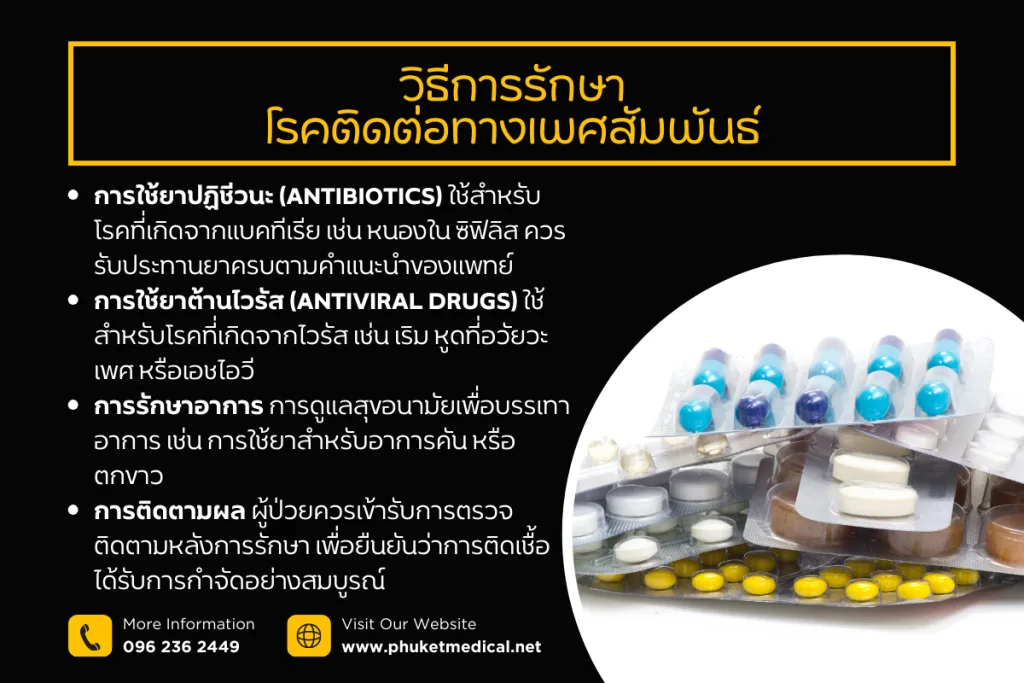
- Antibiotics are used for bacterial diseases such as gonorrhea and syphilis. Take the full course of medication as prescribed by your doctor.
- Antiviral drugs are used for viral diseases such as herpes, genital warts or HIV.
- Treatment of symptoms, hygiene to relieve symptoms such as using medicine for itching or vaginal discharge.
- Follow-up Patients should receive follow-up tests after treatment to confirm that the infection has been completely eliminated.
Prevention of STDs
- Using condoms is the most effective method of prevention to reduce the spread of infection.
- Reduce the number of sexual partners. Having multiple sexual partners increases the risk of infection.
- Avoid sharing needles, especially among drug users.
- Avoid risky behaviors such as having sex while drinking alcohol or being inattentive.
- Getting vaccinated, HPV vaccines and hepatitis B vaccines reduce the risk of these diseases.
- Annual health check-ups help you know your health status and reduce your risk of infection.
- Learn and observe symptoms. Understanding STDs helps you recognize unusual symptoms and take appropriate preventive measures.
Advantages of Testing And treat sexually transmitted diseases at Phuket Medical Clinic, Laguna branch
- A team of expert doctors, providing consultation and treatment by experienced specialists
- Privacy Private examination and treatment services with strict protection of patient information
- Comprehensive examination, a variety of examination services such as HIV, gonorrhea, syphilis, herpes and genital warts
- Modern technology, using certified equipment, helps with accurate diagnosis
- Personalized treatment, providing the most appropriate treatment for each patient
- Convenient, located in an easily accessible location, with advance booking service to reduce waiting time
Phuket Medical Clinic, Laguna branch provides a full range of services, including examination, treatment and consultation, for good health and your confidence!
Read more articles
- Gonorrhea: Causes, Symptoms, Treatment, and Prevention
- Syphilis: Causes, Symptoms, Treatment, and Prevention
Contact Channels
Laguna Branch
- Phuket Medical Clinic, Laguna Branch is located at 58/1, Cherngtalay Subdistrict, Thalang District, Phuket Province 83100
- Open every day, Monday – Sunday, 09.00 – 22.00 hrs.
- Inquire via Line id. @pmcphuket (with @)
- Contact number 096 236 2449
- Clinic map https://maps.app.goo.gl/SXaeLrSU9Lx47YPH6
- Book an appointment online https://pmclaguna.youcanbook.me
Branch in the city
- Phuket Medical Clinic, Phuket City Branch is located at 41/7-41/8, Talat Nuea Subdistrict, Mueang Phuket District, Phuket Province 83000
- Open every day, Monday – Sunday, 09.00 – 22.00 hrs.
- Inquire via Line id. @pmcphuket (with @)
- Contact number 096 228 2449
- Clinic map https://maps.app.goo.gl/yeU9qNArGg3qdwZw9
- Book an appointment online https://phuketmedicalclinic.youcanbook.me
Boat Lagoon Branch
- Phuket Medical Clinic Boat Lagoon Branch is located at 20/96. Moo 2, Thepkrasattri Rd., Koh Kaew Subdistrict, Mueang Phuket District, Phuket Province 83000
- Open every day, Monday – Sunday, 10.00 – 18.00 hrs.
- Inquire via Line ID. @pmcphuket (with @)
- Contact number 096 696 2449
- Clinic map https://maps.app.goo.gl/HbqfUKMEHXuKwan96
- Book an appointment online https://pmctown.youcanbook.me
Sexually Transmitted Diseases (STDs) are preventable health problems if we have knowledge, understanding and follow appropriate prevention methods. Regular health check-ups are the key to reducing the risk of disease transmission and increasing the chances of successful treatment.
If you have risky behavior or suspect that you may be infected, do not wait. Consult a doctor and get a health check to take care of yourself and your loved ones. Good health starts with knowing how to prevent and getting checked regularly!
Reference
- Centers for Disease Control and Prevention (CDC) Comprehensive overview on HIV testing, prevention, and management. [Online] Available at: https://www.cdc.gov/hiv/basics/testing.html
- World Health Organization (WHO) Guidelines on HIV testing and treatment approaches. [Online] Available at: https://www.who.int/publications/i/item/9789241508926
- UNAIDS Global guidelines on HIV prevention and management, including self-testing protocols. [Online] Available at: https://www.unaids.org/en/resources
- กระทรวงสาธารณสุขแห่งประเทศไทย (Ministry of Public Health, Thailand) ข้อมูลเกี่ยวกับการตรวจหาเชื้อเอชไอวีและบริการด้านสุขภาพที่เกี่ยวข้อง. [ออนไลน์] เข้าถึงได้จาก: http://www.moph.go.th
- สถาบันบำราศนราดูร (Bamrasnaradura Infectious Diseases Institute) ศูนย์บริการด้านโรคติดต่อทางเพศสัมพันธ์และเอชไอวีในประเทศไทย. [ออนไลน์] เข้าถึงได้จาก: https://www.bamras.org