
Dengue fever is a common disease in Thailand, especially in hot and humid areas such as Phuket, where dengue outbreaks occur annually. Dengue vaccination is one way to help reduce the risk of infection and prevent severe complications that may arise.
What is Dengue Fever?
Dengue fever is a viral infection caused by the Dengue virus, which is transmitted through the bites of Aedes mosquitoes (Aedes aegypti and Aedes albopictus). This disease is commonly found in tropical and subtropical regions worldwide, including Thailand, particularly during the rainy season when mosquito populations are high.
Dengue fever can affect people of all ages, from children to adults. Symptoms range from mild to severe, and in some cases, it can lead to serious complications such as Dengue Hemorrhagic Fever (DHF) or Dengue Shock Syndrome (DSS), which can be life-threatening.
What Causes Dengue Fever?
Dengue fever is caused by an infection with the Dengue virus, which belongs to the Flavivirus family. The virus is transmitted by Aedes mosquitoes, making them the primary vector of the disease.
Dengue Fever Transmission Cycle
- Mosquitoes acquire the virus – A female Aedes mosquito bites an infected person and ingests Dengue virus present in their bloodstream.
- Virus multiplies inside the mosquito – The virus replicates within the mosquito and accumulates in its salivary glands.
- Mosquitoes transmit the virus to humans – When an infected mosquito bites a healthy person, the virus enters their bloodstream.
- Virus spreads inside the human body – The Dengue virus spreads through the lymphatic system and immune system, leading to symptoms of dengue fever.
Risk Factors for Dengue Fever
- Living in areas with high mosquito populations, such as urban, suburban, and tropical regions.
- Presence of stagnant water in places like water containers, water storage tanks, old tires, and flower vases, which serve as mosquito breeding grounds.
- Lack of mosquito protection measures, such as not using mosquito nets or mosquito repellent.
- Seasonal changes, particularly during the rainy season, when standing water increases mosquito breeding sites.
Symptoms of Dengue Fever
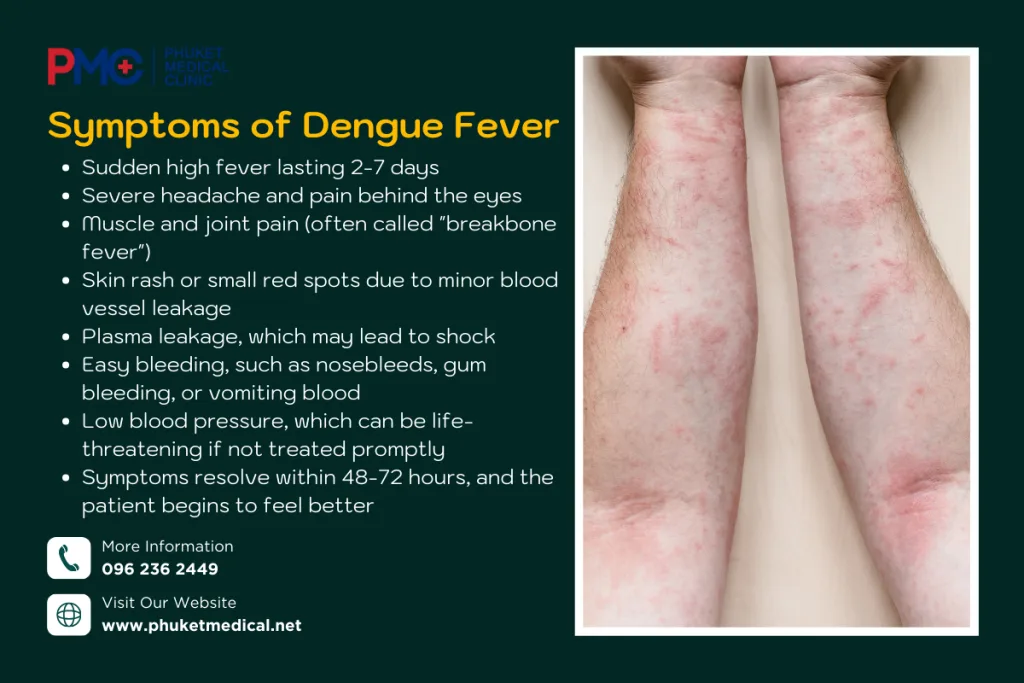
Dengue fever symptoms typically progress through three stages
- Febrile Phase (High Fever Stage)
- Sudden high fever lasting 2-7 days
- Severe headache and pain behind the eyes
- Muscle and joint pain (often called “breakbone fever”)
- Skin rash or small red spots due to minor blood vessel leakage
- Critical Phase (Severe Stage)
- Fever subsides, but the patient may still feel fatigued
- Plasma leakage, which may lead to shock
- Easy bleeding, such as nosebleeds, gum bleeding, or vomiting blood
- Low blood pressure, which can be life-threatening if not treated promptly
- Recovery Phase
- The body starts to regain balance, and symptoms gradually improve
- Increased urination, indicating fluid recovery
- Symptoms resolve within 48-72 hours, and the patient begins to feel better
Treatment of Dengue Fever
Currently, there is no specific antiviral treatment for dengue fever. Since the disease is caused by the Dengue virus, the body’s immune system must fight off the infection naturally. However, treatment focuses on symptom management to prevent severe complications. The recommended approach includes
- Fluid and Electrolyte Replacement
- Patients should drink plenty of water or oral rehydration solutions to prevent dehydration.
- In severe cases, intravenous (IV) fluids may be necessary to stabilize the patient’s condition and prevent shock.
- Fever Reduction
- Paracetamol (Acetaminophen) is recommended to reduce fever.
- Aspirin and Ibuprofen should be avoided as they may increase the risk of bleeding complications.
- Monitoring for Bleeding and Shock
- Patients should watch for warning signs, such as unusual bleeding (nosebleeds, gum bleeding, vomiting blood), rapid heartbeat, or low blood pressure.
- If these symptoms occur, immediate medical attention is required.
- Sufficient Rest
- Patients should get plenty of rest and avoid strenuous activities to allow the body to recover efficiently.
Prevention of Dengue Fever
Dengue fever is a disease caused by the transmission of the Dengue virus through Aedes mosquitoes. Therefore, the most effective prevention methods include
- Eliminate Mosquito Breeding Sites
- Cover water containers such as water tanks, vases, and old tires to prevent mosquitoes from laying eggs.
- Apply Abate Sand (temephos) to standing water sources to prevent mosquito larvae from developing.
- Use Mosquito Repellents and Protective Clothing
- Apply mosquito repellent containing DEET (Diethyltoluamide) to exposed skin.
- Wear long-sleeved shirts and long pants to reduce the chances of mosquito bites.
- Install Mosquito Screens and Nets
- Use window and door screens to keep mosquitoes out of indoor areas.
- Sleep under mosquito nets to protect against mosquito bites, especially in areas with frequent dengue outbreaks.
- Get Vaccinated Against Dengue
- Currently, dengue vaccines are available and have been shown to reduce the severity of the disease.
- Vaccination is recommended as an additional preventive measure, particularly in high-risk areas.
The Dangers of Dengue Fever
Dengue fever is a serious illness that can lead to severe complications if not properly treated. Some of the most dangerous complications include
- Dengue Hemorrhagic Fever (DHF)
- Abnormal bleeding such as skin rashes, nosebleeds, vomiting blood, or blood in the stool.
- Increased risk of severe internal bleeding, which can be life-threatening.
- Dengue Shock Syndrome (DSS)
- Low blood pressure, cold hands and feet, pale skin, and a weak pulse.
- Severe cases may lead to loss of consciousness and organ failure.
- Kidney and Liver Failure
- Dengue virus infection can cause severe liver and kidney dysfunction, leading to acute kidney failure.
- This can result in life-threatening multi-organ failure.
- Death
- In some cases, delayed or improper treatment can lead to death due to shock or excessive bleeding.
- Fatal cases often occur in high-risk groups, including young children, the elderly, and individuals with pre-existing conditions.
Early diagnosis, proper medical care, and preventive measures are crucial in reducing the severity and risk of complications from dengue fever.
Why Should You Get the Dengue Vaccine?
The dengue vaccine helps reduce the risk of infection and lowers the severity of symptoms if infected. Currently, two approved vaccines, Qdenga (Takeda) and Dengvaxia (Sanofi Pasteur), provide protection against all four strains of the dengue virus.
Benefits of the Dengue Vaccine
- Reduces the risk of infection The vaccine stimulates the immune system to protect against the dengue virus.
- Lessens symptom severity While vaccinated individuals may still contract dengue, the chances of severe symptoms and complications are significantly reduced.
- Decreases the burden on healthcare systems Preventing dengue through vaccination helps lower medical costs and reduce hospitalization rates.
- Helps control disease outbreaks If a large portion of the population is vaccinated, it can reduce the number of infections and prevent widespread outbreaks of dengue fever.
What is the Dengue Vaccine?
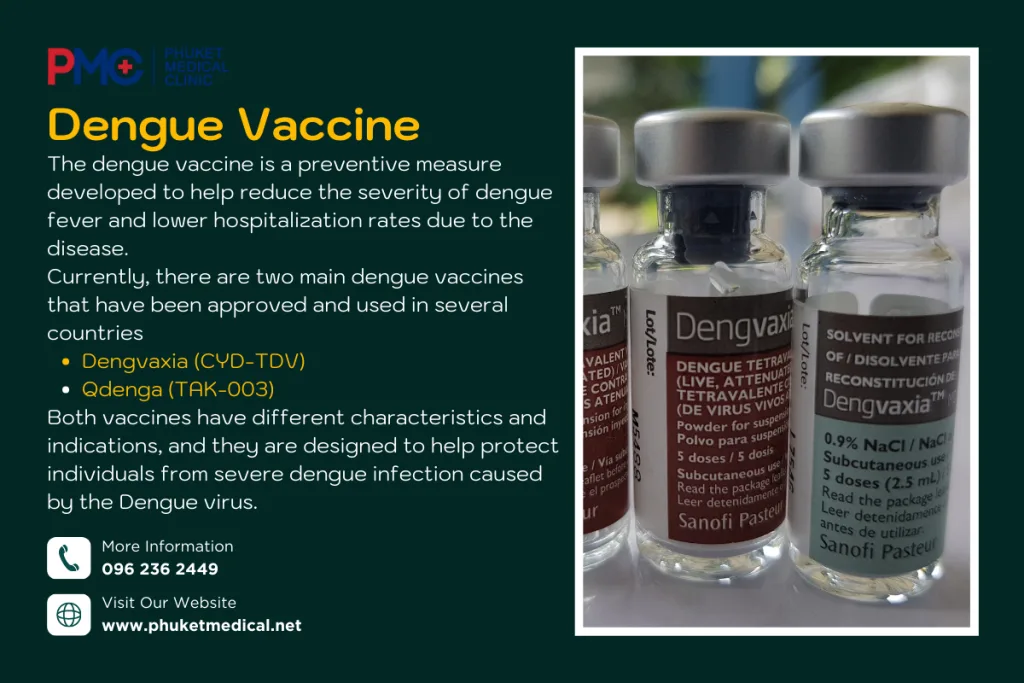
The dengue vaccine is a preventive measure developed to help reduce the severity of dengue fever and lower hospitalization rates due to the disease.
Currently, there are two main dengue vaccines that have been approved and used in several countries
- Dengvaxia (CYD-TDV)
- Qdenga (TAK-003)
Both vaccines have different characteristics and indications, and they are designed to help protect individuals from severe dengue infection caused by the Dengue virus.
Dengvaxia (CYD-TDV)
- Manufacturer: Sanofi Pasteur
- Vaccine Type: Live-attenuated tetravalent vaccine, designed to cover all four strains of the Dengue virus.
Indications
- Recommended for individuals who have had a prior dengue infection (Seropositive).
- Not recommended for individuals who have never had dengue fever, as it may increase the risk of severe symptoms if they contract dengue later.
Dosage Schedule
- Total of 3 doses
- Given 6 months apart (0, 6, and 12 months).
Efficacy
- Reduces the risk of dengue infection by up to 80% in individuals with previous dengue infection.
- Reduces hospitalization rates by over 70%.
Qdenga (TAK-003)
- Manufacturer: Takeda Pharmaceuticals
- Vaccine Type: Live-attenuated tetravalent vaccine, similar to Dengvaxia, but developed for broader use.
Indications
- Can be used in both seropositive and seronegative individuals (those with and without prior dengue infection).
- Approved for a wider age range compared to Dengvaxia.
Dosage Schedule
- Total of 2 doses
- Given 3 months apart.
Efficacy
- Reduces the risk of dengue infection by approximately 80%.
- Reduces the likelihood of severe symptoms and hospitalization rates by up to 90%.
Summary of Differences Between Dengue Vaccines
| Vaccine | Manufacturer | Number of Doses | Dosing Schedule | Eligible Recipients | Efficacy |
| Dengvaxia (CYD-TDV) | Sanofi Pasteur | 3 doses | 0, 6, 12 months | Only for individuals with a previous dengue infection | Reduces illness by 80%, reduces hospitalization by 70% |
| Qdenga (TAK-003) | Takeda Pharmaceuticals | 2 doses | 0, 3 months | Can be used in both seropositive and seronegative individuals | Reduces illness by 80%, reduces hospitalization by 90% |
Who Should Receive the Dengue Vaccine?
- Individuals with a history of dengue infection Those who have previously contracted dengue fever should consider vaccination to prevent reinfection, which can be more severe than the first occurrence.
- Children and adolescents aged 9-45 years The World Health Organization (WHO) recommends dengue vaccination within this age range, as they are at higher risk of infection.
- Residents in dengue-endemic areas People living in regions with frequent dengue outbreaks, such as tropical and subtropical countries, including Thailand, especially during the rainy season, should consider getting vaccinated.
- Travelers to high-risk areas Individuals traveling to countries with ongoing dengue outbreaks should consider vaccination as a preventive measure.
Precautions Before Receiving the Dengue Vaccine
- Dengvaxia should only be given to individuals with a history of prior dengue infection
- Consult a doctor before getting vaccinated
- Possible mild side effects may include fever, body aches, or allergic reactions (though rare)
Does the Dengue Vaccine Have Side Effects?
The dengue vaccine may cause some mild side effects, such as
- Pain and swelling at the injection site
- Low-grade fever or headache
- Fatigue, which usually resolves on its own within 3-4 days
Dengue Vaccine in Thailand
Currently, Dengvaxia has been approved by Thailand’s Food and Drug Administration (FDA) but is only recommended for individuals who have had a prior dengue infection. Meanwhile, Qdenga is still under review for widespread use in Thailand.
Dengue Fever Screening and Treatment Services at Phuket Medical Clinic
At Phuket Medical Clinic, we provide fast and accurate dengue fever screening services using advanced blood testing technology that allows early diagnosis of the disease.
Types of Dengue Fever Tests
- NS1 Antigen Rapid Test – Detects dengue virus protein and can identify infection from the first day of symptoms.
- IgM and IgG Antibody Test – Checks the immune response to determine whether a patient has had a past dengue infection.
- Complete Blood Count (CBC) – Monitors platelet count, white blood cells, and hematocrit levels to track bleeding risk and infection progression.
- Polymerase Chain Reaction (PCR) Test – Directly detects the dengue virus, offering high accuracy for early and precise diagnosis.
Why Choose Phuket Medical Clinic for Dengue Vaccination?
- Experienced medical professionals – Our doctors and healthcare staff specialize in dengue fever management.
- Fast and precise testing services – We use cutting-edge technology to provide rapid and accurate test results.
- Certified dengue vaccines – We offer WHO-approved dengue vaccines to ensure maximum protection.
- Private and safe treatment environment – Our clinic provides a clean, safe, and welcoming atmosphere for all patients.
Read More Articles
Contact Information
Laguna Branch
Phuket Medical Clinic – Laguna Branch is located at
- 58/1, Choeng Thale Subdistrict, Thalang District, Phuket 83100
- Open daily: Monday – Sunday, 09:00 AM–10:00 PM
- Contact via Line ID: @pmcphuket (Include @)
- Phone number: 096 236 2449
- Clinic Location: https://maps.app.goo.gl/SXaeLrSU9Lx47YPH6
- Online appointment booking: https://pmclaguna.youcanbook.me
Phuket Town Branch
Phuket Medical Clinic – Phuket Town Branch is located at
- 41/7-41/8, Talat Nuea Subdistrict, Mueang Phuket District, Phuket 83000
- Open daily: Monday – Sunday, 09:00 AM–9:00 PM
- Contact via Line ID: @pmcphuket (Include @)
- Phone number: 096 228 2449
- Clinic Location: https://maps.app.goo.gl/yeU9qNArGg3qdwZw9
- Online appointment booking: https://phuketmedicalclinic.youcanbook.me
Boat Lagoon Branch
Phuket Medical Clinic – Boat Lagoon Branch is located at
- 20/96, Moo 2, Thepkrasattri Road, Ko Kaeo Subdistrict, Mueang Phuket District, Phuket 83000
- Open daily: Monday – Sunday, 10:00 AM – 06:00 PM
- Contact via Line ID: @pmcphuket (Include @)
- Phone number: 096 696 2449
- Clinic Location: https://maps.app.goo.gl/HbqfUKMEHXuKwan96
- Online appointment booking: https://pmctown.youcanbook.me
Dengue fever is a serious disease that can be prevented through vaccination. Early prevention helps reduce the risk of infection and potential complications. If you live in an area with frequent outbreaks, getting vaccinated is highly recommended to protect both your health and the well-being of those around you.
Dengue fever is a dangerous illness with no specific cure. Therefore, prevention is crucial. Eliminating mosquito breeding sites, using mosquito repellents, and getting vaccinated are among the most effective ways to lower the risk of infection. Dengue vaccines are a medical innovation that help reduce the severity of the disease and prevent its spread within the community.
If you reside in a high-risk area such as Phuket, considering dengue vaccination is an essential step to safeguard your health and the health of your family.
References
- World Health Organization (WHO). Dengue vaccines: WHO position paper. [Online]
Available at: https://www.who.int/news-room/fact-sheets/detail/dengue-and-severe-dengue - Centers for Disease Control and Prevention (CDC). Dengue and the Vaccine. [Online]
Available at: https://www.cdc.gov/dengue/prevention/vaccine.html - Ministry of Public Health, Thailand. Information on dengue vaccines and vaccination guidelines in Thailand. [Online]
Available at: https://ddc.moph.go.th - Government Pharmaceutical Organization (GPO). Dengue vaccine and recommendations for use. [Online]
Available at: https://www.gpo.or.th - Department of Disease Control, Thailand. Dengue prevention guidelines and vaccine recommendations for at-risk groups. [Online]
Available at: https://www.thaivbd.org