

When it comes to hepatitis, which is an inflammation of liver cells, many people are probably familiar with hepatitis A or B. However, hepatitis C is still new to many people. This disease is considered a silent killer that has a serious impact on liver health if left untreated.

What is Hepatitis C?
Hepatitis C Virus (HCV) is divided into 6 main strains (Genotypes), including strains 1 to 6, each of which is different in terms of ease or difficulty in treating.
- Strains 2 and 3: are common strains and are easy to treat.
- Strains 1 and 6: are more difficult to treat and take a long time.
Most patients do not show symptoms in the early stages of infection. Because the nature of this disease is a “silent threat”, patients do not know that they are infected and let the disease progress until it affects their liver health.
Asymptomatic in the early stages
- Most people infected with Hepatitis C do not have obvious symptoms, such as fatigue or loss of appetite, which are symptoms that many people may overlook.
- If not tested and treated, the disease can progress to a chronic stage, causing long-term inflammation of the liver cells.
Causes of Hepatitis C
Hepatitis C infection occurs for many reasons, which are often related to contact with the blood of an infected person or sharing items contaminated with the virus.
- Sharing personal items with an infected person, such as sharing razors and toothbrushes that may be contaminated with blood or bodily fluids, or using unclean nail clippers or tattoo equipment.
- Using drugs, using syringes or tubes contaminated with the virus from an infected person.
- Having sex with an infected person. Infection can occur through unprotected sex, especially in cases where there are wounds or sexually transmitted diseases.
- Receiving unscreened blood. Although the blood screening process is now much safer, there have been cases of receiving contaminated blood in the past.
- Contact with contaminated needles or sharp objects. Medical personnel who come into contact with the patient’s blood, such as being punctured by a needle from a patient with chronic hepatitis C.
- Infection from mother to child. Transmission from mother to child during pregnancy can occur, but it is very rare.
How is hepatitis C transmitted?
Hepatitis C is transmitted through direct contact with blood. Some careless practices in daily life may increase the risk.
- Past surgery or blood transfusions. People who have a history of receiving blood or blood products during surgery or after significant blood loss may be at risk, especially in the past before blood screening was developed.
- Group of patients with chronic kidney disease Patients who need continuous dialysis are at high risk of exposure to contaminated equipment.
- Drug users, injecting drugs or sharing needles or equipment with others
- Tattooing, piercing or acupuncture, using equipment that is not properly sterilized during the piercing or tattooing process
- Frequent sexual partners, having multiple sexual partners without protection, such as using condoms
Characteristics of the hepatitis C virus
When the virus enters the body, most patients do not know that they are infected. Because in the early stages, there may be no obvious symptoms or only minor symptoms that are overlooked. The development of symptoms of hepatitis C can be divided into 3 main stages as follows:
Stage 1: Acute hepatitis C
- Characteristics of this stage
- This stage occurs after the initial infection (approximately 2 weeks to 6 months).
- Most people do not show symptoms or have minor, non-specific symptoms.
- Symptoms found in some cases
- Jaundice, yellow skin, yellow eyes
- Fatigue
- Loss of appetite
- Major problems Patients in this stage often do not know that they are infected, so they do not receive treatment and the virus progresses to the next stage.
Stage 2: Chronic hepatitis C
- Characteristics of this stage
- This stage occurs when the infection has been ongoing for more than 6 months.
- Most people do not have symptoms during this stage, even though the liver has begun to become inflamed or damaged.
- Symptoms that may begin to appear
- Fatigue
- Loss of appetite
- Weight loss
- Long-term effects The inflammation of the liver during this stage can lead to the formation of scar tissue in the liver (fibrosis), which is an important cause of cirrhosis in the later stages.
Stage 3: Cirrhosis
Cirrhosis is the stage where the disease progresses to severe liver damage. It can be divided into 2 sub-stages:
- Early stage cirrhosis
- Characteristics of this stage The liver loses some of its function. The production of nutrients and energy begins to malfunction.
- Symptoms that may occur include fatigue, weight loss, and bloating.
- Severe stage cirrhosis
- Characteristics of this stage The liver loses almost all of its function. This leads to other complications.
- The obvious symptoms include an enlarged spleen, gastrointestinal bleeding, such as bloody or black stools, and ascites (a collection of fluid in the abdominal cavity).
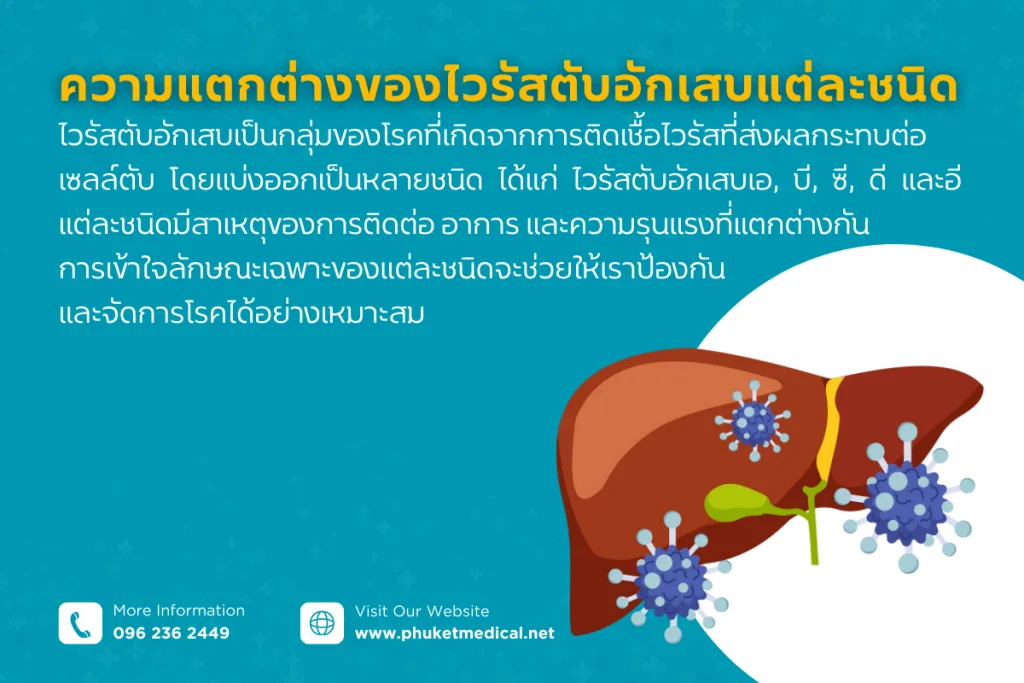
Differences between different types of hepatitis
Hepatitis is a group of diseases caused by viral infection that affects liver cells. It is divided into several types: hepatitis A, B, C, D and E. Each type has different causes, symptoms and severity. Understanding the characteristics of each type will help us prevent and manage the disease appropriately.
Hepatitis A Virus
Transmission
- Transmitted through eating or drinking water contaminated with the virus.
- Caused by contact with an infected person, such as a person who cooks food with the virus in their body.
Symptoms
- Symptoms begin to appear 2-7 weeks after infection.
- Common symptoms:
- Jaundice (yellow eyes, yellow body)
- Fatigue
- Nausea, vomiting
- Tightness in the area under the right rib cage
Distinctive features
- Most symptoms are not severe and tend to go away on their own.
- This disease does not progress to chronic liver disease.
Hepatitis B Virus
Transmission
- Transmitted through blood and bodily fluids, such as
- Unprotected sex
- Transmission from mother to child during birth
- Contact with contaminated blood or blood fluid through a wound
Symptoms
- Most patients are unaware that they are infected.
- Symptoms:
- Low-grade fever
- Weakness, aches
- Loss of appetite, nausea, vomiting
- Jaundice
Characteristics
- Some patients who do not receive treatment may develop cirrhosis or liver cancer.
Hepatitis C Virus
Transmission
- Transmitted through blood, such as
- Receiving unscreened blood
- Sharing injection needles
- Contact with secretions through a wound
- Can be transmitted through sexual intercourse, but is rare.
Symptoms
- Initially, there may be no symptoms or only minor symptoms, such as
- Nausea, vomiting
- Loss of appetite
- Low-grade fever
- Dark urine
Characteristics
- If left untreated, the disease may progress to chronic stages, cirrhosis, or liver cancer.
Hepatitis D Virus
Transmission
- Transmitted through blood
- Often occurs in people who are also infected with the hepatitis B virus.
Symptoms
- Similar symptoms to hepatitis B virus
- If infected with hepatitis B virus, it will increase the severity of the disease.
Characteristics
- There is a chance of developing into cirrhosis and liver cancer faster than other types of hepatitis.
Hepatitis E Virus
Transmission
- Transmitted through eating or drinking contaminated food.
- For example, eating undercooked meat such as pork, wild boar or poultry.
Symptoms
- General symptoms
- Yellow eyes, yellow body
- Fatigue
- Jaundice
Characteristics
- In general, people usually recover on their own.
- But in pregnant women, severe hepatitis may occur.
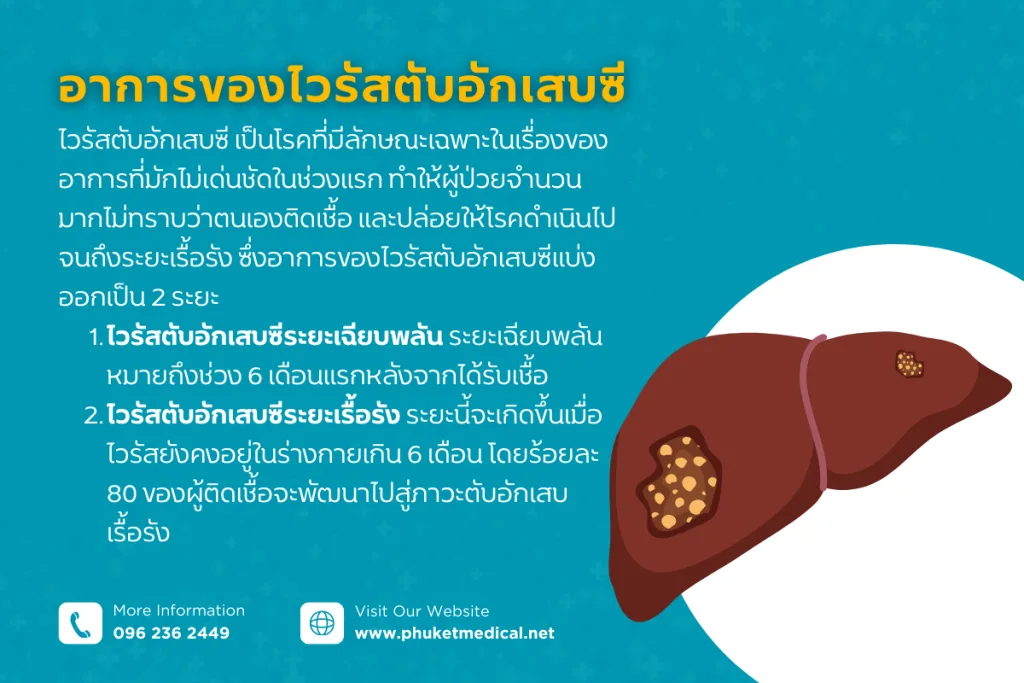
Symptoms of Hepatitis C
Hepatitis C is a disease that has a unique characteristic in that its symptoms are often not obvious at first, causing many patients to not know that they are infected and let the disease progress to the chronic stage. The symptoms of Hepatitis C are divided into 2 stages:
Acute Hepatitis C
- Duration The acute stage refers to the first 6 months after infection.
- Symptoms Most patients in this stage do not have obvious symptoms. However, about 25-30 percent of infected people may have the following symptoms:
- Jaundice: yellow eyes, yellow body
- Feeling weak or easily tired
- Nausea, vomiting
- Loss of appetite
- Importance Because the symptoms in this stage are often not obvious, most patients do not know that they are infected and the virus will progress to the chronic stage.
Chronic Hepatitis C
- Duration Occurs when the virus remains in the body for more than 6 months, with 80 percent of infected people developing chronic hepatitis.
- Symptoms In the early stages of the chronic stage, most patients do not have obvious symptoms until their liver function has been severely damaged. Symptoms found in this stage include:
- Early symptoms
- Weakness, fatigue
- Loss of appetite
- Severe symptoms
- Nausea, vomiting
- Rapid weight loss
- Ascites (fluid accumulation in the abdomen)
- Swollen legs
- Dark, itchy skin without sores or rashes
- Bleeding gums, easy bruising
- Brain symptoms, such as dizziness, lethargy, confusion, or coma
- Early symptoms
- Long-term effects If left untreated, chronic hepatitis C can lead to cirrhosis, which is the beginning of serious problems such as an enlarged spleen and liver cancer.
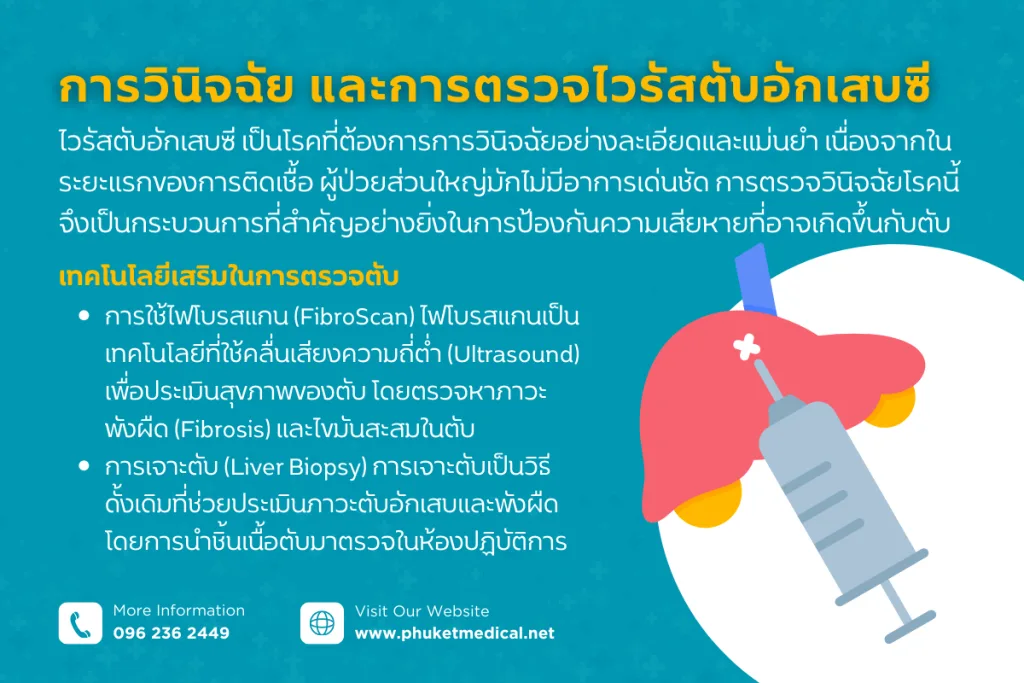
Diagnosis and testing for hepatitis C
Hepatitis C is a disease that requires detailed and accurate diagnosis. Because in the early stages of infection, most patients do not have obvious symptoms. Diagnosis of this disease is a very important process to prevent possible damage to the liver.
Blood test for hepatitis C antibodies (Anti-HCV)
- Details This test is a blood test to find antibodies that the body produces to fight the hepatitis C virus, called “Anti-HCV”.
- Waiting time for results The test results usually take 3-7 days.
- Importance If the result is negative and there is still a risk of infection, the doctor may recommend a repeat test in 2-8 weeks to confirm that the body is not infected with the virus.
- If the result is positive, further confirmation is required.
Confirmation test by direct virus test (Viral Load)
- Details Direct virus test in the blood (HCV RNA) measures the amount of virus in the bloodstream, which helps confirm infection and assess the severity of the disease.
- Importance This test helps to distinguish whether the antibodies found are caused by a current viral infection or not.
Additional technology in liver testing
- FibroScan FibroScan is a technology that uses low-frequency sound waves (ultrasound) to assess the health of the liver by detecting fibrosis and fatty liver.
- Advantages
- No need to puncture the liver
- No pain
- Reduced risk of complications
- Importance This method is suitable for those who want to assess the condition of the liver without risking pain.
- Advantages
- Liver Biopsy Liver biopsy is a traditional method that helps assess liver inflammation and fibrosis by taking a piece of liver tissue for examination in a laboratory.
- Disadvantages
- Patients may feel pain during the procedure.
- There is a risk of complications such as bleeding or infection.
- Disadvantages

How to treat hepatitis C
Hepatitis C is a disease that can be completely cured with current medical technology. Treatment requires an assessment from a specialist to achieve the best results and reduce the risk of long-term complications.
- Assessment of the stage of the disease and the patient’s health condition
- Before starting treatment, the doctor will assess the stage of the disease, such as acute hepatitis, chronic hepatitis, or cirrhosis.
- The doctor will check the patient’s underlying diseases and overall health to determine the appropriate treatment approach.
- Treatment with direct-acting antivirals (DAAs) is a drug that effectively eliminates the hepatitis C virus from the body.
- How to use
- Patients must take the medication continuously as advised by the doctor.
- The general treatment period is 3-6 months, depending on the virus strain and the patient’s health condition.
- Advantages of DAAs
- The cure rate is up to 95%.
- There are fewer side effects than in the past.
- How to use
- Monitoring and monitoring of treatment results
- After treatment, the doctor will test for viruses in the blood (HCV RNA) to confirm that the body can eliminate all viruses.
- Patients with cirrhosis should have regular liver health checks. Even after hepatitis C is cured
- Long-term care and monitoring in patients with cirrhosis
- Liver ultrasound Patients with cirrhosis should have a liver ultrasound and AFP (Alpha-Fetoprotein) test every 6 months to screen for early-stage liver cancer.
- Reduced risk but still need to be monitored Although hepatitis C treatment reduces the risk of liver cancer, patients with cirrhosis are still at risk and need to be monitored continuously.
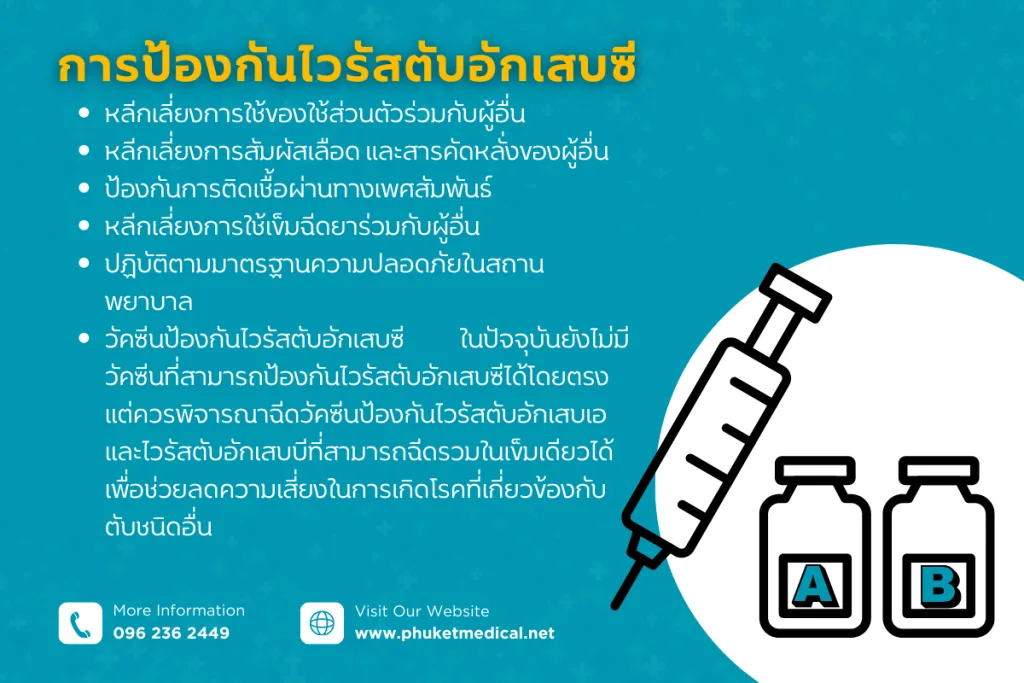
Hepatitis C Prevention
- Avoid sharing personal items with others. Sharing personal items that may have come into contact with blood or bodily fluids, such as toothbrushes, shaving equipment, and nail clippers, can increase the risk of hepatitis C infection. Avoid sharing these items with others to prevent infection.
- Avoid contact with blood and bodily fluids of others. Hepatitis C is transmitted through blood and bodily fluids, such as blood, lymph, saliva, nasal mucus, and semen. Avoid direct contact with these bodily fluids. If contact is necessary, wear protective gloves at all times.
- Prevent sexual transmission. Having sex without a condom increases the risk of hepatitis C infection. Avoid having multiple sexual partners.
- Avoid sharing needles with others. Sharing needles or equipment related to injection is an important channel through which hepatitis C can be transmitted.
- Follow safety standards in healthcare facilities. Healthcare personnel or those who care for patients should always wear protective gloves when in contact with blood or bodily fluids of patients.
- Hepatitis C vaccine There is currently no vaccine that can directly prevent hepatitis C. However, consider getting a hepatitis A and hepatitis B vaccine that can be given in a single dose. To help reduce the risk of developing other liver-related diseases.

Frequently Asked Questions About Hepatitis C
Is Hepatitis C Scary?
Hepatitis C is scary because
- It is a silent killer. This disease often has no symptoms in the early stages, so patients do not know that they are infected. When they do, the disease may progress to chronic stages, cirrhosis, or liver cancer.
- No immunity after treatment. Even if cured, patients will not be able to build immunity to the virus. If exposed to the virus again, they may get infected again.
- Unknowingly spreading the infection, the infection can be transmitted to others through blood or secretions, especially in groups with risky behaviors.
However, hepatitis C can be cured if diagnosed correctly and treated promptly.
Is Hepatitis C Curable?
Hepatitis C is a curable disease, depending on the strain of the virus and the patient’s health. The current treatment approach uses Direct-Acting Antivirals (DAAs), which are highly effective and have few side effects.
The chance of being cured depends on the strain of the virus.
- Hepatitis C type 1 is the most common in many countries. The chance of recovery is about 50% (in the case of using the old treatment). It takes about 1 year to cure. After stopping the drug, you should test for the virus again in 6 months to confirm the treatment results.
- Hepatitis C types 2 and 3 have a chance of recovery of about 70-80%. It takes about 6 months to cure. Test for the virus again using the RT-PCR method in 6 months after stopping the drug.
- Hepatitis C types 4, 5 and 6 are rare in Thailand. It takes about 1 year to cure.
Check and treat hepatitis C at Phuket Medical Clinic, Laguna branch
Phuket Medical Clinic, Laguna branch provides comprehensive hepatitis C diagnosis and treatment services with technology and a team of specialist doctors.
- Diagnostic services
- Test for antibodies (Anti-HCV)
- Confirm by measuring the amount of virus (HCV RNA)
- Treatment services
- Treatment with direct antiviral drugs (DAAs)
- Doctors provide advice and take care of side effects during treatment.
- Follow-up services
- Follow up on treatment results
- Liver health assessment, such as ultrasound
Contact us for an appointment or more information at Phuket Medical Clinic, Laguna branch, ready to take care of you with international standards.
Read more articles
- Hepatitis A: Understand the disease, prevent it, and take proper care
- Hepatitis B: Know it, prevent it, and take proper care
Contact Channels
Laguna Branch
- Phuket Medical Clinic, Laguna Branch is located at 58/1, Cherngtalay Subdistrict, Thalang District, Phuket Province 83100
- Open every day, Monday – Sunday, 09.00 – 22.00 hrs.
- Inquire via Line id. @pmcphuket (with @)
- Contact number 096 236 2449
- Clinic map https://maps.app.goo.gl/SXaeLrSU9Lx47YPH6
- Book an appointment online https://pmclaguna.youcanbook.me
Branch in the city
- Phuket Medical Clinic, Phuket City Branch is located at 41/7-41/8, Talat Nuea Subdistrict, Mueang Phuket District, Phuket Province 83000
- Open every day, Monday – Sunday, 09.00 – 22.00 hrs.
- Inquire via Line id. @pmcphuket (with @)
- Contact number 096 228 2449
- Clinic map https://maps.app.goo.gl/yeU9qNArGg3qdwZw9
- Book an appointment online https://phuketmedicalclinic.youcanbook.me
Boat Lagoon Branch
- Phuket Medical Clinic Boat Lagoon Branch is located at 20/96. Moo 2, Thepkrasattri Rd., Koh Kaew Subdistrict, Mueang Phuket District, Phuket Province 83000
- Open every day, Monday – Sunday, 10.00 – 18.00 hrs.
- Inquire via Line ID. @pmcphuket (with @)
- Contact number 096 696 2449
- Clinic map https://maps.app.goo.gl/HbqfUKMEHXuKwan96
- Book an appointment online https://pmctown.youcanbook.me
Hepatitis C is a disease that can have serious health consequences if not treated properly. Although there is no vaccine to prevent this disease, prevention by avoiding risky behaviors and having regular health check-ups can greatly reduce the chances of infection. If you suspect that you have been exposed or have any symptoms that may be related, you should see a doctor for a diagnosis and appropriate treatment as soon as possible.
Reference
- Centers for Disease Control and Prevention (CDC). Hepatitis C Questions and Answers for the Public. Comprehensive guidelines on prevention, diagnosis, and treatment of Hepatitis C. [ออนไลน์] เข้าถึงได้จาก https://www.cdc.gov/hepatitis/hcv/index.htm
- World Health Organization (WHO). Hepatitis C. Guidelines on screening, care, and treatment of persons with Hepatitis C infection. [ออนไลน์] เข้าถึงได้จาก https://www.who.int/hepatitis/publications/hepatitis-c-guidelines
- กระทรวงสาธารณสุขแห่งประเทศไทย. เว็บไซต์ กรมควบคุมโรค กระทรวงสาธารณสุข. แนวทางการป้องกันและรักษาโรคไวรัสตับอักเสบซีในประเทศไทย. [ออนไลน์] เข้าถึงได้จาก http://www.ddc.moph.go.th
- สมาคมโรคตับแห่งประเทศไทย. แนวทางการดูแลและรักษาโรคไวรัสตับอักเสบซีสำหรับประชาชน. [ออนไลน์] เข้าถึงได้จาก https://www.thasl.org
- เมดิคอล คลินิก. ข้อมูลเกี่ยวกับการตรวจและรักษาโรคไวรัสตับอักเสบซี. [ออนไลน์] เข้าถึงได้จาก https://www.medicalclinic.com