
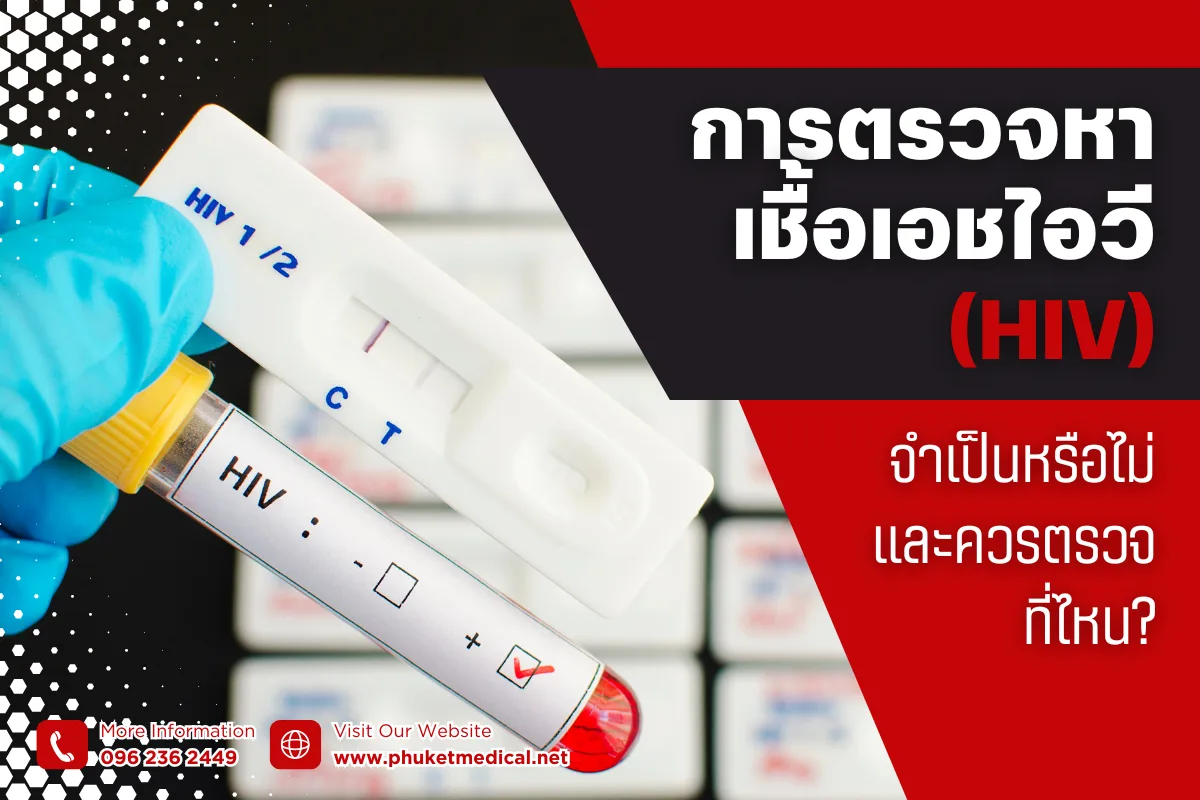
HIV testing is an important step to assess your health and prevent the spread of HIV in society. Many people may think that they are healthy or do not have risky behaviors. But in reality, regular HIV testing not only helps maintain your own health, but also helps protect those around you from getting infected with HIV.
The Importance of HIV Testing
HIV testing plays a key role in many aspects, including prevention, treatment, and planning for the future. Some important things to know include:
- Knowing your HIV status: HIV testing is the only way to confirm whether you are infected. Knowing your HIV status early will help you start treatment in a timely manner.
- Preventing the spread of infection: If you know you are infected, you can prevent the virus from spreading to others by taking preventive measures, such as using condoms and avoiding sharing needles.
- Starting treatment early: Treating HIV with antiretroviral therapy (ART) early can stop the virus from spreading in the body and reduce the risk of complications.
- Reducing the chance of developing AIDS: If left untreated, HIV can develop into late-stage AIDS, which affects the immune system and can lead to opportunistic infections.
Who should get tested for HIV?
Although HIV testing is suitable for everyone, people at high risk or who have behaviors that could lead to HIV infection should be given special attention, including:
- People who have risky sexual behaviors, such as having sex without using condoms or having multiple partners.
- People who are planning to have a family or have children. HIV testing It will help reduce the risk of transmission from mother to child.
- People who suspect that their partner may have risky behaviors, such as partners who have had frequent sex partners or do not use condoms.
- Healthcare personnel, especially those at risk from exposure to blood or fluids from patients.
- People who have shared needles with others, such as those who inject drugs.
- People with chronic illnesses or HIV-related diseases, such as tuberculosis, oral yeast infections, or other opportunistic infections.
- People who have been sexually abused. HIV testing is part of mental and physical health care in cases of victimization.
- Babies born to HIV-infected mothers. Infant testing can help prevent the spread of infection and support the long-term health of the child.
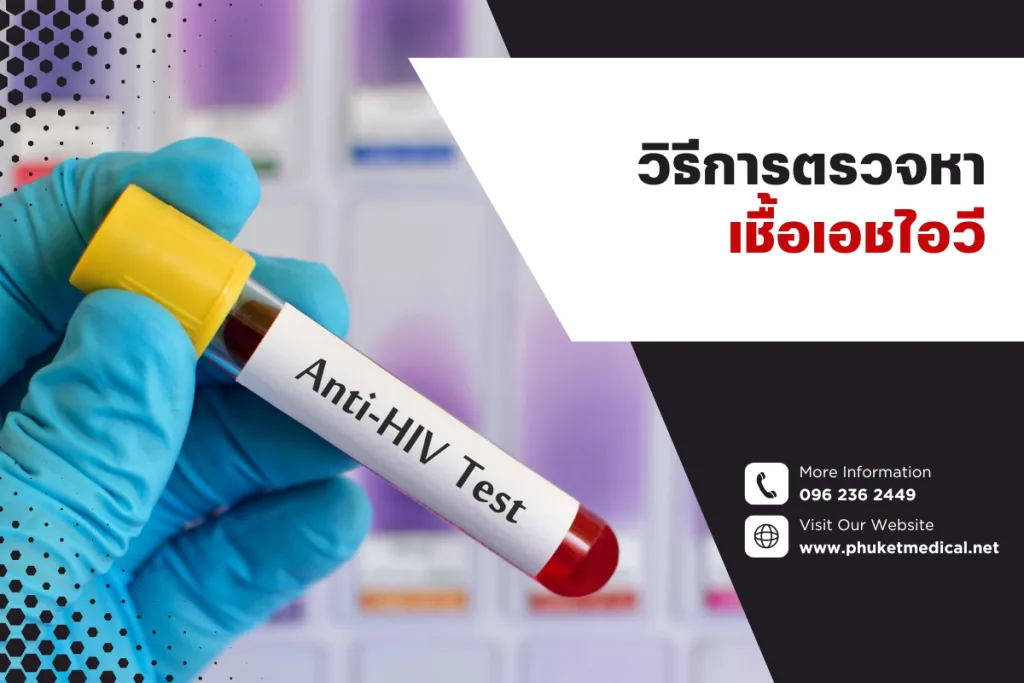
HIV Testing Methods
HIV testing is an important step in the prevention and treatment of HIV-related diseases. There are many ways to test for the virus, each with its own advantages and limitations. Choosing the right testing method will increase the chances of a quick and accurate diagnosis.
Anti-HIV testing
Anti-HIV testing or testing for HIV antibodies is a method used to test the body’s immune response to HIV after the body starts to create antibodies to fight the virus.
- The nature of the test uses a blood sample to detect antibodies produced by the body in response to infection.
- The appropriate time for testing can be detected about 3-4 weeks after infection because it takes the body time to create antibodies.
- Advantages
- This is a popular method today.
- The cost is not high.
- The accuracy is at an acceptable level.
- Limitations
- Cannot detect early infection.
HIV Antigen Testing
Testing for antigens, especially the p24 protein, is a method that helps detect infection in the early stages before the body creates antibodies.
- The nature of the test uses a blood sample to detect the p24 protein, which is a component of HIV.
- The appropriate time for testing Detectable approximately 14-15 days after infection
- Advantages
- Can detect early infection
- Suitable for those at high risk
- Limitations
- Can not be used to confirm results in all cases
- Must be used in conjunction with other methods for diagnosis
NAT (Nucleic Acid Testing)
NAT testing, also known as “NAT testing”, is the most sensitive HIV testing method currently available.
- Characteristics of the test Use a blood sample to directly detect HIV genetic material.
- The appropriate time for testing Can detect infection from 3-7 days after exposure to the infection
- Advantages
- Detecting early infection quickly
- High accuracy
- Helps shorten the time to start treatment
- Limitations
- High cost
- Often used in high-risk cases or those requiring fast results
Rapid HIV Test
Rapid HIV Test or rapid testing is a popular preliminary screening test because it does not take a long time.
- Characteristics of the test Use a blood or saliva sample to test for antibodies to HIV.
- The appropriate time for testing Results in just 20 minutes
- Advantages
- Fast
- Convenient
- Can be used in hard-to-reach places
- Limitations
- If the test result is positive, it must be confirmed by the Anti-HIV or NAT method
- May not be suitable for testing in the early stages after infection
HIV Self Testing
HIV Self Testing is a method that allows people to test for HIV by themselves.
- Types of testing
There are 2 methods:- Fingertip blood test
- Oral fluid sample collection
- The appropriate time for testing is suitable for preliminary screening, but the test should be done about 3-4 weeks after exposure to the virus.
- Advantages
- Convenient
- Preserve privacy
- Suitable for those who are not convenient to go to a hospital
- Limitations
- The accuracy may be less than the laboratory method.
- If the result is positive, the result must be confirmed by other methods.
When to get tested for HIV after exposure?
HIV testing after exposure is important, but it should be done at the right time to get accurate results.
- The ideal time is at least 2-4 weeks after exposure, or about 14-30 days.
- If tested too early, the result may be “inconclusive” because the body has not yet created enough antibodies or antigens.
- If tested too late, the disease may spread and treatment may be delayed.
- Additional advice: If the first test result is negative, the test should be repeated in 3 months to confirm the result.
Do I need to fast for an HIV test?
There is no need to fast for an HIV test.
- You can eat and drink normally before the test.
- Avoid tea, coffee, sweet drinks or drinks with other ingredients. Drink only plain water for safety.
Preparing for an HIV test
If you are planning to get tested for HIV, being properly prepared can reduce anxiety and increase the effectiveness of the test.
- Review the risk period. Check when the risk event occurred. The test should be done at least 2-4 weeks after the event.
- There is no requirement to fast. You can eat and drink normally before the test.
- Prepare necessary documents, bring your ID card or identification document to register at the hospital.
- Prepare yourself. HIV testing can cause anxiety. You should be prepared to receive the test results, whether they are negative or positive.
- For those who are unable to travel to the hospital, you can use an HIV self-test kit. If the result is positive, you should go for a repeat test at the hospital to confirm the result.
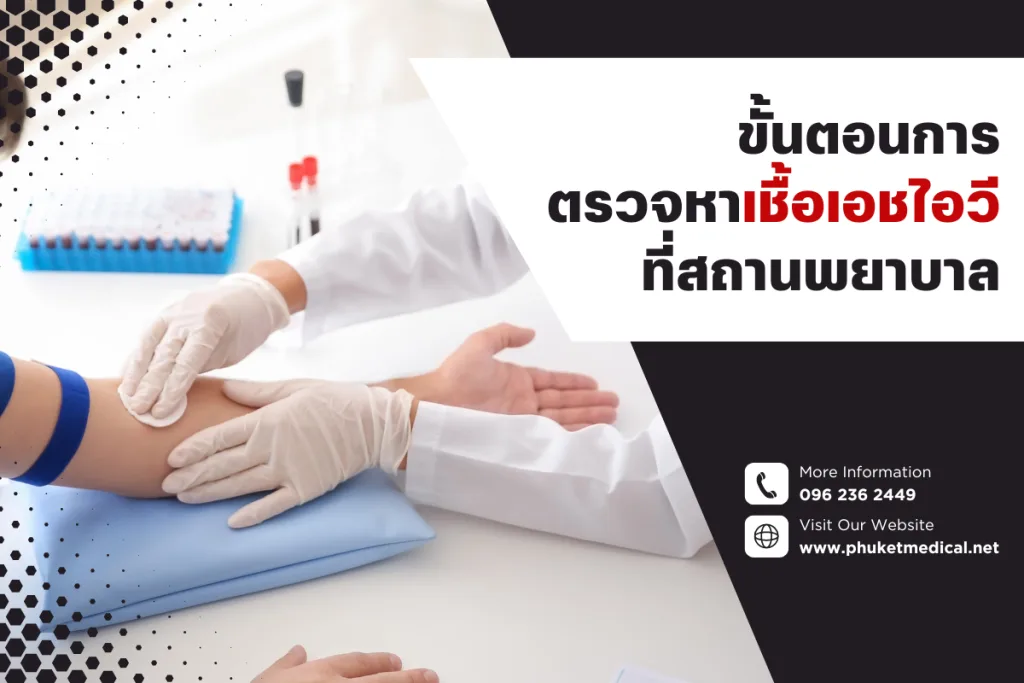
HIV Testing Process at a Medical Facility
HIV testing at a medical facility is performed by medical professionals who are experts in the field, which will help ensure accurate and safe testing.
- Registration and Informing of Intent When you arrive at the medical facility, present your national ID card or other identification document to the staff and inform them that you want to be tested for HIV.
- Receive initial consultation
- Before the test, the testee will receive consultation from a doctor or specialist.
- This process includes a discussion about risky behaviors, risk assessment, and information about the testing process.
- The testee will sign a consent form for HIV testing. This process takes no more than 30 minutes.
- Blood draw A medical professional will draw blood to collect a sample for HIV testing. The time it takes to know the test results may vary from medical facility to medical facility, with some hospitals able to provide results within the same day.
- Listening to the test results
- In the case of a negative test result (no infection found), the doctor will recommend preventive measures to reduce the risk of future infection.
- In the case of a positive test result (infection found), the patient will receive advice on self-care, starting treatment, and more information about HIV.
HIV Self Testing Process
For those who are unable to travel to a medical facility, HIV self-testing is a convenient and fast option.
- Purchasing an HIV test kit Can be purchased from a pharmacy or a reliable source
- Preparation of equipment and cleaning Wash hands with soap and water and use an alcohol pad to clean the fingertip and wait for it to dry completely.
- Blood sampling Twist the cap of the blood sampling needle and press the needle down on the fingertip to draw blood. Then drop 1-2 drops of blood into the S slot of the test cartridge.
- Adding the test solution Use a straw to draw the test solution and drop 4 more drops into the S slot.
- Waiting for the test result Wait for the result for about 15-20 minutes.
- Reading the result
- If the result shows a strip in the T and C slots, it means that the infection is found.
- If the result shows a strip only in the C slot, it means that the infection is not found.
- If no strip is displayed or the result is abnormal, there may be an error in the test. The test should be repeated.
- Reading the result
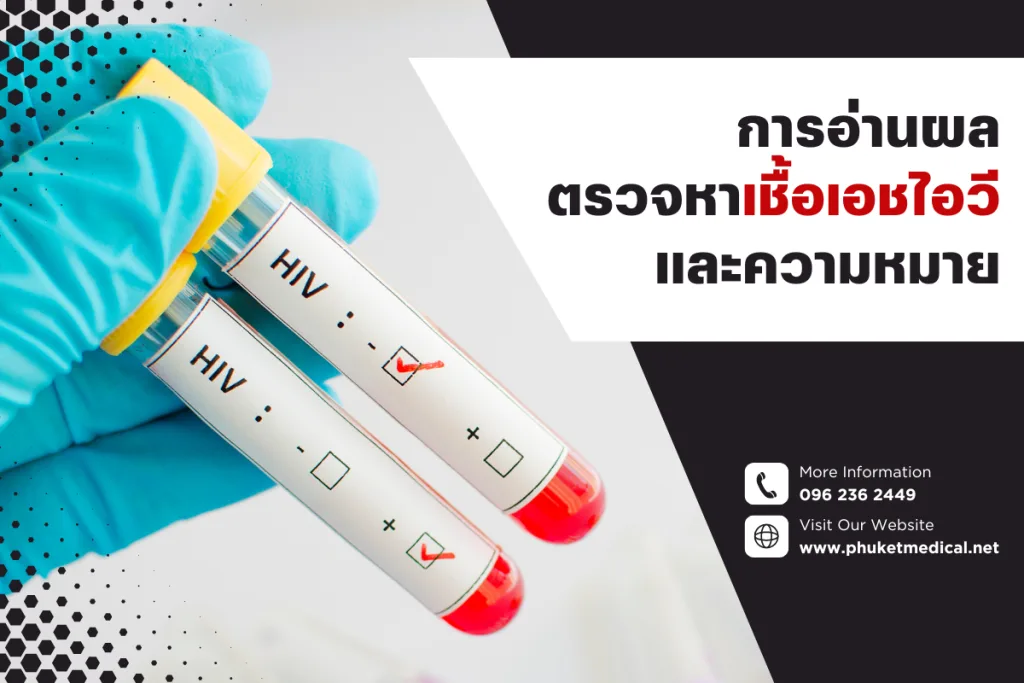
Interpreting HIV Test Results and What They Mean
When you are tested for HIV, you will receive the following results:
Negative test result (Anti-HIV Negative)
- Description A negative test result means that there is no HIV infection in the body or the body’s immune system has not yet created antibodies to the virus at a detectable level.
- Result characteristics The first test kit shows a non-reactive result.
- Caution If the test is done shortly after the risk (such as within the first 3-4 weeks), the body may not have created enough antibodies, so the test result may not be completely conclusive. It is recommended to repeat the test 3 months after the risk.
Positive test result (Anti-HIV Positive)
- Description A positive test result means that there is HIV infection in the body. A positive test result must be confirmed by several steps of testing.
- Result characteristics All 3 test kits show the same reactive result.
- Next process The person being tested will enter the correct treatment and care process, which includes counseling and starting antiretroviral drugs. And life planning to reduce long-term health risks
Inconclusive results
- Description
An inconclusive test result means that it is not yet possible to confirm whether the person being tested has HIV infection or not. This may be due to several factors, such as:- The test period is in the incubation period of the virus.
- The antibody level is still too low to be detected.
- The test that requires additional confirmation, such as the HIV genome test.
- Recommendations If the test result is inconclusive, you should consult a doctor to repeat the test at the appropriate time. A highly sensitive test method, such as NAT or p24 antigen test, may be required.
The time it takes to know the HIV test result
The time it takes to know the HIV test result depends on the test method chosen.
- Rapid HIV Test takes only 15-20 minutes to know the result, suitable for preliminary screening.
- Anti-HIV Testing The test result will be ready within the same day (depending on the hospital). Used to test for antibodies to HIV.
- NAT (Nucleic Acid Testing) can be tested from 3-7 days after exposure to the virus. It takes several days to a week to know the result.
- The p24 antigen test can detect the virus 14-15 days after exposure. It takes about 1-2 days to wait for the results.
HIV Testing: Prices, Locations, and Advice for Appropriate Testing
How much does an HIV test cost?
The price of an HIV test varies depending on the location and testing method chosen. The prices can be divided as follows:
- Rapid HIV Test
- Starting price 200 baht
- Takes about 15-20 minutes to get results
- Suitable for preliminary screening
- PCR (Polymerase Chain Reaction) Test
- Starting price 1,500 baht
- Takes about 1 week to get results
- Highly accurate, detects infection in the early stages
- Testing at private hospitals
- Starting price 600-1,000 baht
- Fast and convenient service
- HIV Self-Test
- The price is around 500 baht per kit
- Can be used for preliminary screening at home
- Laboratory (LAB) Test
- Starting cost 500-2,500 baht
- Depending on the technique and complexity of the test
- Testing at government hospitals
- Two free tests per year for those who join the program
- Services are provided at government hospitals and participating health centers
Where to get tested for HIV
Choosing a place to get tested for HIV depends on the convenience and needs of each individual.
- Government hospitals have a program to test for HIV for free twice a year, suitable for those who want to reduce costs, but must allow time for waiting in line.
- Private hospitals provide fast and private services, which may be more expensive than government hospitals.
- Specialist clinics, such as sexual health clinics, provide specialized consultations and appropriate services.
- Self-testing HIV kits are suitable for those who are unable to travel to a hospital. They can be purchased at general drug stores.
- Specialist testing centers, such as health service centers in Bangkok and other provinces, have equipment and a team of experts.
How often should I go to the doctor for HIV testing?
The frequency of HIV testing depends on the behavior and situation of each individual:
- People with risky behaviors should get tested for HIV at least once a year or every time after engaging in risky behavior.
- Couples or spouses, if one of them has risky behaviors, should get tested for HIV for certainty.
- People who have received advice from a doctor should follow their doctor’s advice on the frequency of testing.
Is it good to test for HIV yourself?
Currently, testing for HIV yourself has become another popular option. It has the following advantages and precautions:
Advantages
- Convenient and can be tested anywhere
- Get results quickly within 15-20 minutes
- Suitable for those who want privacy
Precautions
- If the test result is positive, consult a doctor immediately to confirm the result and start treatment.
- If the test result is negative but still in the incubation period (window period), you should retest in 3 months.
HIV Testing at Phuket Medical Clinic, Laguna Branch
Phuket Medical Clinic, Laguna Branch provides comprehensive HIV testing services for those who want convenience, speed, and privacy. Details are as follows:
- Fast and safe service, Rapid HIV Test, results within 20 minutes, and NAT testing for those at risk in the early stages.
- Modern technology, using equipment certified to international standards, with high accuracy in diagnosis.
- Personalized care, with a team of doctors and personnel to provide consultation both before and after the test, while the personal information of service recipients is strictly protected.
- Friendly atmosphere, services in a private area, reducing anxiety and embarrassment, no need to wait long, with services in a relaxing atmosphere.
Phuket Medical Clinic is ready to take care of you with a comprehensive service, from testing, counseling, to planning appropriate health care!
Read more articles
- AIDS and HIV Understanding Causes, Symptoms, Prevention and Treatment
- Preventive and Emergency HIV Antiretroviral Drugs: A Detailed Understanding and How to Get Them
Contact Channels
Laguna Branch
- Phuket Medical Clinic, Laguna Branch is located at 58/1, Cherngtalay Subdistrict, Thalang District, Phuket Province 83100
- Open every day, Monday – Sunday, 09.00 – 22.00 hrs.
- Inquire via Line id. @pmcphuket (with @)
- Contact number 096 236 2449
- Clinic map https://maps.app.goo.gl/SXaeLrSU9Lx47YPH6
- Book an appointment online https://pmclaguna.youcanbook.me
Branch in the city
- Phuket Medical Clinic, Phuket City Branch is located at 41/7-41/8, Talat Nuea Subdistrict, Mueang Phuket District, Phuket Province 83000
- Open every day, Monday – Sunday, 09.00 – 22.00 hrs.
- Inquire via Line id. @pmcphuket (with @)
- Contact number 096 228 2449
- Clinic map https://maps.app.goo.gl/yeU9qNArGg3qdwZw9
- Book an appointment online https://phuketmedicalclinic.youcanbook.me
Boat Lagoon Branch
- Phuket Medical Clinic Boat Lagoon Branch is located at 20/96. Moo 2, Thepkrasattri Rd., Koh Kaew Subdistrict, Mueang Phuket District, Phuket Province 83000
- Open every day, Monday – Sunday, 10.00 – 18.00 hrs.
- Inquire via Line ID. @pmcphuket (with @)
- Contact number 096 696 2449
- Clinic map https://maps.app.goo.gl/HbqfUKMEHXuKwan96
- Book an appointment online https://pmctown.youcanbook.me
HIV testing is an important step in taking care of your health. Choosing the right test method and testing location, as well as consulting with your doctor, will help you feel confident and effectively protect yourself and others.
Reference
- Centers for Disease Control and Prevention (CDC) Comprehensive overview on HIV testing, prevention, and management. [Online] Available at: https://www.cdc.gov/hiv/basics/testing.html
- World Health Organization (WHO) Guidelines on HIV testing and treatment approaches. [Online] Available at: https://www.who.int/publications/i/item/9789241508926
- UNAIDS Global guidelines on HIV prevention and management, including self-testing protocols. [Online] Available at: https://www.unaids.org/en/resources
- กระทรวงสาธารณสุขแห่งประเทศไทย (Ministry of Public Health, Thailand) ข้อมูลเกี่ยวกับการตรวจหาเชื้อเอชไอวีและบริการด้านสุขภาพที่เกี่ยวข้อง. [ออนไลน์] เข้าถึงได้จาก: http://www.moph.go.th
- สถาบันบำราศนราดูร (Bamrasnaradura Infectious Diseases Institute) ศูนย์บริการด้านโรคติดต่อทางเพศสัมพันธ์และเอชไอวีในประเทศไทย. [ออนไลน์] เข้าถึงได้จาก: https://www.bamras.org