
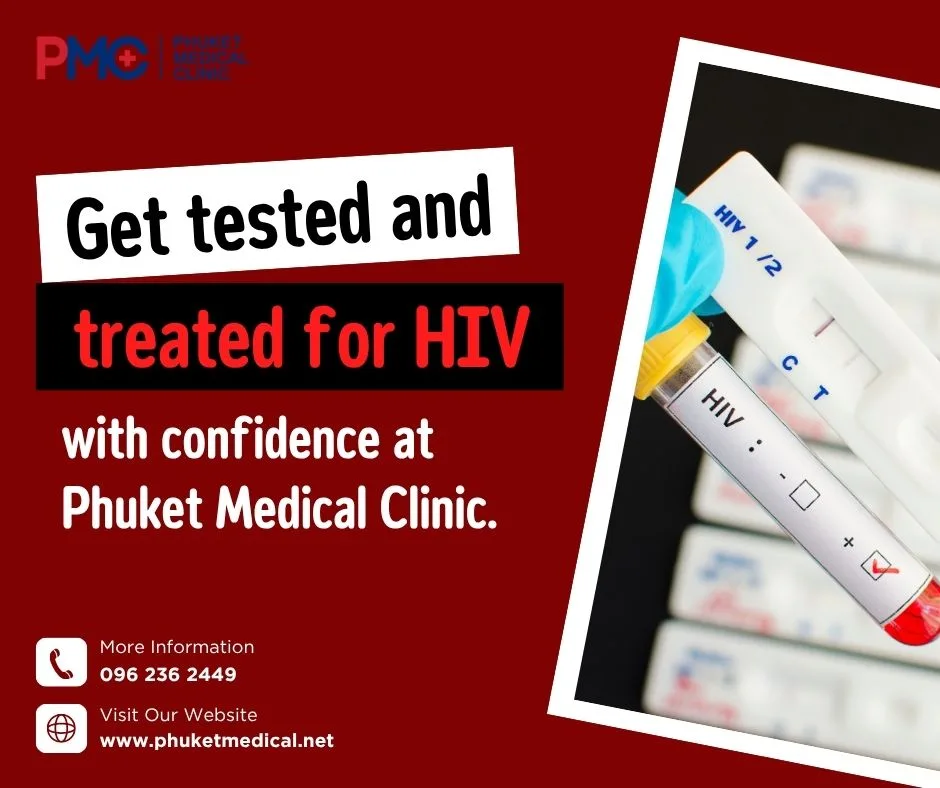
HIV testing and timely initiation of HIV treatment are key to long-term health and significantly reduce the risk of HIV transmission to others. At Phuket Medical Clinic, we are committed to offering high-standard HIV testing and treatment services, with a strong emphasis on privacy, safety, and personalized care, so that you and your loved ones can feel secure at every step of your health journey.
Why Is HIV Testing Important?
HIV testing involves analyzing a blood sample or other bodily fluid to detect signs of HIV infection. HIV attacks CD4 white blood cells, weakening the immune system and increasing the risk of opportunistic infections and chronic illnesses.
- Early diagnosis, early treatment: Individuals who know their HIV status can start antiretroviral therapy (ART) immediately. ART suppresses the virus to undetectable levels and prevents complications.
- Preventing transmission: When the viral load is undetectable, individuals with HIV cannot transmit the virus to their partners (based on the U=U principle: Undetectable = Untransmittable).
- Better life and health planning: Knowing your status enables you to make informed decisions about your health, family planning, and sexual relationships.
- Reduced anxiety and uncertainty: Regular testing gives you peace of mind and supports better mental health by eliminating doubts.
HIV Testing Methods
Antibody Test
This test detects antibodies produced by the immune system in response to HIV. After exposure, the body takes time to generate detectable levels of antibodies.
- Testing formats include
- Rapid test via finger prick
- Blood draw from a vein
- Oral fluid sample
- Advantages Widely used, affordable, and fast results (in 15–30 minutes in some formats). Suitable for individuals at risk within 3 weeks to 3 months after exposure.
- Limitations Cannot detect recent infections during the window period (early phase after exposure).
Antigen/Antibody Combo Test
This test detects both p24 antigen (a protein from the HIV virus present shortly after infection) and HIV antibodies developed later.
- Testing format Blood sample drawn from a vein, conducted in a laboratory setting only.
- Advantages Can detect HIV earlier than antibody-only tests, sometimes as soon as 2 weeks after exposure. Highly accurate and recommended by WHO and CDC.
- Limitations Results may take 1–5 days and the test must be performed in a facility with a lab.
Nucleic Acid Test (NAT)
This test detects HIV’s RNA, or genetic material, directly, making it the earliest method for identifying infection.
- Testing format Blood sample sent to a specialized lab.
- Advantages Can detect HIV as early as 10–14 days after exposure. Suitable for urgent cases, such as unprotected sex with a known HIV-positive partner or pre-blood donation screening.
- Limitations More expensive than other methods and does not provide information on CD4 count or viral load trends. Only available at facilities with specialized equipment.
Who Should Get Tested for HIV?
HIV testing is not only for those showing symptoms or those in medical risk groups. It is also recommended for anyone who may have unknowingly been at risk. You should consider getting tested, especially if any of the following situations or behaviors apply to you:
- People with Risky Sexual Behaviors
- Having vaginal or anal sex without using a condom
- Having multiple sexual partners or partners whose HIV status is unknown
- Having sex with someone who is HIV-positive or at high risk, such as sex workers
- People Who Share Needles or Equipment
- People who inject drugs and share needles
Those who have received piercings or tattoos at unregulated or unhygienic places - Healthcare workers who have experienced needle-stick injuries or accidental blood exposure
- People who inject drugs and share needles
- Pregnant Women or Those Planning to Have Children
- All pregnant women should be tested for HIV at least once during prenatal care
- If HIV is detected, treatment can begin immediately to reduce the risk of mother-to-child transmission to nearly zero
- People Who Received Blood Transfusions Before 1992
- Prior to 1992, Thailand did not have a comprehensive HIV screening system for blood donations
- Individuals who received blood during this period should be tested at least once
- People With Immune-Related Symptoms or Illnesses
- Frequent or chronic infections without clear cause
- Unexplained weight loss
- Swollen lymph nodes throughout the body
- Persistent mouth ulcers, herpes, or oral thrush
- People Who Have Experienced Sexual Assault
- Rape or sexual coercion often involves unprotected sex and a lack of risk control
- HIV testing is an important part of both physical and mental healthcare for survivors
Steps in the HIV Testing Process
- Pre-test Counseling Discuss your risk factors and the most suitable testing method with a doctor or health professional.
- Sample Collection A blood sample will be taken by a trained professional.
- Waiting for Results The waiting time depends on the type of test chosen.
- Receiving Results and Post-test Counseling Whether the result is positive or negative, the provider will give you advice on the next steps for your health care.
Understanding HIV Test Results
Interpreting HIV test results correctly is a vital step in managing your own health and protecting others. There are two main types of HIV test results:
Negative Result (HIV Not Detected)
This means that no antibodies or genetic material of the HIV virus were found in your blood at the time of testing. However, a negative result does not always mean that a person is completely free of HIV infection—especially if the test was taken too soon after a potential exposure (e.g., within a few days of unprotected sex).
What to do if your result is negative
- If you have had no new risks in the past 3 months → The result is considered reliable.
- If you had a risk within the past 3 months → You should retest in 1–3 months based on medical advice.
- If you are in a high-risk group or feel anxious → Consider NAT or Antigen/Antibody Combo Tests, which offer greater accuracy.
Positive Result (HIV Detected)
This indicates that HIV antibodies or genetic material of the virus have been detected in your body.
Next steps after a positive result
- You will need a confirmatory test, such as Western blot or PCR, to verify the diagnosis.
- After confirmation → Receive counseling and start antiretroviral therapy (ART) immediately.
- Knowing your status early allows for quick viral control, reduces the risk of transmission, and supports a normal life (according to the U=U principle: Undetectable = Untransmittable).
HIV Treatment with ART
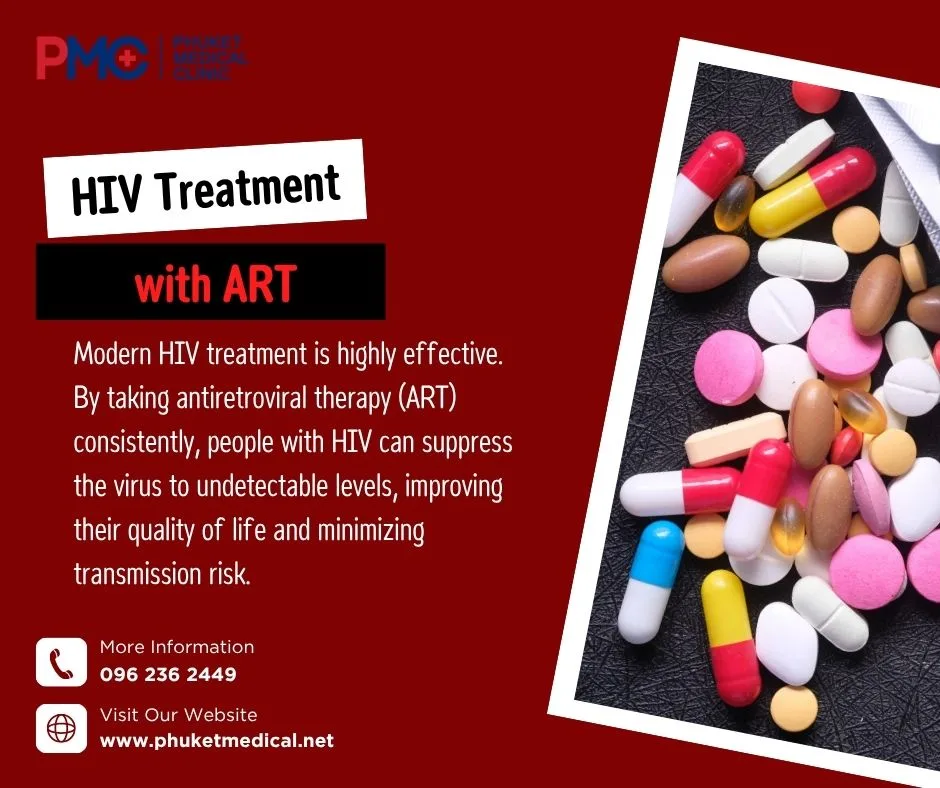
Modern HIV treatment is highly effective. By taking antiretroviral therapy (ART) consistently, people with HIV can suppress the virus to undetectable levels, improving their quality of life and minimizing transmission risk.
What is ART?
ART involves taking a combination of antiretroviral drugs to stop HIV from replicating. Each drug targets different stages of the HIV life cycle—such as genetic copying, integration into host cells, and protein assembly.
Goals of HIV Treatment
- Reduce viral load in the blood to undetectable levels, preventing immune system damage and eliminating the risk of sexual transmission (U=U).
- Restore immune function by increasing CD4 count, which strengthens the body’s defenses against opportunistic infections.
- Reduce mortality and extend lifespan. With consistent medication, people with HIV can live nearly as long as those without the virus.
Common ART Regimens
- Most treatments combine multiple drugs into a single daily pill to improve adherence and reduce the risk of missed doses.
- Key drug classes
- NRTIs (e.g., Tenofovir, Lamivudine)
- NNRTIs (e.g., Efavirenz)
- INSTIs (e.g., Dolutegravir)
- Popular regimens include: Biktarvy® and TLD (Tenofovir + Lamivudine + Dolutegravir)
Why Daily Adherence Matters
- Taking medication at the same time every day maintains stable drug levels in the body.
- Prevents drug resistance, which can make treatment less effective.
- With good adherence, viral suppression can usually be achieved within 3–6 months.
Monitoring After Starting Treatment
- Viral load testing every 3–6 months
- CD4 count monitoring to evaluate immune recovery
- Liver, kidney, lipid, and blood sugar tests to check for side effects
Quality of Life After Treatment
With ongoing treatment, people living with HIV can
- Maintain healthy, safe relationships (U=U)
- Work, exercise, and live normally
- Plan for parenthood safely under medical guidance
Why Choose HIV Testing and Treatment at Phuket Medical Clinic?
Choosing where to get tested and treated for HIV is not a minor decision. Beyond testing accuracy, what truly matters is receiving warm, understanding, and non-judgmental care—this makes clients feel confident and encouraged to care for their health consistently. Phuket Medical Clinic stands out for the following reasons
- High Privacy Standards The clinic is designed with privacy in mind, from registration to consultation. Clients can be assured that their information is kept strictly confidential and never disclosed without consent.
- Expert and Friendly Medical Team Phuket Medical Clinic employs doctors and staff specially trained in HIV and sexually transmitted infections (STIs). They provide non-judgmental, personalized guidance and help create tailored treatment plans for each individual.
- Fast Test Results with Immediate Treatment With advanced testing technology, the clinic offers rapid results. If HIV is detected, clients can begin treatment on the same day.
- Convenient and Accessible Location Centrally located in Phuket, the clinic is easy to reach, near key landmarks, and offers parking. Open daily with minimal waiting times.
- Comprehensive Services in One Place Beyond HIV testing and treatment, the clinic also offers:
- Screening for other STIs
- Vaccinations for infectious diseases
- Counseling on safe sex
- Ongoing health monitoring and follow-up care
Read More Articles
- Where to get a blood test in Phuket? Fast and reliable service.
- HIV Know the causes, symptoms, testing and treatment methods in detail.
Contact Information
Laguna Branch
Phuket Medical Clinic – Laguna Branch is located at
- 58/1, Choeng Thale Subdistrict, Thalang District, Phuket 83100
- Open daily: Monday – Sunday, 09:00 AM–10:00 PM
- Contact via Line ID: @pmcphuket (Include @)
- Phone number: 096 236 2449
- Clinic Location: https://maps.app.goo.gl/SXaeLrSU9Lx47YPH6
- Online appointment booking: https://pmclaguna.youcanbook.me
Phuket Town Branch
Phuket Medical Clinic – Phuket Town Branch is located at
- 41/7-41/8, Talat Nuea Subdistrict, Mueang Phuket District, Phuket 83000
- Open daily: Monday – Sunday, 09:00 AM–9:00 PM
- Contact via Line ID: @pmcphuket (Include @)
- Phone number: 096 228 2449
- Clinic Location: https://maps.app.goo.gl/yeU9qNArGg3qdwZw9
- Online appointment booking: https://pmctown.youcanbook.me
Circle Clock Tower Branch
Phuket Medical Clinic – Circle Clock Tower Branch is located at
- 206/8 Phuket Rd, Taladyai, Mueang Phuket District, Phuket 83000
- Open daily: Monday – Sunday, 12:00 AM – 08:00 PM
- Contact via Line ID: @pmcphuket (Include @)
- Phone number: 096 696 2449
- Clinic Location: https://maps.app.goo.gl/svPvTabmmD1DHe9v9
- Online appointment booking: https://phuketmedicalclinic.youcanbook.me
Getting tested and treated for HIV promptly is essential for protecting your health and preventing transmission. At Phuket Medical Clinic, we are committed to providing professional, compassionate care—because your well-being matters.
References
- Centers for Disease Control and Prevention (CDC). HIV Testing Overview. Updated Guidelines and Testing Options. [Online] Available at: https://www.cdc.gov/hiv/basics/testing.html
- World Health Organization (WHO). Consolidated guidelines on HIV prevention, testing, treatment, service delivery and monitoring. [Online] Available at: https://www.who.int/publications/i/item/9789240031593
- U.S. Department of Health and Human Services (HHS). Guidelines for the Use of Antiretroviral Agents in Adults and Adolescents with HIV. [Online] Available at: https://clinicalinfo.hiv.gov/en/guidelines
- Ministry of Public Health, Thailand. Guidelines for HIV Self-Testing Services in Thailand. [Online] Available at: https://ddc.moph.go.th/uploads/publish/1464120230908033845.pdf
- Ministry of Public Health, Thailand. National Guidelines for HIV/AIDS Treatment and Prevention 2021–2022. [Online] Available at: https://www.prepwatch.org/resources/thailand-national-guidelines-on-hiv-aids-treatment-prevention-2021-22/